Korean Racing Girls Redux – History of Female Jockeys in Korea

Last Saturday afternoon at Seoul, something happened that would have been unthinkable just a few years ago. Race 7, an otherwise unremarkable domestic class 4 allowance race, was won by jockey Yoo Mi Ra. The second place horse was ridden by Kim Hae Sun and Ahn Hyo Ri was on the third. Female jockeys had swept the placings for the first time ever in Korea.

Earlier in the afternoon, a horse called Dewma had given Lee Shin Young, Korea’s first female trainer, her 39th winner and the following day, Sunday, saw Lee Ah Na ride Imperial Girl to second place behind Tough Win in the afternoon’s feature event.

It is questionable what would be the more unlikely: that by 2013, South Korea would have a female President or that women would be performing so strongly in the traditionally ultra male dominated world of Korean horse racing.
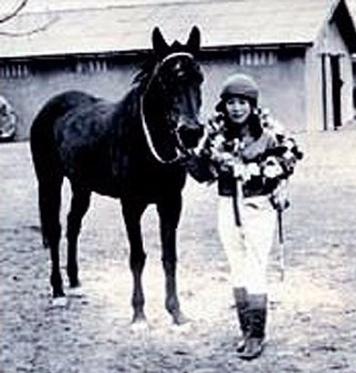
Korea's first female jockey, Lee Ok Rae in 1975. At the time, the horses were not thoroughbreds

Korea’s first female jockey, Lee Ok Rae in 1975. At the time, the horses were not thoroughbreds

Park Geun Hye was elected the nation’s first female President last month, however, somewhat surprisingly, you have to go back to the now long-gone Ttukseom Racecourse on the north bank of the Han River and to the Spring of 1975 when 21-year-old Lee Ok Rae became the first woman to be granted a jockey license in Korea.

South Korea was, at the time, under the authoritarian rule of President Park Chung Hee – father of the new President Park Geun Hye – who had recently survived the second of three assassination attempts – this one had resulted in the death of his wife. Then, as now, racing held a near monopoly on gambling and Ttukseom was full to bursting on each race-day.

Lee Ok Rae graduated in the same class as Bae Dae Sun and Ji Yong Cheol, who would go on to become two of the top riders of their generation and today are among the country’s most successful trainers. Assigned to trainer Kwon In Deok, on March 17 that year, Lee rode in her first race.

In true storybook fashion it was a winning debut as in race 4 that day, she partnered horse number 1, “Kansas” to victory over five and a half furlongs.

Lee continued to establish herself over the coming months, however, in August that year, disaster struck in the shape of a fall in which she sustained injuries that would end her career. She retired just six months after her first ride with seven wins from forty-eight starts. No Korean woman would ride in a race for the next quarter of a century.

By the time they did, Park Chung Hee had been dead for two decades and his once bitter enemy Kim Dae Jung was now President of South Korea. Seoul had hosted the Olympic games in 1988 and Ttukkseom Racecourse was closed as the huge new track at Gwacheon opened, having been constructed on the site of the Olympic Equestrian events. At the turn of the millennium, the KRA made an effort to get more women into the sport.

From left: Lee Ae Li, Lee Keum Ju and Lee Shin Young in the early 2000s (KRA)

From left: Lee Ae Li, Lee Keum Ju and Lee Shin Young in the early 2000s (KRA)

In 2001, two jockeys were granted licenses, Lee Keum Joo and Lee Shin Young. They were followed a year later by Lee Ae Li and Park Jin Hee. Lee Keum Joo and Lee Ae Li are these days occasional riders, the former having only ridden sporadically since her marriage while the latter, despite retaining her popularity with punters with her “Ae Li Gongju” (Princess Ae Li) image complete with pink silks and boots, has only ridden 50 times in the past year.

Of Lee Shin Young and Park Jin Hee, we will return to shortly.

Tragedy struck the next intake. Granted a license in 2005, Lee Myoung Hwa took her own life shortly afterward. She was found to have been suffering from depression that is believed to have been exacerbated by worries about constant reducing to make weight. A year later, newly licensed Kim Seo Jin quit before her first ride.

In 2006, female jockeys received mainstream publicity in Korea with the release of the movie “Gaksoltang” (Lump Sugar). Starring actress Im Su Jeong as a jockey and largely shot at Seoul Race Park, the movie is, for its acting and focus on the horse as a star, arguably one of the best racing movies ever produced (Click here to see trailer.). KBS Television produced a one-off documentary about Lee Ae Li to coincide with the film’s release.
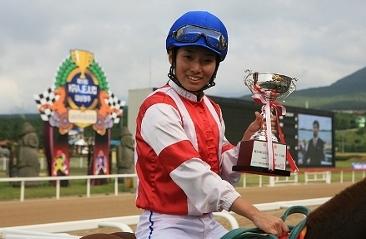
Na Yu Na after winning the Jeju Cup (KRA)

Na Yu Na after winning the Jeju Cup (KRA)

Meanwhile, down on Jeju Island Kim Joo Hee and Na Yu Na became the first women to receive jockey licenses for the pony racing there. Kim was formerly a promising athlete while Na was an Aerobics instructor. Both have become prolific winners with Na becoming the first woman to reach first 100 – and now 200 – career winners as well as landing the prestigious KRA Jeju Cup.

Na and Kim have found it easier to compete riding the Jeju ponies than their counterparts have on the thoroughbreds on the mainland and in a short time have risen to first and third in the all-time female winners list. They’ve been joined in recent years by Kim Da Young who is also winning regularly.

Back in Seoul, Yoo Mi Ra qualified in 2008. She along with 2010 graduate Park Jong Hyun have struggled to gain much of a foothold but are still working hard although Yoo did make all to win that historic race on Saturday.

2010, however, saw another desperately sad turn of events, one that shook everybody involved in racing here. Having begun racing at Seoul in the same graduation class as Lee Ae Li, Park Jin Hee moved to the new track at Busan when it opened in 2005.

She started riding winners and became well established but in 2009 her form began to dip. One Friday in March 2010, she failed to appear for her rides. After the alarm was raised, she was found dead in her apartment. She was 28.
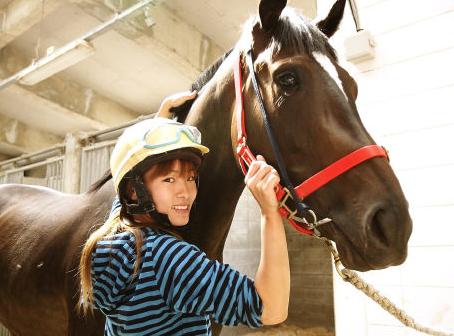
Park Jin Hee

Park Jin Hee

Park Jin Hee left behind a detailed suicide note, outlining what she believed to be unfair treatment and bullying in racing in general and that she in particular had suffered, principally from trainers. The recriminations were bitter with the jockeys and trainers unions engaging in furious rows.

Nearly three years on and for all that Busan is a much more progressive track than Seoul in terms of its raceday operation, its rules and its openness to foreigners, no Korean woman has been licensed at the track since.

Later in 2010, the Korean movie industry once more turned its attention to female jockeys as Kim Tae Hee starred in “Grand Prix” Unlike Gaksoltang, however, this was not a movie to live long in the memory.

At Seoul Lee Shin Young, who qualified as a jockey nine years earlier, sat and passed the exam needed to gain a trainers’ license. She continued riding for nearly a year until, with 90 winners to her name, a barn became vacant. On July 1, 2011 and still only 31 years old, Lee Shin Young surrendered her jockey license and became Korea’s first female trainer.
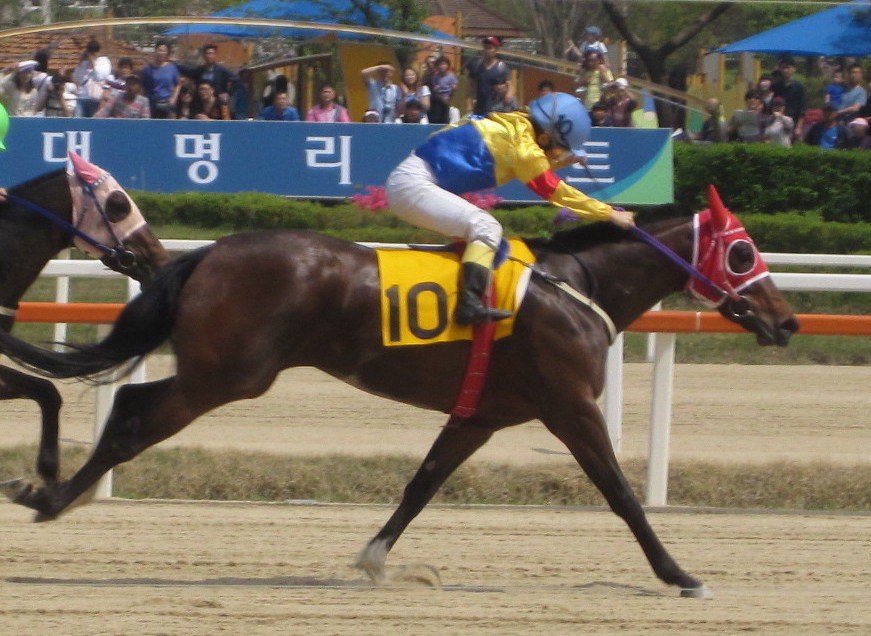
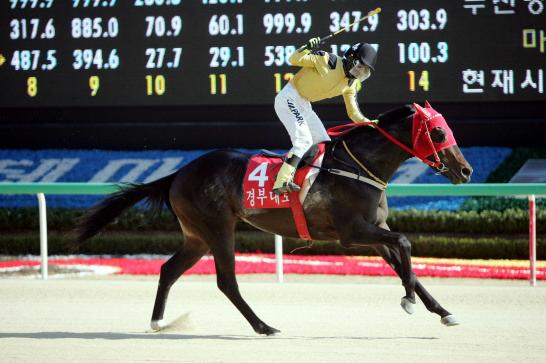
Kim Hae Sun is winning on the track

Kim Hae Sun is winning on the track

She has started well, saddling 35 winners including one in a listed race.

Her barn now has 24 horses in it, including Feel So Good, the first Korean bred horse to win a race in the US and she is thought of as one of the most promising talents on the backstretch. As a jockey she had an aggressive style which landed her in the stewards room far too often.

It is an attitude has served her well in an environment where many people were hoping for her failure.

On the track, Lee Shin Young’s protegé is Kim Hae Sun who has 80 winners to her name. A product of the Seoul Jockey Academy, which has started to churn out a series of promising young riders who have been putting their elders to shame, Kim along with 2011 graduate Lee Ah Na and 2012’s Ahn Hyo Ri, have every chance of making it to the very top.

All time List – (Winners/Rides as of January 2013):

1. Na Yu Na* – 219 (1829)
2. Lee Shin Young – 90 (895)
3. Kim Joo Hee* – 88 (1542)
4. Kim Hae Sun – 80 (1147)
5. Lee Ae Li – 53 (1062)
6. Park Jin Hee – 38 (651)
7. Kim Da Young* – 35 (450)
8. Lee Keum Ju – 19 (755)
9. Lee Ah Na – 12 (165)
10. Ahn Hyo Ri – 9 (134)
11. Lee Ok Rae – 7 (48)
12. Yoo Mi Ra – 7 (629)
13. Park Jong Hyun – 2 (110)
14. Lee Myoung Hwa –
15. Kim Seo Jin –

*Jeju Pony Racing

** There have also been three Japanese women riding in Korea and all of them have been successful. Mai Beppu rode at Seoul in 2011 while Hitomi Miyahsita rode plenty of winners at Busan in 2009/2010. Akane Yamamoto also had a successful speel at Busan in 2011/2012. Unfortunately, Akane suffered a serious injury in a paddock accident in Japan last year.

*** This post is an updated version of one published on this blog back in 2009 titled “Korean Racing Girls”. Much of the information for that original post was sourced from the excellent Korean language blog “Enjoy Horse Racing” whcih is still going strong.
Tough Win Back On Form at Seoul but Gyeongbudaero is Aced at Busan

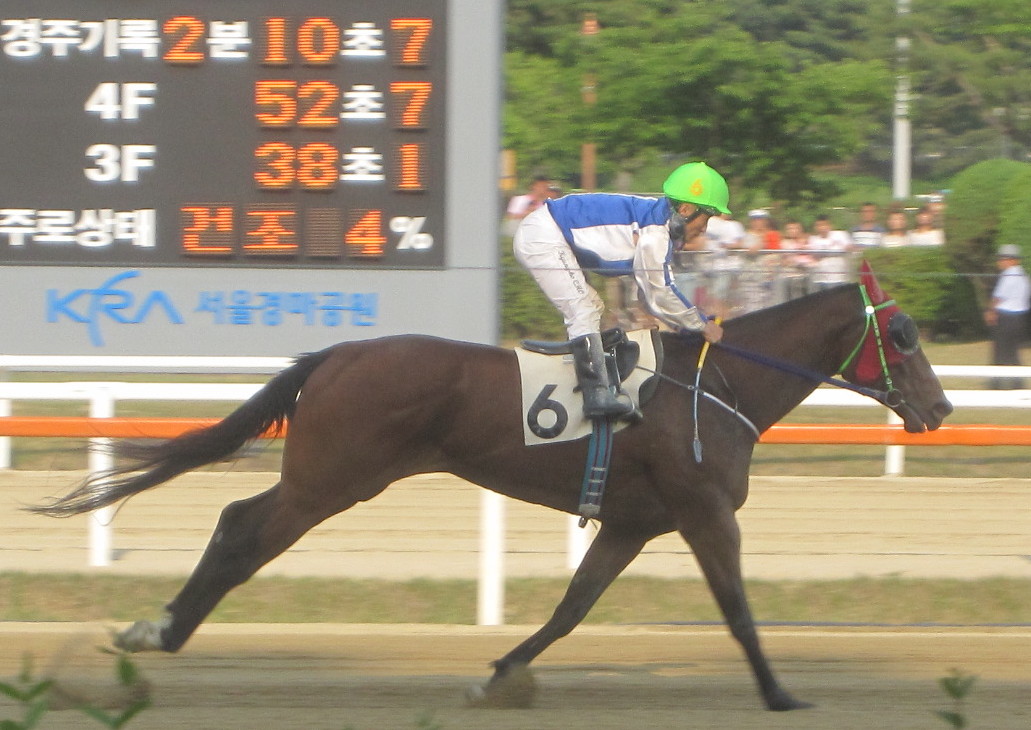
Tough Win may have lost his Grand Prix Stakes title to Gamdongubada last month but the six-year old showed he’s still the horse to beat at Seoul as he began 2013 with a routine win this afternoon.

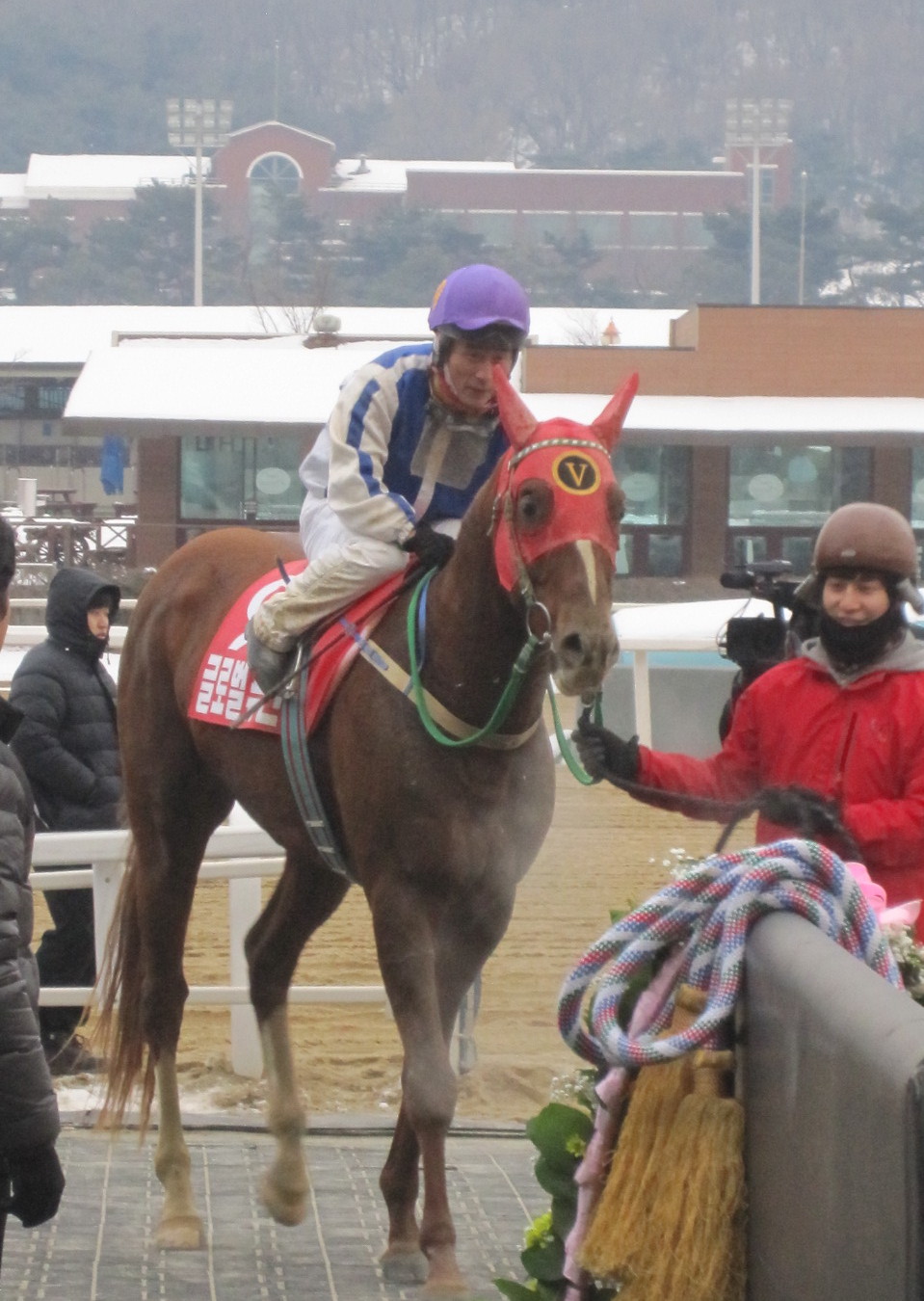
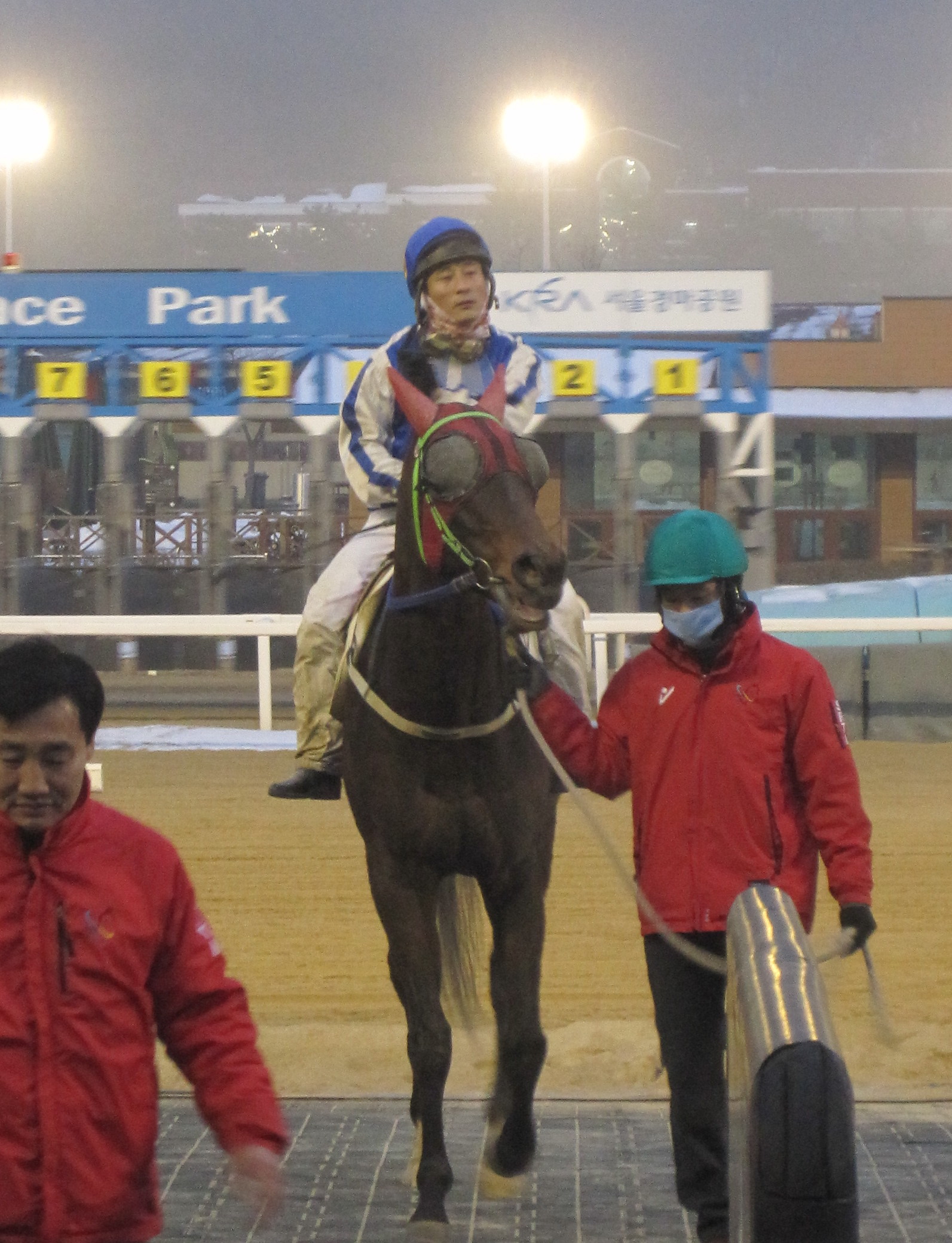
Tough Win and Cho Kyoung Ho return as winners

Tough Win and Cho Kyoung Ho return as winners

Sent off the overwhelming favourite and back at his favoured 1800 metres, Tough Win (Yonaguska) was never troubled as he coasted to a six-length victory.

60/1 outsider Imperial Girl (Imperialism) was the well-beaten second while Stakes winners Kkakjaengi (Put It Back) and Nolbu Manse (Simon Pure) trailed in fourth and fifth.

The victory was Tough Win’s 19th from his 26 starts and jockey Cho Kyoung Ho, who missed the mount in the Grand Prix due to suspension was clearly a very happy man as they crossed the line.

One race earlier, former champion filly & mare Top Point (Tom Cruiser) made her return to racing after a 6-month lay-off. And it was an encouraging performance as, while the race was won by 66/1 Brothers (Vicar) she finished a close third just a length back. Now 9-years old, Top Point still looks as though she has a season or more’s running in her.

Down at Busan, Geyongbudaero (Menifee) made his Open company debut. In the absence of the well-fancied Prince Kingdom, last year’s KRA Cup Mile winner was backed into favouritism, however, he ran slap-bang into an in-form Viva Ace (Macho Uno) who started quickly and made all to pull-off an 8-length romp.

Viva Ace has been one of the most consistent – and underbet – horses at Busan. Very rarely sent off as favourite, he has now amassed 11 wins from his 22 starts.

Also at Busan, there was success for the new combination of the track’s best Korean jockey Jo Sung Gon and only foreign trainer, Peter Wolsley. The pair combined to win the first of the co-feature races with Secret Whisper (Sea Of Secrets). The 5-year old mare has now won 8 of 19 starts.

Weekend Preview: Tough Win, Gyeongbudaero Set For Season Debuts

We didn’t have to wait too long for the big boys to come out the barn and onto the track this year as several of the country’s most well-known horses make their 2013 debuts this weekend.

Tough Win is back

Tough Win is back

Chief among them is Tough Win (Yonaguska). Now a 6-year old, he failed to successfully defend his Grand Prix Stakes title last month but should really be back to winning ways on Sunday at Seoul.

He will, however, be giving 4 kilos to Nolbu Manse (Simon Pure), who also disappointed in the Grand Prix but is a Stakes winner and did finish ahead of Tough Win in the KRA Cup Classic. What should be an entertaining race over 1800 metres is one of co-features at Seoul on Sunday.

The other co-feature sees a return to the track after 6 months of rest for former Champion Filly & Mare Top Point (Tom Cruiser). The 9-year-old will need to be close to her old best though to beat a competitive field of 14 in a handicap which, like its partner feature, will also be run over 1800 metres.

Taking on the foreigners: Gyeongbudaero (Pic: KRA)

Taking on the foreigners: Gyeongbudaero (Pic: KRA)

Down at Busan, Gyeongbudaero (Menifee) is the first of last year’s Classic winners to make his 4-year-old debut. The KRA Cup Mile winner will take on a field of imported horses including consistent winner Viva Ace (Macho Uno).

Owner Jang Kwang Hwa also owns Yeonseung Daero and took a very similar approach with him when he reached 4 years old.

Korean bred horses receive a weight allowance when running against imports and, while Yeonseung Daero has won nowhere near the number of races he would most likely have done had he just raced his compatriots, he has had more than his fair share of success and his career has been a delight to watch. Hopefully we are in for more of the same with Gyeongbudaero.

Here’s what’s happening when and where:

Friday January 11

Busan Race Park: 11 races from 12:00 to 18:00
Jeju Race Park: 9 races from 13:30 to 17:30

Saturday January 12

Seoul Race Park: 12 races from 11:00 to 17:40
Jeju Race Park: 9 races from 12:30 to 17:20

Sunday January 13

Seoul Race Park: 11 races from 11:00 to 18:00
Busan Race Park: 6 races from 12:50 to 17:00

Didyme, Five-Time Leading Sire In Korea, Has Died Aged 22

Didyme, the most successful sire in Korean racing history, passed away last month. He was 22.

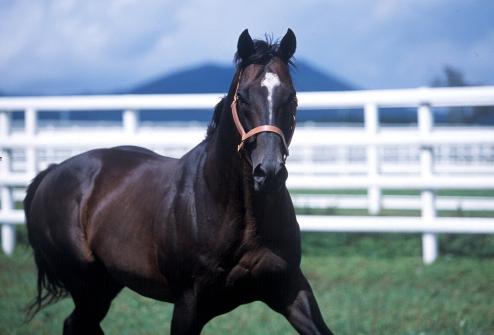
Didyme 1990 - 2012 (Picture: KRA)

Didyme 1990 – 2012 (Picture: KRA)

The stallion, who had been suffering from circulatory issues, died on December 22 after developing blood-clots while receiving treatment for leg abrasions at the KRA Stud Farm on Jeju Island. He had been in Korea for nearly 18 years.

American bred, Didyme [Dixieland Band – Soundings (Mr. Prospector)] started his racing career in France, winning his debut race at Maisons-Lafitte in July 1992. Two weeks later, he won the Group 2 Prix Robert Papin at the same track. He made just two further appearances that year in France and then spent a year away from the racetrack.

When he next appeared, it was in the USA and he would spend the remainder of his racing career in California, picking up two wins at Santa Anita before being retired after a 3rd place finish in the Morvich Handicap in November 1994. A month later, he arrived in Korea.

Didyme’s first foals hit the racetrack in 1998 and that crop led him to the Leading Sire of Three-Year-Olds in 1999. His first Leading General Sire title followed in 2000 and he went on to win four more times, most recently in 2009.

Among his progeny were Korean Derby winner Mupae Gangja and Oaks winner Jeolho Chance. He also sired Areumdaun Jilju, who won 19 out of 32 lifetime starts and the multiple Stakes winning Kwaedo Nanma who has himself gone on to become one of very few Korean bred stallions to be successful at Stud.

The Leading sire of two-year olds in 2011, the best of that crop, Nobel Pokpung, went on to finish 2nd in the Korean Derby.

A fixture in Korean racing for nearly two decades and a horse who has played a huge role in the development of Korean racing, Didyme will be greatly missed.

Here is a video of Didyme at Stud:

Weekend Round-up: Global Fusion Takes New Year Stakes While Moon Se Young Rides First Winner in Macau

The first Stakes race of 2013 was run at Seoul Race Park on Saturday afternoon and it went the way of 3/1 joint second-favourite Global Fusion (Menifee).

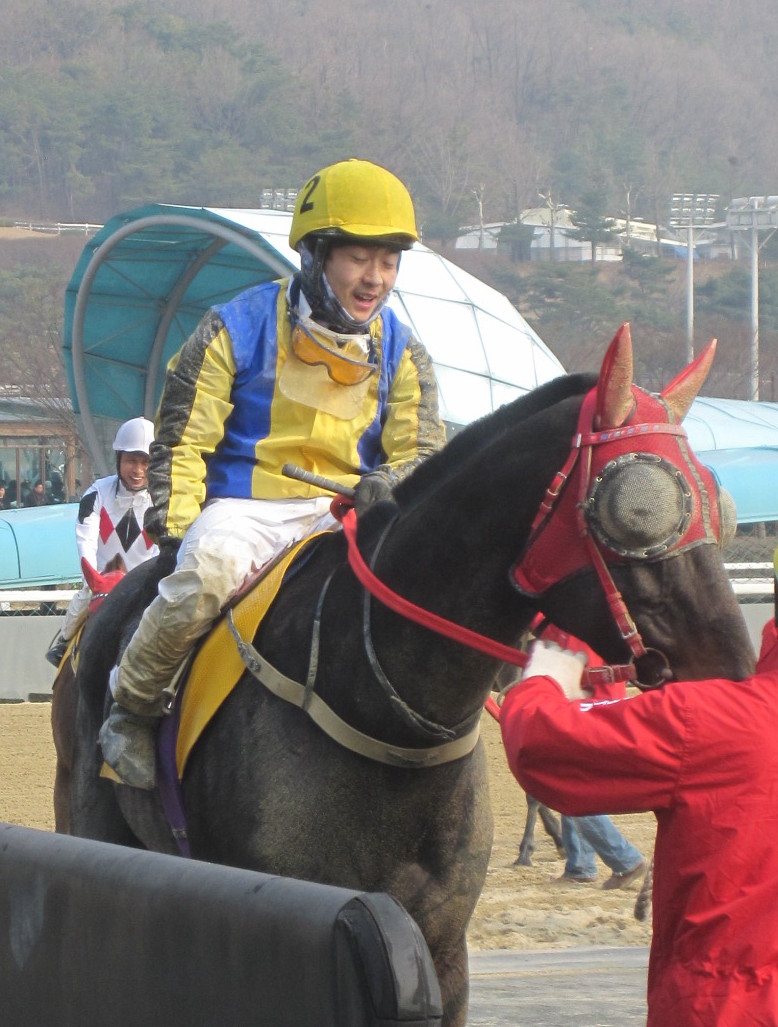
Global Fusion and Cho Kyong Ho return after winning the New Year Stakes

Global Fusion and Cho Kyong Ho return after winning the New Year Stakes

Yaho Pilseung (Exploit) was sent off as favourite but, despite jockey Choi Bum Hyun’s frantic efforts, refused to break when the gates opened, leaving himself with 20 length to make up on the field – much to the chagrin of punters. In his absence at the business end of the race, Global Fusion, who was always well-placed, got the better of Naejangsan (Menifee) in the final furlong.

Global Fusion (Menifee-Morning Red Sky) is a 4-year-old colt and moves onto 6 wins from 12 starts, qualifying for class 1 races in the process. For jockey Cho Kyoung Ho, it was a welcome return to big race form after a disappointing end to 2012.

Another jockey enjoying a good start to 2013 was Yukio Abe. The Japanese rider has had a challenging time getting rides since moving to Seoul midway through last year after a successful stint at Busan. He’s begun the year well though, landing a double on Saturday first through Sudden Fortune (Latent Heat) in race 5 and then on Appealing Jeil (Exploit) in race 13.

Winning: Seo Seung Un

Winning: Seo Seung Un

The best start of all, however, was made by Seo Seung Un. The second year jockey ride four winners across the weekend and, along with Jo In Kwen, looks set to make Champion Jockey Moon Se Young work very hard if he is to retain his title.

They will certainly have a chance to gain a big lead as Moon is spending the early part of the season riding in Macau. On Saturday, Moon rode his first winner there, partnering 22/1 chance Mr. Excellency to victory over 1200 metres on turf. As well as Moon, Boo Min Ho is also riding on a short-term license in Macau but is yet to score after 5 ides.

* One notable result from Busan on Friday was a second consecutive win for 3-year-old gelding My Key (Macho-Uno-Worldly Pleasure). The half-brother of US champion Game On Dude broke his maiden last time out by 10 lengths and on Friday, despite stepping up in class, was a 7 length winner in race 6.

Busan’s Sunday feature race was won by another horse with a famous sibling – in Korean terms anyway. Dongteuja (Montbrook-Maremaid) is the half-sister of two-time Grand Prix winner Dongbanui Gangja. She was the 3 length winner of the 1800 metre contest to record her 7th victory from 12 starts.

Weekend Preview / 2013 Fixtures

The first racing of the year in Korea gets underway this weekend with an unusual set of cards. As Jeju Island takes the week off, Busan will host 12 races on Friday and 5 on Sunday while Seoul run 14 on Saturday and 10 on Sunday.

Still a lot of snow on the ground as 2013 begins

Still a lot of snow on the ground as 2013 begins

The big race of the weekend is the New Year’s Commemorative Stakes at Seoul on Saturday afternoon. The 1800 metre race sees Sand Jjang (Forest Camp) with 5 wins from 6 starts head a competitive looking field of 13.

On Friday at Busan, My Key (Macho Uno), half-brother to Game On Dude, makes his first appearance since breaking his maiden a month ago. He steps up in class in race 6. Busan’s feature races of the weekend are on Sunday with a pair of class 1 handicaps.

It’s been a bone-numbingly cold week on the Korean peninsula with temperatures averaging around -14C since Christmas. However, while it is still set to be below freezing throughout the weekend, it shouldn’t be quite as bad as it has been.

Here’s what’s happening when and where:

Friday January 4

Busan Race Park: 12 races from 12:00 to 18:00

Saturday January 5

Seoul Race Park: 14 races from 11:00 to 17:45

Sunday January 6

Seoul Race Park: 10 races from 11:00 to 17:50
Busan Race Park: 5 races from 12:50 to 16:50

* A few people have been in touch asking about 2013 race fixtures. They have been published and I’ll be updating the fixture list as soon as I get a chance. In the meantime, the calendar can be downloaded direct from the KRA website for Seoul and for Busan.

2012 Breeding Round-Up: Menifee is Leading Sire in Korea

Menifee has been crowned Leading Sire in Korea for 2012. The 15-year old, who had three crops of foals running this year saw his progeny amass nearly $3Million more than closest rival and the stallion who beat him last year by a matter of just a few thousand dollars, Exploit.

Leading Sire in Korea: Menifee (KRA)

Leading Sire in Korea: Menifee (KRA)

Menifee, who underwent potentially life-saving surgery earlier this year, was also by far and away the Leading Sire of two-year olds and looks set to comfortably retain his general sire title next year.

For the second straight year, Vicar finished in third place while Forest Camp was a new entrant to the top ten in fourth. Volponi improved to fifth ahead of former Leading Sire Creek Cat.

Eight of the top ten sires are US bred with Japan’s Ingrandire, who was responsible for Korean Derby winner Jigeum I Sungan and Brazil’s Pico Central the only non-Americans scoring highly. The highest non-Korean based sire in the list was Werblin, whose filly Gamdonguibada won the Grand Prix Stakes, Korea’s most prestigious race in December. He was in 20th place, one ahead of Chapel Royal, who was himself imported to Korea a month ago.

Chapel Royal was one of a number of relatively well-known sires who made their way to Korea this year and will be expected to feature in this list in future. Among others were Sharp Humor and Rock Hard Ten. Already here and covering more mares than any other stallion in the past year is One Cool Cat while Officer, Whywhywhy and Aussie Delago Brom are not far behind. The Korean breeding industry is going from strength to strength.

Sadly we lost a number of stallions during 2012. Areumdaun Jilju was a top racehorse in Korea but sadly passed away before he had the opportunity to prove himself at Stud as did Gold Money. Creek Cat, who died in March, was leading sire in 2010 while Didyme, who took the crown three times consecutively from 2007 to 2009 succumbed to illness only last week (full obituary to follow). The wonderful world-travelling racehorse Running Stag was lost in June while Social Charter passed in September.

Leading General Sires in Korea 2012

1. Menifee (USA) [Harlan] – 6,927,782 (742/126 – 17%) – Gyeongbudaero
2. Exploit (USA) [Storm Cat] – 4,037,501 (942/67 – 7.1%) – Singgeureounachim
3. Vicar (USA) [Wild Again] – 3,792,051 (582/78 – 13.4%) – Wonderful Namhae
4. Forest Camp (USA) [Deputy Minister] – 3,570,626 (563/86 – 15.3%) – Cheoneun
5. Volponi (USA) [Cryptoclearance] – 3,054,200 (769/62 – 8.1%) – Royal Active
6. Creek Cat (USA) [Storm Cat] – 2,950,704 (550/57 – 10/4%) – Tongjesa
7. Ingrandire (JPN) [White Muzzle] – 2,750,101 (419/51 – 12.2%) – Jigeum I Sungan
8. Pico Central (BRZ) [Spend A Buck] – 2,502,101 (378/58 – 15.3%) – Alpha Myeongjang
9. Ft. Stockton (USA) [Cure The Blues] – 2,234,095 (543/42 – 7.7%) – Cheonun
10. Concept Win (USA) [Manila] – 2,217,618 (518/45 – 8.7%) – King Fighting

Yeonseung Daero Closes Out 2012 At Busan

Murphy Bows Out / Kim Yong Geun Stood-Down

If every horse in Korea was campaigned in the same way that Yeonseung Daero has been, the standard of the nation’s thoroughbred may just be a little bit higher.

Yeonseung Daero - (Pic: KRA)

Yeonseung Daero – (Pic: KRA)

The six-year old has won over US$ 1.5Million in prize money but it would surely have been higher were he not to almost always be put in against imported horses. You don’t have to be very good to win a race restricted to Korean bred entrants, however, the prize money is higher so there is little point going up against the (rather average but better trained) imports.

Of course, Yeonseung Daero’s owner can afford the luxury of being a sportsman – he has owned a string of top Korean horses including this year’s KRA Cup Mile winner Gyeongbudaero – and he doesn’t do it with all of them. Nevertheless, Yeonseung Daero’s career has been a joy to watch. Since completing his three-year old season, Yeonseung Daero has very rarely run in domestic company and he has more than held his own.

He had been without a win – without evene finishing in the money – since triumphing in the Listed Busan Ilbo Cup way back in February. However, today, Yeonseung Daero (Creek Cat) was right back in form, swooping late to deny three-year old US colt Grand Distinction (With Distinction) in the final few strides of the first of Busan’s co-feature race with Haengbok Dream (Lammtarra) also in close-attendance in third.

Yeonseung Daero has now won 17 of his 46 career starts. No doubt he’ll continue to compete in 2013.

Closing day for 2012 at Busan saw what was for the track, an unrecedented 14 race card. It was also the last day training in Korea for American Joe Murphy. His horse Atanarjuat was scratched out of the finale, so his last runner was filly Uddukseon, who finished 7th of 14 in race 10.

A 50/1 outsider finishing in the middle of the field perhaps describes Murphy’s time at Busan perfectly although to be fair to the trainer, he has had very little ammunition in his barn during his two years here nor has he had the original amount of time he understood he would have – and felt was required – to turn things around.

There was also more depressing news off the track as it emerged that Busan’s newly crowned Champion Jockey Kim Young Geun has been stood down pending investigation into possible breaches of racing’s integrity rules. More on this, and on Murphy’s last day, later this week.

A mixed ending to the year then. We don’t have to wait long to get going again though. Racing returns next weekend, with the feature being the New Year’s Commemorative Stakes at Seoul.

Weekend Preview: Busan & Jeju Only

There’s no racing in Seoul as Busan takes centre stage on the last weekend of 2012. Just like last week, the only racing in Korea on Friday is the ponies on Jeju Island as Busan runs a short 6 race card on Saturday and then a bumper 14 race program on Sunday.

Busan Racecourse can be a lonely place, but it's the only place to be for thoroughbred racing in Korea this weekend

Busan Racecourse can be a lonely place, but it’s the only place to be for thoroughbred racing in Korea this weekend

A few of Busan’s bigger names will be on show across the weekend. 2008 Korean Derby winner Ebony Storm, still going strong as a seven-year old, goes on Saturday, while multiple Stakes winner Yeonseung Daero makes an appearance in one of Sunday’s co-features. A host of up and coming tw-year olds, both Korean-bred and imported, will also be on show both days.

This weekend also sees American trainer Joe Murphy bow out of Korea after a challenging two years. Murphy will saddle his last runner when six-year old Atanarjuat goes in Sunday’s last race.

Friday December 28

Jeju Race Park: 12 races from 12:00 to 18:00

Saturday December 29

Busan Race Park: 6 races from 12:30 to 17:30
Jeju Race Park: 8 races from 11:00 to 17:00

Sunday December 30

Busan Race Park: 14 races from 11:00 to 17:50

Former Seoul & Busan Jockey Yoshi Aoki Has Died Aged 35

Sad news out of Japan this evening with local sports media reporting that jockey Yoshiyuki Aoki, who had two stints riding in South Korea, was found dead at his home in Yokohama earlier today.

According to the Japanese Daily Sports Online, Police believe Aoki took his own life. He was 35.

Yoshi Aoki 1977-2012

Yoshi Aoki 1977-2012

A JRA licensed jockey, Aoki rode 106 winners in Japan since his 1995 debut. He first came to Korea in 2009, spending three months riding at Seoul Race Park.

He returned to the peninsula in autumn 2010, this time to Busan where he was much more successful, landing 21 winners from 165 rides in six months on the south coast, many of them partnering with trainer Peter Wolsley.

Shortly before he was due to return to Japan in order to renew his JRA license in April 2011, Aoki suffered a bad fall at Busan which brought his time in Korea to an early end.

With his distinctive Godolphin-esque blue silks, Aoki was well liked by racing fans during his time here.

(ht @uk_maniax)