News

Creek Cat, Former Leading Sire in Korea, Dies Aged 15

Creek Cat [Storm Cat-Vivano (Island Whirl)], Leading Sire in Korea in 2010 and fourth on the list in 2011, has died. The fifteen year old stallion suffered a sudden heart-attack at Evergreen Farm on Jeju Island on March 12.

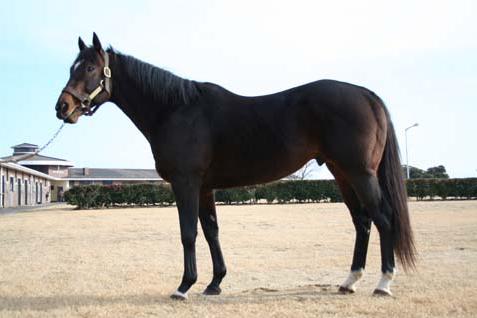
Creek Cat - 1997-2002 (Pic: KRA)

Unraced but well-bred, Creek Cat was sold from Kentucky to Korea for an undisclosed fee as a three-year old in 2000.

Joining the then-newly established Korean breeding program, he would go on to become an extraordinarily consistent producer of quality racehorses for the next ten years.

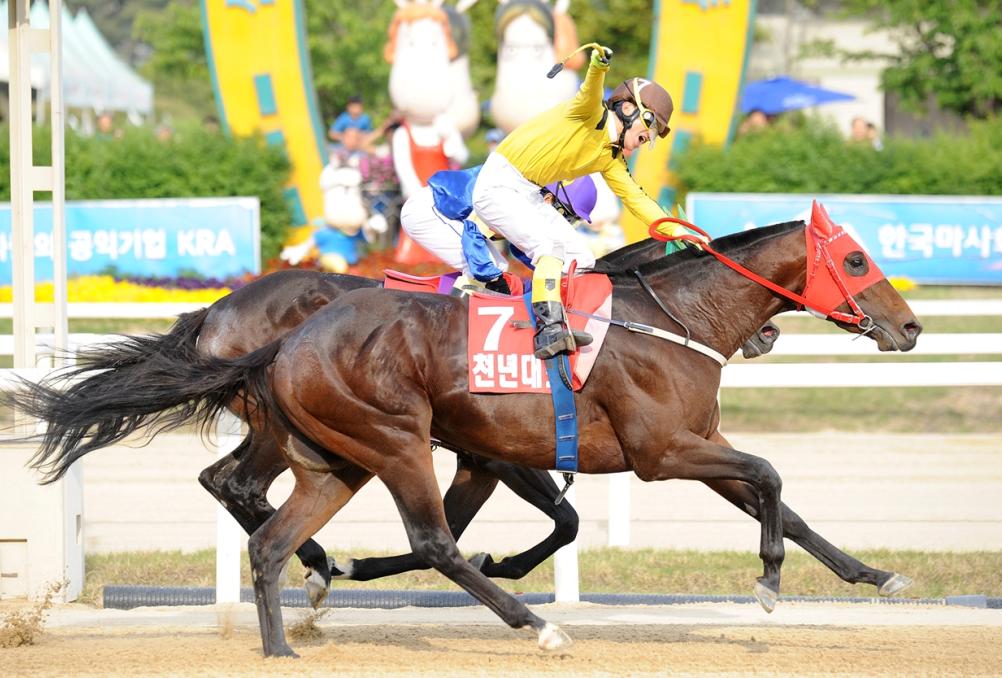
He sired a Korean Derby winner, Cheonnyeon Daero, who in 2010, helped him to the top of the Leading Sire list for the first and to date, only time. Other notable gets include the multiple Stakes winner Yeonseung Daero and 2010 Champion filly Love Cat.

Creek Cat is well represented on this year’s Triple Crown trail, with his colt Viva Cat one of the most highly rated three-year olds on the peninsula.

These days, as Korean buyers can import big names such as Vicar, Menifee, Forest Camp, One Cool Cat and Officer seemingly at will, there are fewer opportunities for untested sires in Korea. However, with the KRA eager to see a successful Korean born stallion, it is possible that Creek Cat’s line may live on. While a number of his fillies have become broodmares, Cheonnyeon Daero entered Stud this year.

Whatever happens, Creek Cat has had a major influence on horse racing in Korea over the past decade. He will be missed.

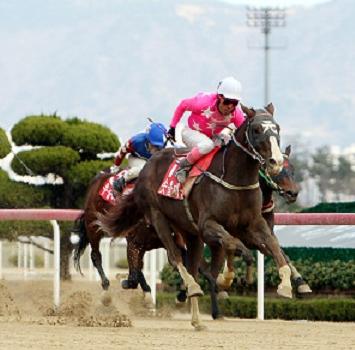
Cheonnyeon Daero wins the 2010 Korean Derby (Pic: Ross Holburt)

Japanese Jockey Narazaki Kosuke To Debut At Busan

It was Sho Ueno at Seoul last week, this week it is the turn of another Japanese jockey to make his Korean debut.

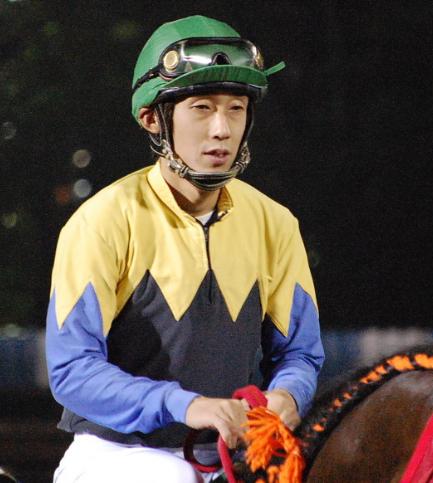
Narazaki Kosuke

Narazaki Kosuke will have his first rides at Busan this Friday as he fills the foreign jockey slot recently vacated by his countryman Eiki Nishimura.

Kosuke – as he will be known in Korea – is 30 years old and has career figures of 848 wins from 7484 rides since debuting in 1999.

An NAR (rather than the more prestigious JRA) jockey, he has most recently been based at Fukuyama Racecourse in Hiroshima.

Kosuke only has two rides on his first weekend although one is for Busan’s leading trainer, Kim Young Kwan, which is a good sign. The other is for Kim Jae Sub who is one of the biggest supporters of foreign riders at the track.

Two other foreign jockeys have also been granted temporary licenses at Busan. More on that next week.

h/t @LBshaka

Sho Time – Japanese Jockey Ueno Has a Tough Task Ahead

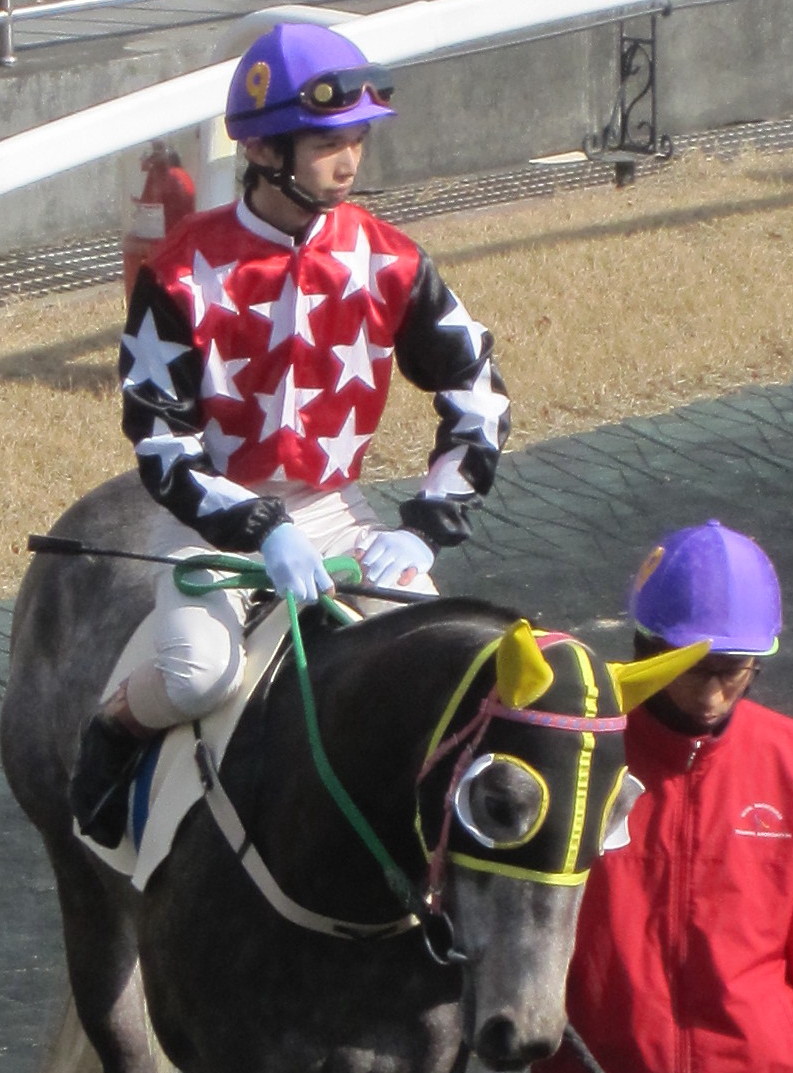
Over the weekend, Sho Ueno became the latest Japanese jockey to debut at Seoul Race Park, replacing Mai Beppu who left the track at the end of February. He has a tough task ahead of him.

Sho Ueno at Seoul

Nevertheless, the young JRA rider made an encouraging start. With just four rides across the weekend, all unfancied, he ended up with two third-place finishes and another fifth with only one being out of the prize-money.

The foreign jockeys are now the only ones who are considered “freelance”. All others are attached to trainers.

Under the jurisdiction of the Jockey Union, it used to be the case that jockeys who were retained by a trainer could only take five race rides per week but would get a salary for trackwork. Freelancers could ride as many as they wanted but would have no guaranteed salary.

The best jockeys went freelance and on average, earned three to four times that of retained jockeys. The very top ones even more.

Now all jockeys are retained by a trainer with a limit for everyone of 14 rides over a weekend. Of course, the best jockeys still get all the best rides – Moon Se Young is with Ha Jae Heung and Ch Kyoung Ho back with his old boss Shin Woo Chul.

The new system makes is, however, likely making it even harder for the foreign jockeys to get rides. When each trainer has two or three jockeys retained, they need a very good reason to employ someone else. Not a problem for Moon Se Young who gets plenty from many trainers, but not so easy for the foreigners.

And the figures don’t lie. Makoto Noda has won 8 times since arriving last June while Toshi Inoue has just 1 victory to show from his three months so far – and that was on his first day. They are poor returns but both, just like Beppu and Hiro Hamada before them, seem more than capable in the saddle but only get opportunitites to ride horses in contention for the minor placings at best.

On the surface, the success last year of Nathan Stanley and Akane Yamamoto at Busan would appear to undermine this theory. In reality, however, while both were officially the only freelancers at the track, in reality the pair acted as stable jockeys to Peter Wolsley and Kim Young Kwan in all but name. It’s unlikely a visitor to Seoul will get similar opportunities any time soon.

With Cho Kyoung Ho sidelined since January, Moon Se Young has dominated the early part of the Seoul season. The breakthrough of the year is Seo Seung Un, still a first year apprentice but fourth in the standings:

2012 Seoul Jockey Championship (Up to March 12)

1. Moon Se Young – 33
2. Oh Kyoung Hoan – 16
3. Park Tae Jong – 14
4. Seo Seung Un – 12
5. Jo In Kwen – 11

Akane is Famous!

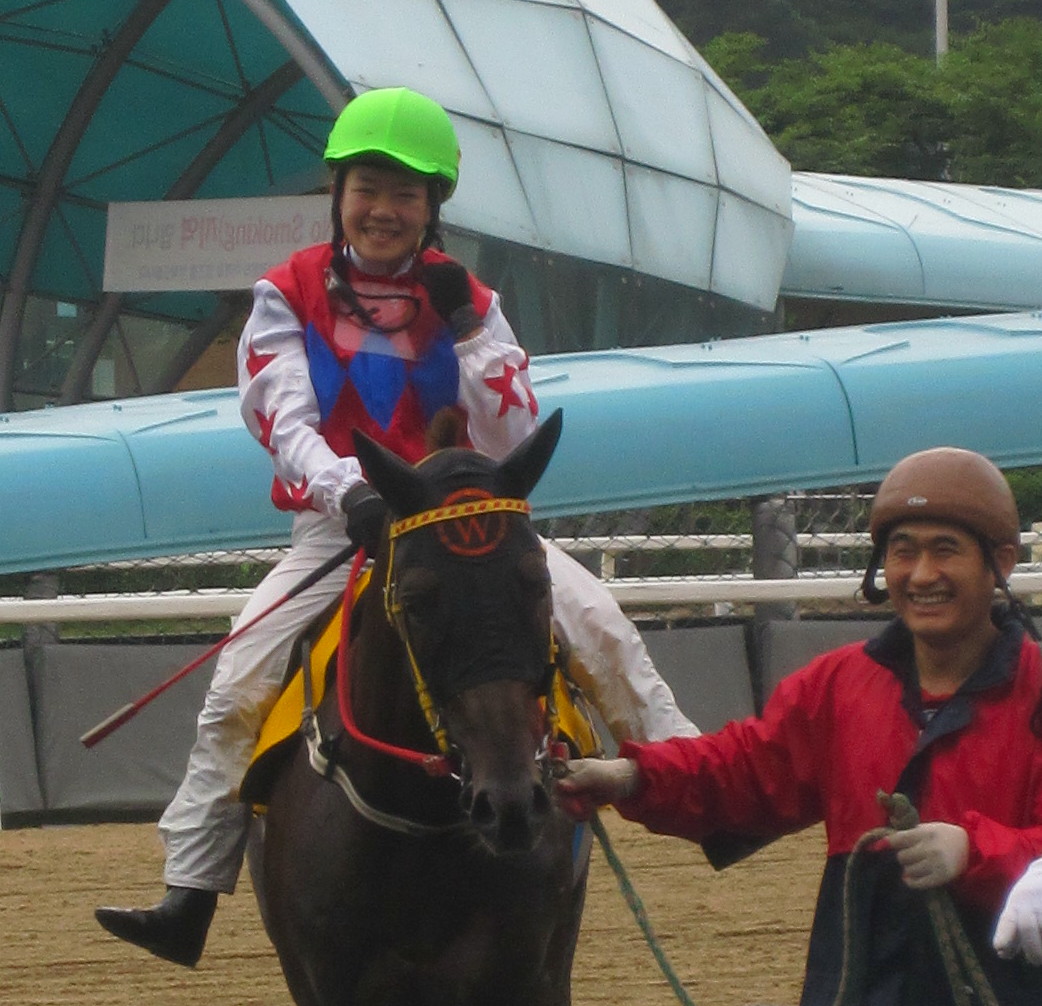
Japanese Racing TV has produced a feature on jockey Akane Yamamoto as she comes to the end of her first year riding at Busan.

It’s all in Japanese but well worth a look both for the quintessentially Japanese graphics at the beginning and also for the trackwork shots of Busan:

*h/t @uk_maniax

Before coming to Korea, Kyoto-native Yamamoto had a spell riding in New Zealand.

In Korea for being the current jockey of Mister Park, who last year set a Korean record of 17 consecutive wins. She has won twice on him and rode him to second-place behind Tough Win and ahead of Smarty Moonhak in last year’s Grand Prix Stakes at Seoul Racecourse.

Her total record in Korea to date is 34 wins from her total 217 rides.

Bye, Mai – Japanese Jockey Change at Seoul

Mai Beppu’s time riding in Korea has come to an end. The Japanese jockey has held a license at Seoul Race Park for a full year but will return to Japan at the end of February. She will be replaced by young JRA jockey Sho Ueno.

Yes!! I'm going home! - Mai Beppu

Beppu first rode in Korea in the “International Lady Jockey Invitational” – an event that mercifully for all sorts of reasons hasn’t been repeated – in Busan in 2009, finishing third in the race behind fellow Japanese Hitomi Miyashita who herself went on to spend a successful year riding full-time at Busan.

Beppu arrived in Seoul last March and, after getting injured on her first weekend went on to have a reasonably successful time at the track – at least by the usual standards of the thankless task that is being a foreign jockey riding at Seoul. She ended with 13 wins over the year, with a quinella strike rate of 9%. Like all other foreign jockeys at Seoul, while she did get plenty of rides (around 300 in total), their quality was lacking.

Always smiling, the 24 year-old Mai was popular with punters, trainers and other jockeys (some more than others) and will, with any luck, continue to have a successful career in future.

Mai’s replacement at Seoul is 26 year-old Sho Ueno. Based at tthe JRA’s Ritto Training Centre, Ueno debuted in 2004 but has only managed 38 winners from 1,236 rides in Japan. He joins Makoto Noda, who is coming to the end of his license and Toshihiko Inoue as the only foreign riders at Seoul.

Akane Yamamoto is currently the only foreign jockey at Busan although the suspended Nathan Stanley is still licensed. Sho Ueno is on an initial 4 month license starting March 1.

60/1 Deep Desire Gives Joe Murphy Unlikely First Winner Of 2012

A fortnight ago, it took a 50/1 winner to get Aussie Peter Wolsley off the mark for 2012. Today it was the turn of the only other foreign trainer in Korea, American Joe Murphy, to get his first of the year with an even longer priced victor as Deep Desire swooped late to land the feature race at Busan.

Sent off at odds of 64/1 and under jockey Lee Hee Cheon, Deep Desire hit the front deep inside the final furlong to take a half-length win from fellow outsider Money Tree while early leader Tough Tiger battled on for third.

Deep Desire (Jump Start) is a five-year old gelding who, at one stage during his three-year-old season, looked to heading for the very top. Instead he has become a solid handicapper and today recorded his eighth win in twenty-eight lifetime starts. His last victory came in September last year – a success that was until today, his trainer’s most recent too.

The win is just Murphy’s eighth in his eighteen months in Korea and while it was, in terms of prize-money, the trainer’s biggest in Korea, it may be that the morale boost to his barn at getting off to a great start for the year ends up being worth far more than the money.

As an interesting footnote to the win, Deep Desire’s owner, Yoo Su Tae, has three horses stabled with Murphy as well as others elsewhere. Remarkably one of those others is second-placed Money Tree. One wonders if, in addition to the prize-money, the owner had a few won on the exacta which paid out at 2544/1.

Retiring Cheonnyeon Daero Honoured At Busan

Derby Winner Was Chief Rival To Dangdae Bulpae

Cheonnyeon Daero, winner of the 2010 Korean Derby, was honoured with a retirement ceremony at Busan Race Park this afternoon. Such a ceremony is a rare occurrence in Korea racing and an honour only afforded to Classic or multiple Stakes winners.

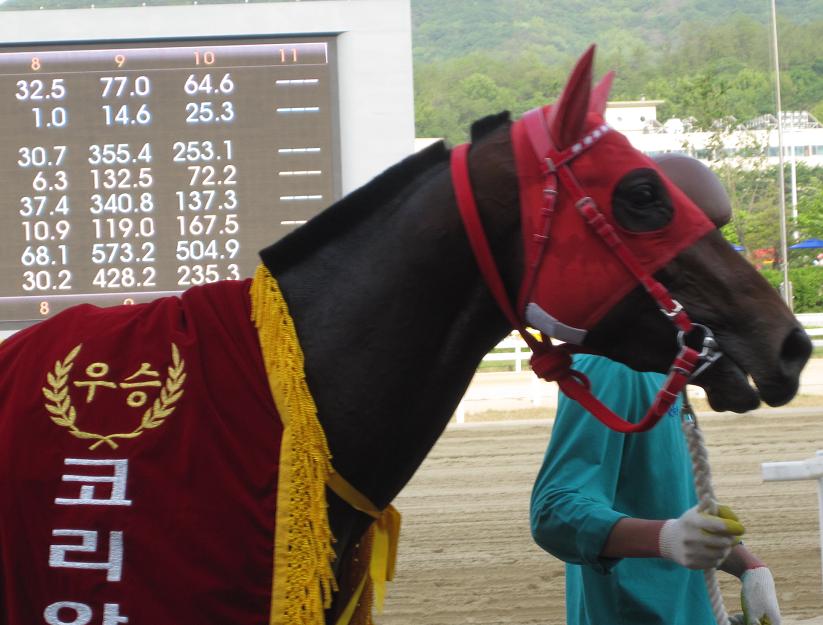
Cheonnyeon Daero wins the 2010 Derby (Pic: Ross Holburt)

While his Derby win was impressive, Cheonnyeon Daero [Creek Cat-Doneitmyway (Northern Flagship)] will perhaps be remembered more for what he nearly won – and his rivalry with the horse that usually beat him – rather than for what he did win. Of his 28 starts, he only won 7 times but finished second on a remarkable 14 occasions, including the President’s, Minister’s, and Ttukseom Cups, plus the KNN and the Owners’ Trophies, with Dangdae Bulpae the horse beating him in all but the latter.

Cheonnyeon Daero

The rivalry between Dangdae Bulpae and Cheonnyeon Daero has been one of Korean racing’s most enduring features over the past two years. They faced each other seven times, always in Stakes races with Dangdae Bulpae getting the better of his rival on five occasions.

However, when they started out as three-year olds it was different. Cheonnyeon Daero finished third in the KRA Cup Mile, the opening leg of the Triple Crown yet was still sent off as a 28/1 outsider behind favourite Money Car. We all know what happened next as Money Car got sucked into an early speed duel with the sprinter Seonbongbulpae and tired in the home straight, allowing Cheonnyeon Daero to catch and pass him in the final few strides. Dangdae Bulpae was back in third.

Nemesis: Dangdae Bulpae and Jo Sung Gon

Park Geum Man rode him that day and would go on to partner him in all but one of his seventeen subsequent starts. Australian trainer Peter Wolsley, who acted as Park’s mentor, told the Korea Times that even though it was for a different trainer, Park’s Derby win was his proudest moment in Korean racing.

By the time the third-leg of the Crown rolled around, the Minister’s Cup in October, the tables had turned. Dangdae Bulpae was the sixth length winner and Cheonnyeon Daero’s time in his shadow had begun.

After the Derby, Cheonnyeon Daero only won four more times but he was consistently placed, most often second. He actually crossed the line first in the Owners’ Trophy last September, only to be demoted to second. In a strange twist, the horse that Cheonnyeon Daero interfered with was the Peter Wolsley trained Khaosan. Khaosan’s promotion gave Park’s mentor his first Korean Stakes win.

Cheonnyeon Daero’s final race was the Grand Prix Stakes at Seoul in December, after the decision had already been made to retire him. For the first and only time in his career, he finished outside the money. He will be retired to Stud.

Cheonnyeon Daero’s Derby:

Top Sire Menifee Undergoes Surgery

The Korea Racing Authority (KRA) has announced that Menifee, one of the star Stallions of the Korean breeding program, underwent a two-hour operation on January 12 and had two stones removed from his urinary tract.

Menifee (KRA)

The sixteen-year old had been displaying symptoms of a Urinary Tract Infection since mid-December. According to the Korean Racing Journal, the KRA consulted with overseas specialists before deciding upon the surgery and flew in two Equine Vets from the USA to take part in the operation at the KRA Stud Farm on Jeju Island.

Initial signs are that the operation was successful and, smooth recovery permitting, Menifee is tentatively scheduled to begin covering mares in late April.

Menifee [Harlan-Anne Campbell (Storm Cat)] finished second in the Kentucky Derby and Preakness Stakes in 1999. A $3,000,000 purchase by the KRA in 2006, he finished second in the Leading Sire list in 2011, despite only having two crops of foals on the race track. His chief-earner, filly Useung Touch, won the Korean Oaks.

“This is a Korean horse. It doesn’t understand Western ways”

That was definitely the money-quote from John Glionna’s Los Angeles Times profile of Busan trainer Joe Murphy, a report which reflects the reality of the challenges faced by those brought in by the Korea Racing Authority (KRA) to implement its oft-stated goal of “Internationalization.”

Over the years, I’ve written on this topic several times with regard to, amongst other things, Korean horses racing overseas and foreign jockeys coming to Korea. But what is internationalization, why are they doing it and why isn’t it working?
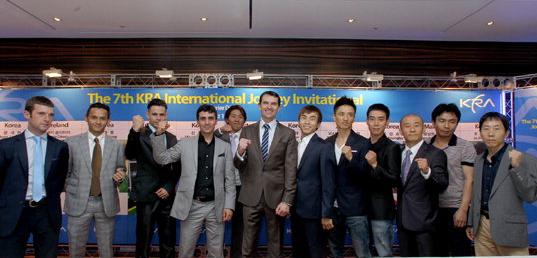
Competitors pose prior to last year's International Jockey Challenge in Seoul

The KRA started the process in 2004 with a dubiously named “Five-Year Plan”. That year they inaugurated a series of exchange races with other Racing Authorities and also established an annual International Jockey Challenge. The aim was, by the end of the five years, to regularly have Korean horses going overseas to compete while welcoming international competitors to Korea.

There were a number of reasons for doing this but one key factor was the desire of the KRA (or more specifically, the Ministry of Food, Agriculture, Fisheries and Forestry under whose jurisdiction the KRA is – it has always been a matter of debate as to how interested the KRA really is in changing things and how much is forced upon them) was to improve the domestic image of horse-racing, making it a vital part of the economy.

Racing has a near-monopoly on legal gambling and as such has a dreadful public image and is persistently the target of populist anti-gambling groups who seek to impose even tighter restrictions on racing. Under the auspices of the National Gaming Control Commission, this has involved the enforced closure of the KRA’s internet and telephone betting services and an order for it to close several of its Off-Track Betting sites.

To fight this image, the KRA has become one of the largest charitable organizations in the country, has constructed family leisure parks at its tracks to get families in and sponsored the production of racing movies such as “Gak-seol-tang”, “Grand Prix” and “Champ”. Alongside this, they are fully aware of the importance of National pride in Korea. An internationally competitive racing industry would be a secure industry.

The KRA set about trying to improve its breeding, training and riding. The results have been mixed. The first aim has been successful. The Jeju Stud Farm was already operational but the addition of the Jangsu Farm in 2007 (with a foreign Manager), the lifting of restrictions on spending on broodmares and a bigger budget to import stallions. Korea now has an impressive Stud line-up with the calibre of foals much better than it was a decade ago and the importers know what they are doing. However, for the most part, when they reach the track they’re still slower than the very average two-year-old imports – Korean buyers are still only allowed to spend $20,000 on importing a colt for racing.

That’s where the training comes in and that’s where the problems start. Training and conditioning here is substandard. Joe Murphy is only the second foreign trainer after Peter Wolsley who has just completed his fourth year at Busan. The Australian is finally in command of a decent string of horses but at 18 months in, Murphy is in roughly the same position as Wolsley was at the same point.

Wolsley stuck it out and to his credit, Murphy despite the difficulties, speaks very highly of his Korean co-workers and says he enjoys life at Busan and intends to stay to make a success of things. However, it is fair to say that a system which requires three years of toil for little reward isn’t likely to attract much talent going forward.

Why is it like this? Why doesn’t the horse “understand western ways”? A lot comes down to money and control. The KRA administers racing but it would be quite a stretch to say they control it. There are four sets of license holders; Owners, Trainers, Jockeys and Grooms. These groups – and the organisations that represent them wield the real power. With prize-money so high, as far as many are concerned the system is not broken and doesn’t need to be improved.

At Busan, it is only the owners who can change things. It was owners who wanted their horse ridden by Japanese jockey Toshio Uchida and now it is owners who want Peter Wolsley to train their horses. When they win, they can start to influence the locals in a postive way as happened with the introduction of pacifiers as approved racing gear a couple of years ago; the first two horses home in the Grand Prix Stakes, Tough Win and Mister Park, were both wearing the equipment that Wolsley introduced to Korea.

Interestingly, it is at Seoul, where hostility to foreigners is such that not a single trainer has been invited and where no foreign jockey can be said to have been a success, where there has been visible progress and that has come in the saddle. The KRA’s Jockey academy, headed by a South African, has been turning out some good young riders. At Busan, Murphy points out the problem of younger jockeys showing far too much respect for their elders but at Seoul, if the likes of Jo In Kwen, Jang Chu Yeol and Seo Seung Un respect their elders then they have a funny way of showing it. All are genuine talents but there is no-one similar at Busan.

There have been some improvements, for instance, The KRA’s English language webpage has got much better over the past couple of years and a foreign steward is a permanent fixture on the panels at both Seoul and Busan (although they have stopped producing English language reports).

Korea also exported some racehorses to Malaysia last year, a first for the industry. Additionally, like they’re doing with young jockeys, the KRA is sending groups of trainers abroad – not only to the US but also to Australia and the UK (with no raceday medication allowed in Korea, it is thought these two countries are better options for trainers).

However, for every step forward in Korean racing, there are two steps back. A foreign Master Farrier left Seoul last October after being frustrated in his attempts to improve the generally poor shoeing quality of racehorses here. The local farriers have a good union and a good income. Meanwhile horses continue to have bad shoes.

Then again, the Korean horses probably wouldn’t like or understand those western shoes.
2011 – The Foreigners in Korea

Jockeys, Trainers & Stewards Flying Various Flags

The KRA is still, officially at least, plugging away with its “Internationalization” project. And while part of that project involves sending Korean riders and trainers overseas, another involves bringing foreign racing professionals to Korea.

International staff work in the Korean breeding program on the stud farms in Jeju and at Jangsu in Jeolla Province. There is a foreign handicapper at Busan and there are Americans on the Stewards’ panels at both thoroughbred tracks; sought after positions those were too given the ongoing difficultes in the thoroughbred racing industry worldwide.

Soseuldaemun and Toshio Uchida win the KRA Cup Mile (Picture: KRA)

It’s on the track though where the most visible foreign representation is. Two foreign trainers were joined throughout the year by a total of nine foreign jockeys, eight of them Japanese.

2011 started with “Mr. Pink” Toshio Uchida ruling the roost in the Busan weighing room. By the time his license expired in August – and after pleading from the local Jockey Union, it wasn’t renewed, he had racked up 58 winners including the KRA Cup Mile. Such was his popularity among punters we called him the most popular Japanese man in Korea.

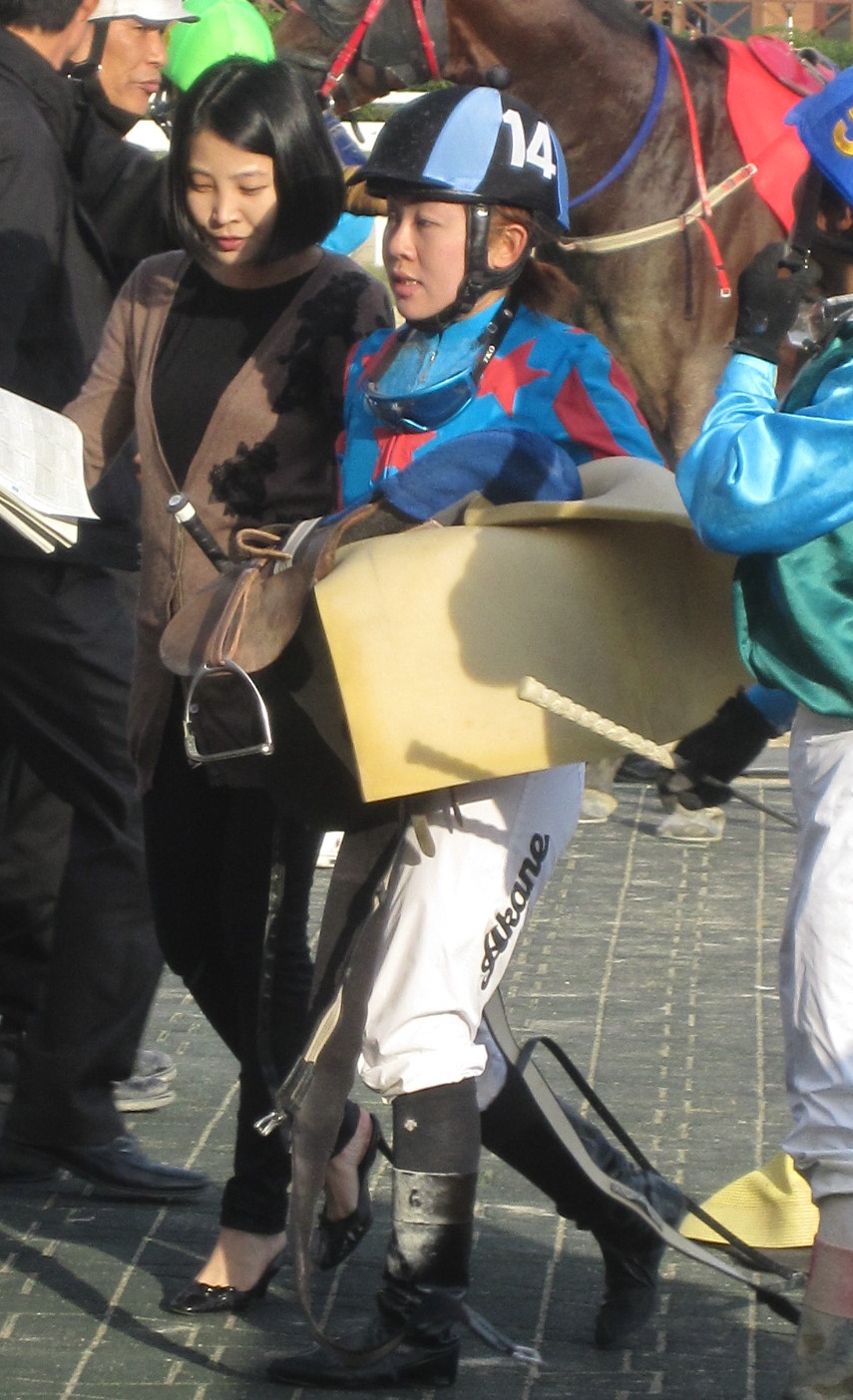
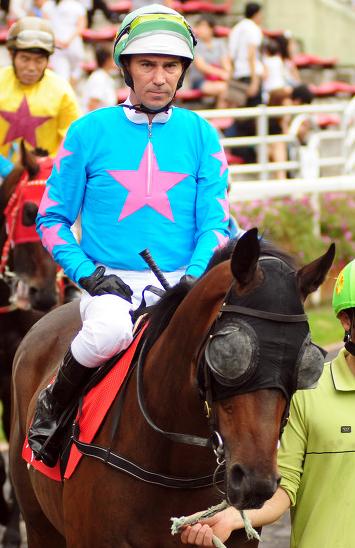
Akane Yamamoto

Uchida was joined at Busan in June by Akane Yamamoto. The 28-year-old became the first woman to ride at the track since Hitomi Miyashita left last year. Akane qucikly started winning and found herself in the unlikely position of becoming the second foreign rider (after South African Martin Wepner) to be stable jockey to Busan’s top trainer Kim Young Kwan.

Trainer Kim hasn’t always had the best of reputations and he’s not always been a fan of foreign jockeys but he likes winning and he likes Akane. Through this partnership, Akane found herself making Korean racing history as she rode Mister Park to his record-breaking 17th consecutive win before just missing out in the biggest race of all as the pair finished second to Tough Win in the Grand Prix Stakes.

Only Non-Japanese: Nathan Stanley (KRA)

A foreign rider will get a chance at Busan as, Jo Sung Gon and a couple of noteworthy exceptions aside, the competition – and the Union – is not very strong. It’s a different matter at Seoul. Mai Beppu has been the most successful of the four Japanese jockeys to ride in the capital this year.

The only non-Japanese foreign rider this year was Australian Nathan Stanley. Unlike some who have gone before, Stanley brought the right kind of attitude – tough and self-confident but not egotistical – to succeed in Korea. And with Aussie trainer Peter Wolsley crying out for a rider to convert his near-misses into winners, the timing was perfect. Stanley won the Owners’ Cup (after a disqualification) on his first mount in Korea and went on to score 17 winners with a quinella percentage of 39%. However, a three-month ban incurred for careless riding brought a premature end to his 2011.

Foreign Jockeys in 2011: Name/Time in Korea / Winners (Track)

1. Toshio Uchida (Jan-Aug) 58 (Busan)
2. Akane Yamamoto (Jun-Dec) 28 (Busan)
3. Nathan Stanley (Sep-Dec) 17 (Busan)
4. Mai Beppu (Mar-Dec) 13 (Seoul)
5. Yoshi Aoki (Jan-Apr) 7 (Busan)
6. Eiki Nishimura (Oct-Dec) 7 (Busan)
7. Makoto Noda (Jun-Dec) 6 (Seoul)
8. Hiro Hamada (Jan-Jun) 2 (Seoul)
9. Toshihiko Inoue (Dec) 1 (Seoul)

Stanley’s win on Khaosan in the Owners’ Cup was a standout moment in a standout year for trainer Peter Wolsley. Earlier in the year, he scored his 100th winner and ends his fourth year in Korea in fourth place in the Busan Trainer Championship.

It took Wolsley two years to really become established. American Joe Murphy is at the 18 month mark and continues to work hard without the reward he perhaps deserves, with seven winners in 2011. His string is gradually getting bigger but still lacks quality. Maybe 2012 will be the year he makes his breakthrough.

In the Stewards’ room, Brett Wright headed home to Racing Victoria while James Smith and Billy Williams joined. Of course the year started with the tragic news from Australia that James Perry, who made many friends in Seoul, lost his life in the Queensland floods. He remains fondly remembered in Korea.

As we head into 2012, another Australian trainer is reportedly considering joining Busan in March while the KRA continues to advertise for qualified foreign jockeys – any takers should click here. Just remember to choose Busan.