Internationalization

Korean Classic Winners Speedy First & Major King In USA For 2014 Campaign

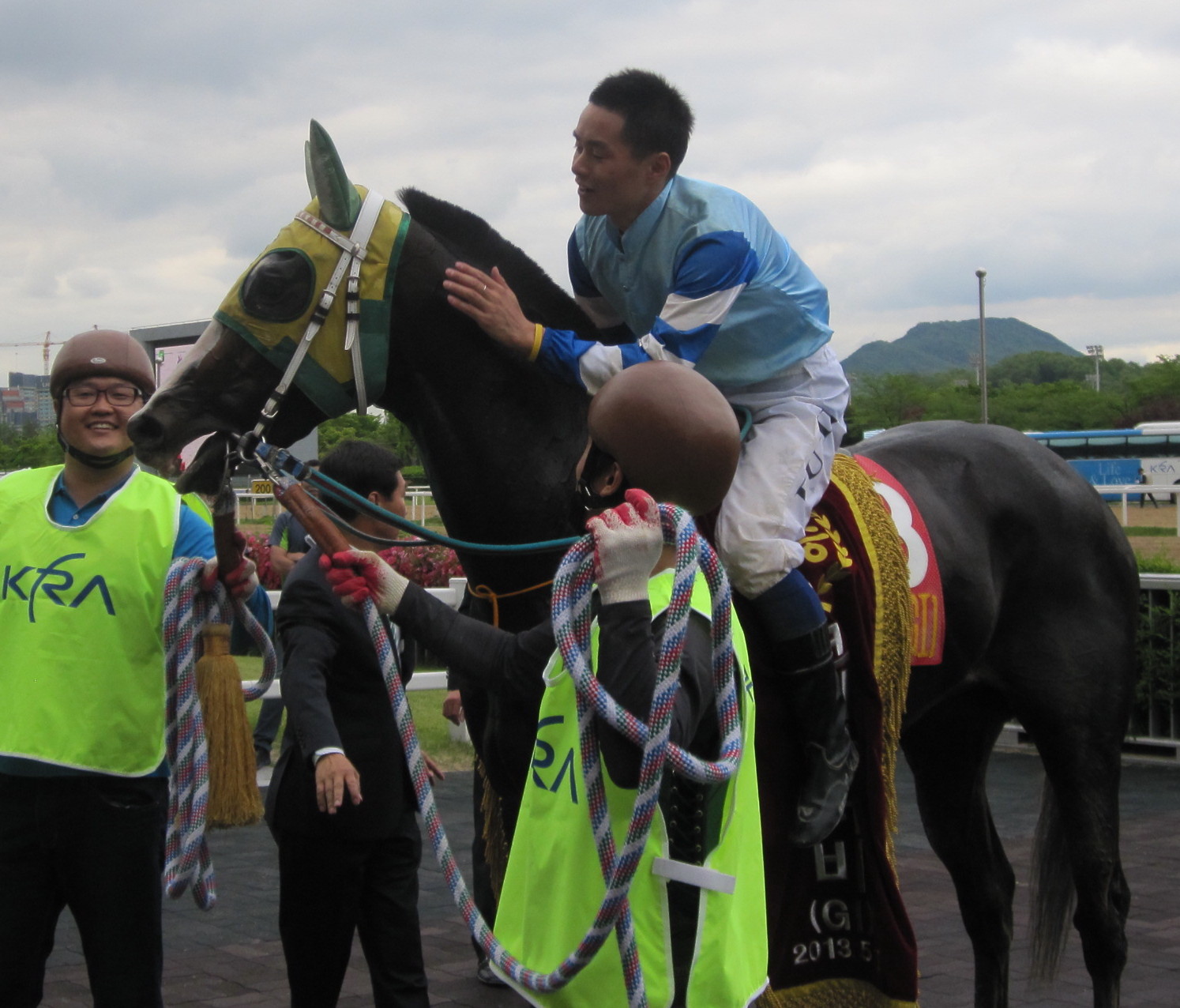
Korean Derby and Oaks winner Speedy First and Minister’s Cup winner Major King are in the United States where they will be trained and raced for at least the first part of the year.

Stateside: Korean Derby and Oaks winner Speedy First

Stateside: Korean Derby and Oaks winner Speedy First

The pair, who between them won 3 of the 4 Korean Classic races in 2013, arrived at JFK Airport last week and are currently in quarantine. They are then expected to transfer to Laurel Park in Maryland to enter training.

Speedy First [Menifee – Speedy Deedy (Victory Gallop)] is a 4-year-old filly who has won 6 of her 10 starts to date. In May last year, she became the 5th filly to win the Korean Derby and added another classic in August with a comfortable win in the Oaks at Busan.

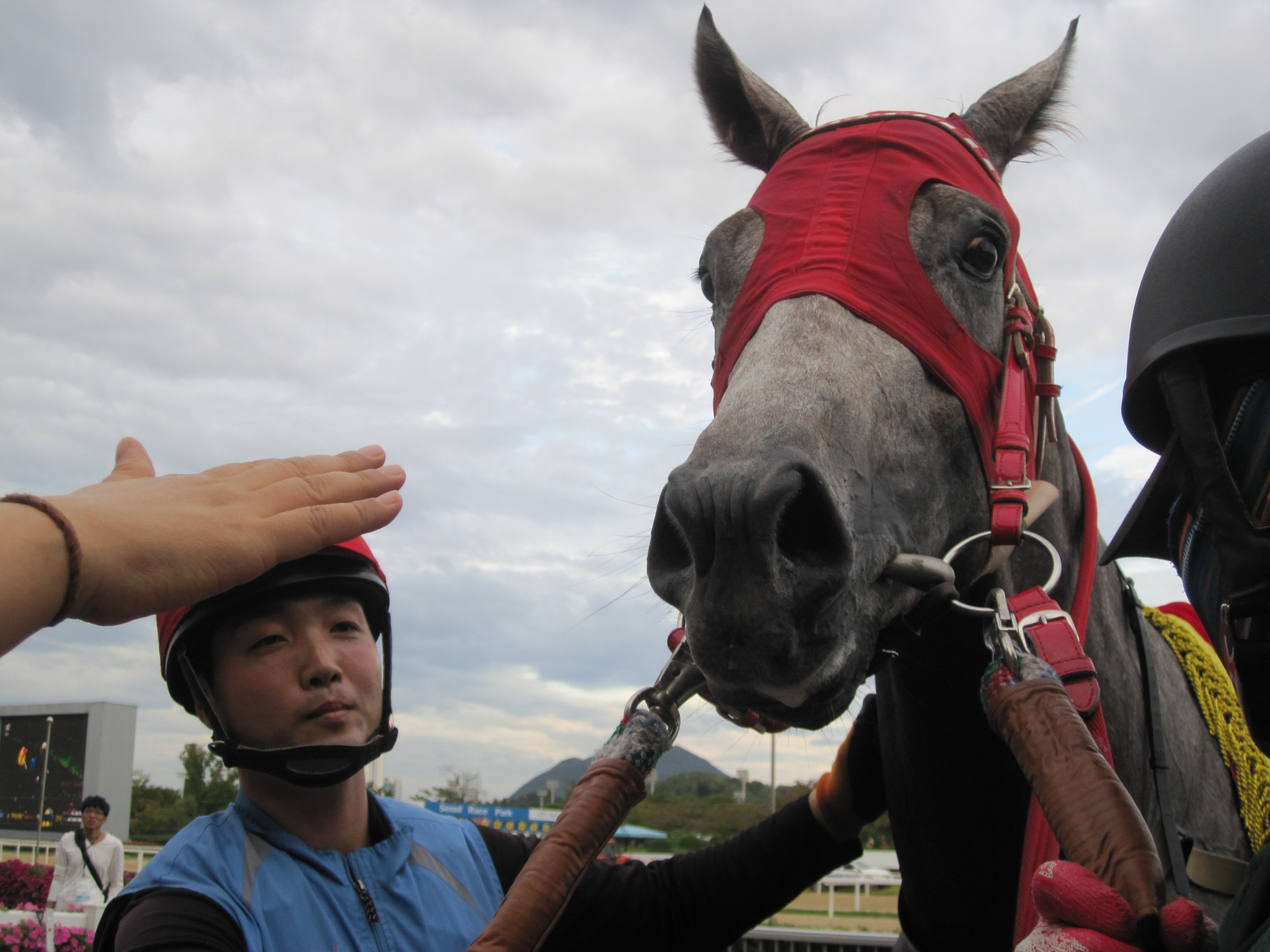
Major King [Pico Central – Still Golden (Gold Fever)] was third in the Derby, but had his revenge in the Minister’s Cup, the final leg of the Triple Crown when he scored a 2-length win. An out of sorts Speedy First finishing last that day.

He might have fluffy ears, but Major King is a Classic winner. he is also in the US

He might have fluffy ears, but Major King is a Classic winner. he is also in the US

Neither finished the 2013 season especially strongly, Speedy First slumping to another defeat in the Gyeongnam Governor’s Cup while Major King was an also ran in the President’s Cup, the effects of a long season being blamed for both.

They are by no means the first Korea bred horses to run Stateside. In 2008, a horse called Pick Me Up went to the US and ran – extremely unsuccessfully – at Charles Town, Laurel and Delaware Park. A year later, 2007 Korean Oaks winner Baekpa also went across and ran similarly poorly.

That prompted the Korea Racing Authority to change their approach a little and to send a small group of yearlings and 2-year-olds to Florida each year in the hope of proving their belief that it wasn’t necessarily that Korean-bred horses could compete if trained the same way as their American counterparts.

They got their reward when Feel So Good won a race at Calder in September 2012. Now they’ve decided to try again with established horses.

If all goes to plan, Speedy First and Major King will make their American debuts in April. We’ll be following their progress.

Speedy First winning the 2013 Korean Derby

Major King winning the 2013 Minister’s Cup

French Jockey Jerome Lermyte Debuts At Busan Friday

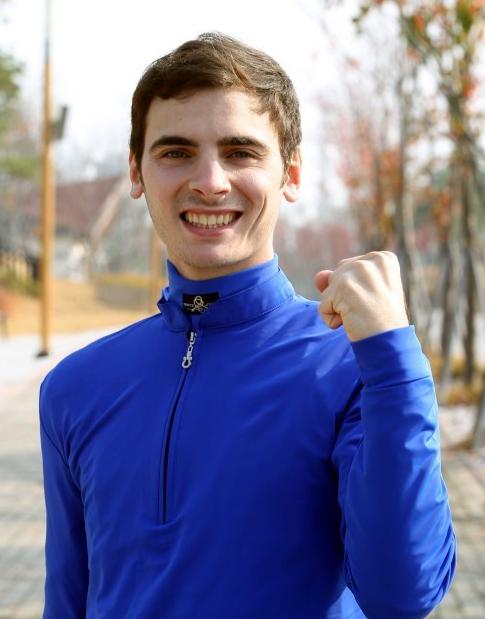
There’s another addition to the foreign jockey ranks at Busan as French rider Jerome Lermyte makes his Korean debut on Friday.

Jerome Lermyte gets his Korean pose on (Pic: KRA)

Jerome Lermyte gets his Korean pose on (Pic: KRA)

The 24-year-old Lermyte may be young but he’s certainly well-travelled.

He started as an apprentice in France in 2005 and in his homeland he’s won several decent races including three “Tierce Cups”, the Derby de Lyon, the Grand Prix De Lyon and the Derby D’Angers.

Lermyte’s career also took him to Germany, Mauritius, the USA, Qatar and Kuwait before spending 2 years in Macau. Earlier this year, he had a stint riding in Western Australia.

With Ureshi Katsunori departing, Lermyte joins the Japanese pair of Joe Fujii and Masa Tanaka and Britain’s Darryll Holland as Busan’s overseas riders. Japan’s Ikuyasu Kurakane and Brazil’s Fausto Durso are the only foreign riders at Seoul.

Lermyte, who has a racing weight of 51kg, will have his first ride on Lethal Yeowang in Race 6 on Friday.

Fly Top Queen, Watts Village, Full Moon Party Settle In At Ohi

After spending a week at a quarantine facility 200km north of the Japanese capital, Fly Top Queen, Watts Village and Full Moon Party have finally arrived at Ohi Racecourse in Tokyo.

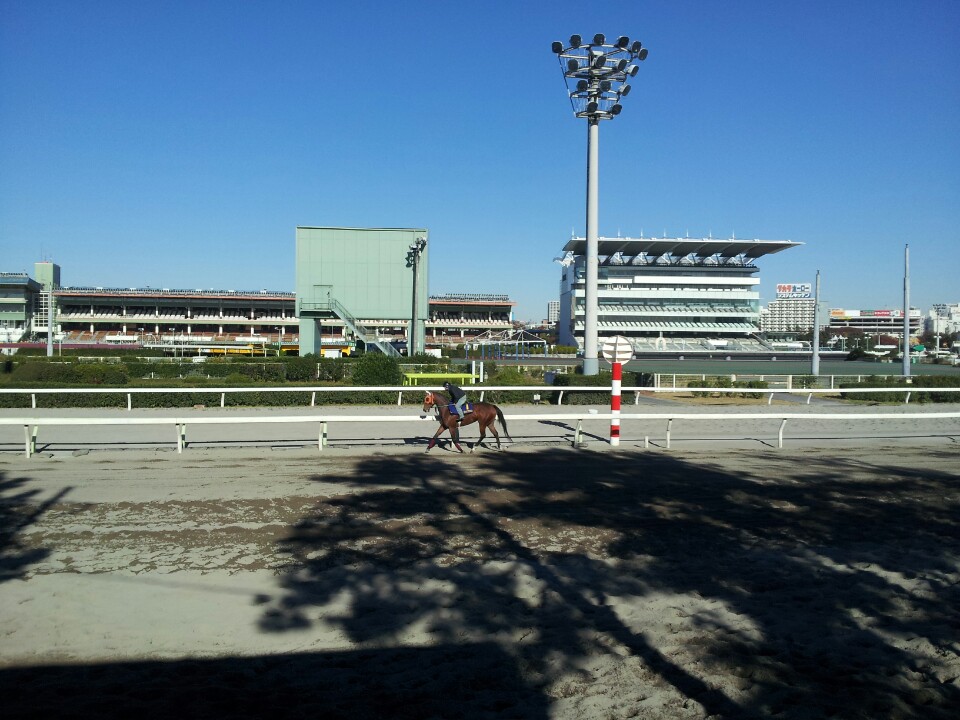
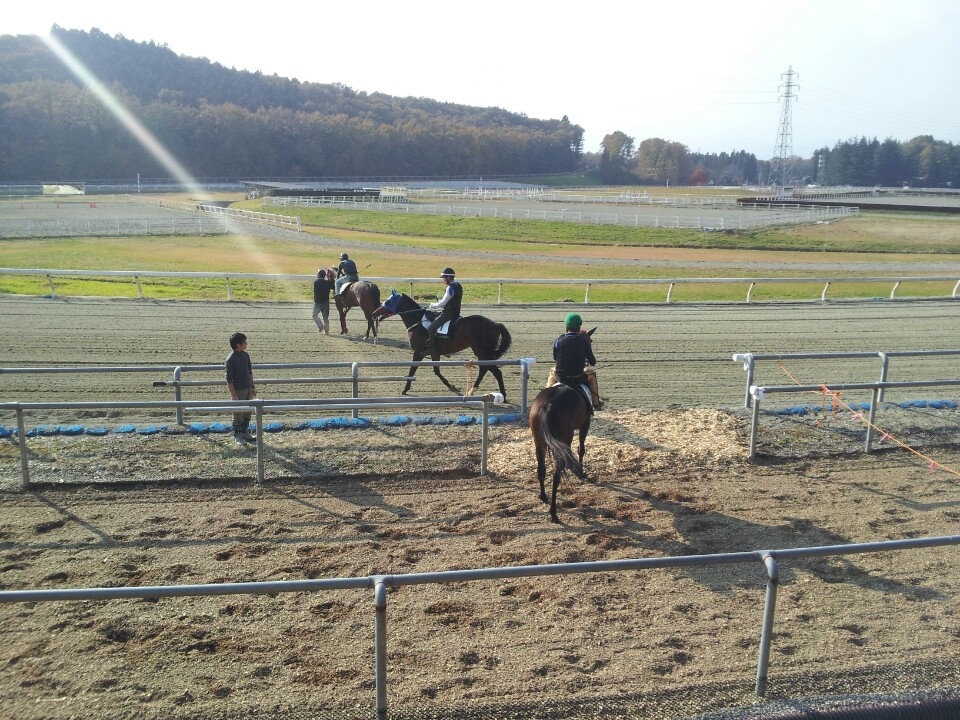
Morning trackwork at Ohi (Pic: Ryu Seung Ho/KRA)

Morning trackwork at Ohi (Pic: Ryu Seung Ho/KRA)

The trio have made the trip across the East Sea to take part in the 2nd leg of the Korea vs Japan Challenge at Ohi next Tuesday evening.

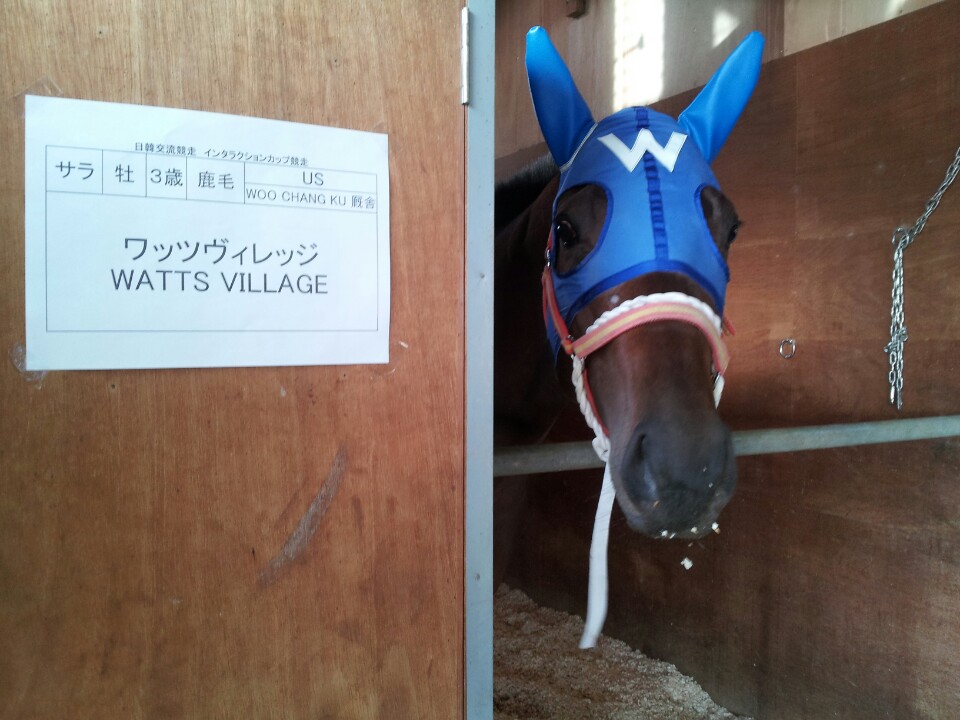
Watts Village in his new box at Ohi (Pic: Ryu Seung Ho/KRA)

Watts Village in his new box at Ohi (Pic: Ryu Seung Ho/KRA)

We’ll have a full preview of the race next Monday. In the meantime, check out our Facebook page for more pictures.

Korean Horses Arrive Safely In Japan

The three horses who will represent Korea in the second leg of the Korea vs Japan Challenge, have been in trackwork since touching down on Japanese soil last week.

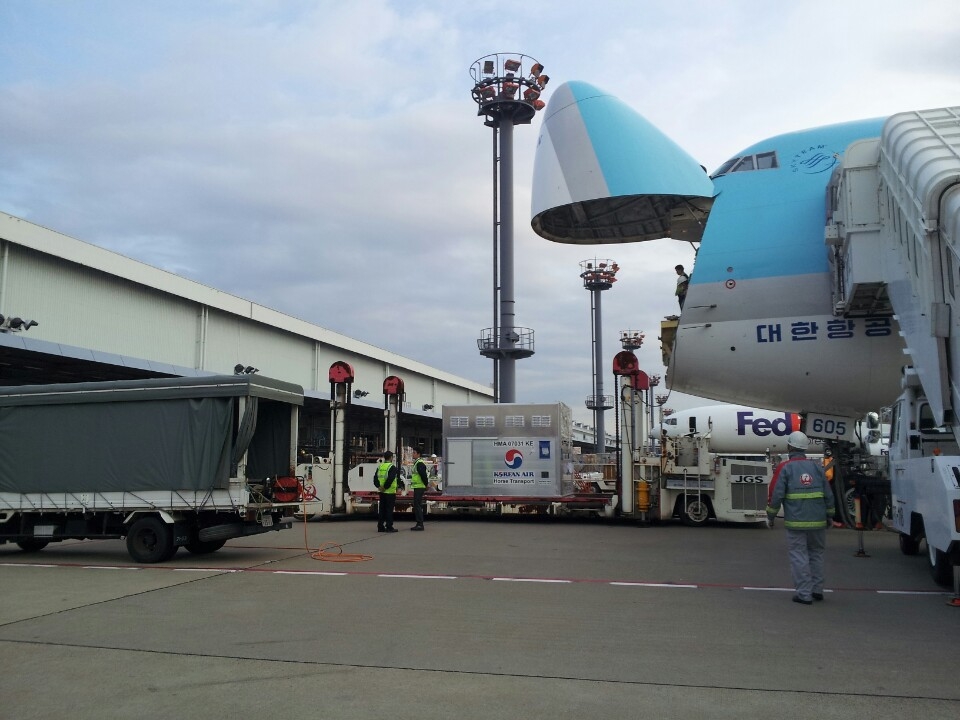
The horses arrived by Korean Air last Thursday

The horses arrived by Korean Air last Thursday

After a stable-to-stable trip of 16 hours, Fly Top Queen, Watts Village and Full Moon Party arrived at the NAR Education Centre at Nasu, about 200km north of Tokyo where there is a quarantine facility.

Into the light: Trackwork at Nasu (Pic: KRA)

Into the light: Trackwork at Nasu (Pic: KRA)

All three horses travelled well and will soon relocate to Ohi Racecourse in Tokyo, where the race will take place next Tuesday evening (November 26). We’ll have more of the build up over the coming days. See Facebook for more pictures.

Tosen Archer Wins SBS Goodwill Cup For Japan

Tosen Archer made history today as the first ever foreign-trained horse to win a race in Korea as his veteran jockey Fumio Matoba produced a perfectly timed ride to win the SBS Korea-Japan Goodwill Cup at Seoul Race Park.

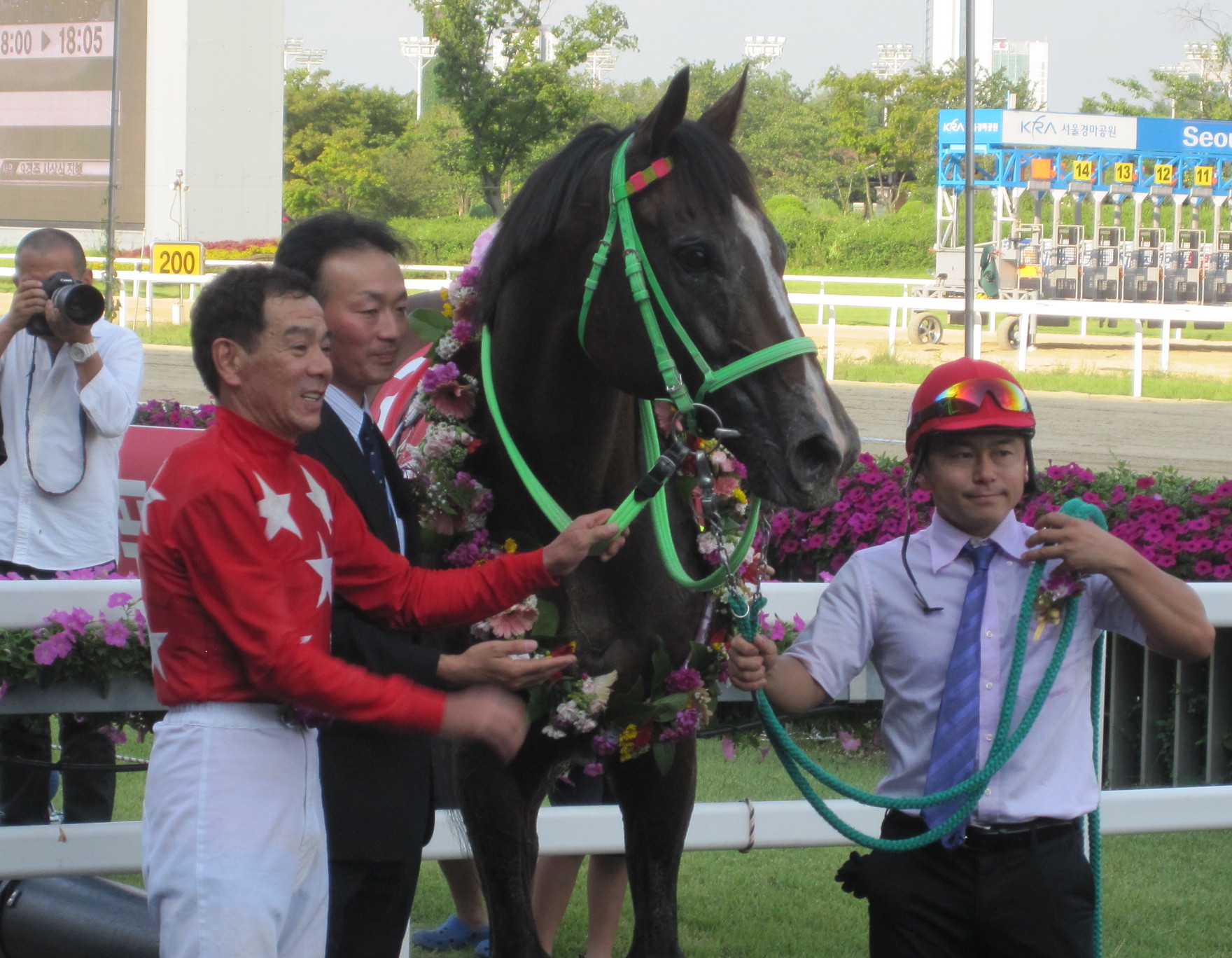
Fumio Matoba and Tosen Archer in the SBS Cup Winner's Circle

Fumio Matoba and Tosen Archer in the SBS Cup Winner’s Circle

Sent off as the least favoured of the three visiting Japanese horses, Tosen Archer (Barathea), a 9-year-old gelding, was kept at the back of the field by verteran jockey Fumio Matoba in the opening stages of the 7-furlong race.

As the field rounded the top of the home turn, Matoba started to bring his mount forward but still had plenty to do as Pureun Miso (Malibu Moon) and Watts Village (Forestry) led the field into the home straight.

Tosen Archer poses for the cameras after winning the SBS Goodwill Cup

Tosen Archer poses for the cameras after winning the SBS Goodwill Cup

Pre-race favourite Tough Win struggled to get into gear but there were no such problems for Tosen Archer, who flew down the outside to hit the front 20 metres from the line and extend to win by a length.

Watts Village hung on well for 2nd while filly Indian Blue scored a very creditable 3rd. Tough Win, Korea’s best hope pre-race, was relatively disappointing 4th. The remaining two Japanese challengers, Big Gulliver and Final Score finished behind those in 5th and 6th respectively.

A lot of Japanese photographers were on hand to welcome Tosen Archer back

A lot of Japanese photographers were on hand to welcome Tosen Archer back

It was a hard-fought race and a great occasion for Korean’s first experiment with true international racing. The winner was a worthy one but the home team was in no way disgraced.

SBS Korea-Japan Goodwill Cup – Seoul Race Park – 1400M – September 1, 2013

1. Tosen Archer (JPN) [Barathea – Interruption (Zafonic)] – Fumio Matoba – 12.8, 3.2
2. Watts Village (USA) [Forestry – Edey’s Village (Silver Deputy)] – Seo Seung Un – 2.9
3. Indian Blue (USA) [Henny Hughes – Gambler’s Passion (Prospector’s Gamble)] – Ikuyasu Kurakane – 3.2

Distances: 1 length/1.5 lengths
Also Ran: 4. Tough Win (USA) 5. Big Gulliver (JPN) 6. Final Score (JPN) 7. Nolbu Manse (USA) 8. Mari Daemul (USA) 9. Pureun Miso (USA) 10. Dongbanjaui Gijeok (USA) 11. Sydney Jewelry (AUS) 12. Celebrate Tonight (USA) 13. Gold Big (USA) 14. Remember Bulpae (USA).

The return leg is at Ohi Raceocurse in Tokyo on November 26.

Korea vs Japan in SBS ESPN Goodwill Cup Set For September 1

Overseas-trained horses will run in Korea for the very first time as three Japanese runners will make the trip to Seoul for the SBS ESPN Goodwill Cup on September 1. In November, three Korean horses will make the return trip to Tokyo.

It's Korea vs Japan in the SBS ESPN Goodwill Cup

It’s Korea vs Japan in the SBS ESPN Cup

After what has been a long process to win government approval due to Korea’s strict quarantine rules, the Japanese entrants will arrive in Korea on August 22 and be transported directly to a special quarantine zone in Seoul Racecourse. Japanese jockeys will be in-town to ride in the race.

The visitors, 8-year old Final Score, 9-year old Tosen Archer and 5-year old Big Gulliver will line up against a maximum of 11 Korean-trained horses with Grand Prix Stakes and Busan Metropolitan Stakes winner Tough Win set to head the home challenge.

In a major coup, the 7-furlong race will be shown live on SBS ESPN, Korea’s leading cable and satellite Sports Network, who will also lend their name to the event.

The return leg, at Ohi Racecourse on Tuesday November 26 – the “Japan Collaboration Cup” – will be run over 6 furlongs and, like the first leg in Seoul, will have a prize fund approaching $250,000.

A maximum of 14 horses will run in each race. Here’s a rundown of the entrants at this stage (Name [Sire] Age, Sex (Starts/1/2/3):

SBS ESPN Korea/Japan Goodwill Cup – Seoul Race Park – 1400M – September 1, 2013 – 16:20

Japan

Final Score (JPN) [Fusaichi Pegasus] 8 Horse (36/6/7/4)
Tosen Archer (JPN) [Barathea] 9 Horse (47/5/2/2)
Big Gulliver (JPN) [Tap Dance City] 5 Horse (28/8/8/2)

Korea

Pureun Miso (USA) [Malibu Moon] 3 Filly (10/4/1/3)
Tough Win (USA) [Yonaguska] 6 Gelding (29/22/2/1)
Sydney Jewelry (AUS) [Lion Heart] 4 Colt (13/6/2/1)
Sing Sing Cat (USA) [D’Wildcat] 5 Horse (26/10/3/1)
Maengsan Horangi (USA) [El Nino] 4 Gelding (12/5/3/1)
Nolbu Manse (USA) [Simon Pure] 4 Colt (22/5/4/3)
Dongbanjaui Gijeok (USA) [Half Ours] 3 Colt (9/5/2/0)
Murangae (USA) [Sunriver] 4 Gelding (25/1/6/4)
Celebrate Tonight (USA) [Songandaprayer] 5 Horse (24/5/2/4)
Remember Bulpae (USA) [After Market] 3 Horse (8/4/1/1)
Stradiot (AUS) [Strada] 4 Colt (14/3/1/1)
Damyang Chukjae (USA) [Good Reward] 4 Colt (15/3/2/2)

(3yo’s will carry 55Kg and 4yo’s 57Kg. Fillies & Mares receive a 2Kg allowance).

After Feel So Good wins in the US, KRA tells trainers “Maybe we found out that the problem is not the horse”

There’s a very good write-up on Brisnet about Feel So Good’s victory at Calder Racecourse in Florida last week when he became the first Korean bred horse to win a race outside of Korea. The article quotes Ko Byung Un of the Korea Racing Authority as saying:

“…even though Feel So Good is a Korean horse, we had him in the U.S. since he was young, and the horse learned to race here and was taught by American trainers…I think maybe we found out that the problem is not the horse.”

That’s not exactly news to anyone who’s been watching Korean racing over the last few years although for a KRA official to come out and say it in such explicit terms is unusual.

Having invested shrewdly in the past few years, the stallion stock in Korea is very solid and improving all the time. The broodmares that they get to cover are also, while not among the world’s elite, more than adequate and certainly the equal of those who foal the cheap American imports that arrive here aged two and then regularly run faster than the homegrown talent.

Feel So Good in the winner’s circle at Calder

The idea of “Internationalization” is resisted by many in the industry in Korea for understandable reasons but it is necessary. It’s necessary not only for the sake of the sport but also because of the precarious position that racing – as one of very few legalised gambling options in the country – occupies.

Korean governments are nothing if not impulsive as recent policies attempting to “ban” public drinking (practically the national sport here), internet pornography and Sunday opening of supermarkets have shown. All of them were ill thought out and ended up being unworkable, however, it seems only a matter of time until legal gambling finds itself targeted to an even greater extent than it already is.

Some in the KRA realise this and are eager to make the racing industry, already a major employer, bankroller of Korean agriculture and charity fundraiser – not to mention tax payer – a source of national pride.

It’s difficult to get very excited about Feel So Good [Ft.Stockton – Courting Dreams (Eastover Court)] winning a midweek maiden claimer at Calder. If Dangdae Bulpae had been trained in the US, he could be winning Stakes races. However, the fact that he’s done it is important and sends a big message to those training young horses in Korea that we need to be achieving more. We have a captive audience of hundreds of thousands every weekend but we can’t stand still. And to be fair, most realise this.

Feel So Good makes the front page of the Korean Racing Journal

Feel So Good has already entered quarantine in preparation to return to Korea. On arrival he’ll be sold to a private owner to begin his domestic racing career. In pictures he looks bigger and stronger than other Korean bred horses his age. With plans to set up their own training centre in Ocala, the KRA is considering making Feel So Good only the first of many to spend the early part of their life outside of Korea.

There is one potential downside to Feel So Good’s win at Calder. As one trainer pointed out at the weekend, he was almost certainly running on Lasix. Like the vast majority of racing jurisdictions outside the US, raceday medication is banned in Korea and hopefully the KRA doesn’t get any foolish ideas.

Hopefully they won’t and if Feel So Good can finally put to rest the idea of “this is a Korean horse, it doesn’t understand western ways”, then the experiment will have been more than worth it.

* Thanks to @KeeneGal on twitter for the link to the Brisnet article.

“This is a Korean horse. It doesn’t understand Western ways”

That was definitely the money-quote from John Glionna’s Los Angeles Times profile of Busan trainer Joe Murphy, a report which reflects the reality of the challenges faced by those brought in by the Korea Racing Authority (KRA) to implement its oft-stated goal of “Internationalization.”

Over the years, I’ve written on this topic several times with regard to, amongst other things, Korean horses racing overseas and foreign jockeys coming to Korea. But what is internationalization, why are they doing it and why isn’t it working?
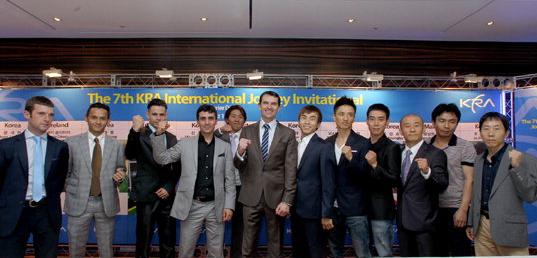
Competitors pose prior to last year's International Jockey Challenge in Seoul

The KRA started the process in 2004 with a dubiously named “Five-Year Plan”. That year they inaugurated a series of exchange races with other Racing Authorities and also established an annual International Jockey Challenge. The aim was, by the end of the five years, to regularly have Korean horses going overseas to compete while welcoming international competitors to Korea.

There were a number of reasons for doing this but one key factor was the desire of the KRA (or more specifically, the Ministry of Food, Agriculture, Fisheries and Forestry under whose jurisdiction the KRA is – it has always been a matter of debate as to how interested the KRA really is in changing things and how much is forced upon them) was to improve the domestic image of horse-racing, making it a vital part of the economy.

Racing has a near-monopoly on legal gambling and as such has a dreadful public image and is persistently the target of populist anti-gambling groups who seek to impose even tighter restrictions on racing. Under the auspices of the National Gaming Control Commission, this has involved the enforced closure of the KRA’s internet and telephone betting services and an order for it to close several of its Off-Track Betting sites.

To fight this image, the KRA has become one of the largest charitable organizations in the country, has constructed family leisure parks at its tracks to get families in and sponsored the production of racing movies such as “Gak-seol-tang”, “Grand Prix” and “Champ”. Alongside this, they are fully aware of the importance of National pride in Korea. An internationally competitive racing industry would be a secure industry.

The KRA set about trying to improve its breeding, training and riding. The results have been mixed. The first aim has been successful. The Jeju Stud Farm was already operational but the addition of the Jangsu Farm in 2007 (with a foreign Manager), the lifting of restrictions on spending on broodmares and a bigger budget to import stallions. Korea now has an impressive Stud line-up with the calibre of foals much better than it was a decade ago and the importers know what they are doing. However, for the most part, when they reach the track they’re still slower than the very average two-year-old imports – Korean buyers are still only allowed to spend $20,000 on importing a colt for racing.

That’s where the training comes in and that’s where the problems start. Training and conditioning here is substandard. Joe Murphy is only the second foreign trainer after Peter Wolsley who has just completed his fourth year at Busan. The Australian is finally in command of a decent string of horses but at 18 months in, Murphy is in roughly the same position as Wolsley was at the same point.

Wolsley stuck it out and to his credit, Murphy despite the difficulties, speaks very highly of his Korean co-workers and says he enjoys life at Busan and intends to stay to make a success of things. However, it is fair to say that a system which requires three years of toil for little reward isn’t likely to attract much talent going forward.

Why is it like this? Why doesn’t the horse “understand western ways”? A lot comes down to money and control. The KRA administers racing but it would be quite a stretch to say they control it. There are four sets of license holders; Owners, Trainers, Jockeys and Grooms. These groups – and the organisations that represent them wield the real power. With prize-money so high, as far as many are concerned the system is not broken and doesn’t need to be improved.

At Busan, it is only the owners who can change things. It was owners who wanted their horse ridden by Japanese jockey Toshio Uchida and now it is owners who want Peter Wolsley to train their horses. When they win, they can start to influence the locals in a postive way as happened with the introduction of pacifiers as approved racing gear a couple of years ago; the first two horses home in the Grand Prix Stakes, Tough Win and Mister Park, were both wearing the equipment that Wolsley introduced to Korea.

Interestingly, it is at Seoul, where hostility to foreigners is such that not a single trainer has been invited and where no foreign jockey can be said to have been a success, where there has been visible progress and that has come in the saddle. The KRA’s Jockey academy, headed by a South African, has been turning out some good young riders. At Busan, Murphy points out the problem of younger jockeys showing far too much respect for their elders but at Seoul, if the likes of Jo In Kwen, Jang Chu Yeol and Seo Seung Un respect their elders then they have a funny way of showing it. All are genuine talents but there is no-one similar at Busan.

There have been some improvements, for instance, The KRA’s English language webpage has got much better over the past couple of years and a foreign steward is a permanent fixture on the panels at both Seoul and Busan (although they have stopped producing English language reports).

Korea also exported some racehorses to Malaysia last year, a first for the industry. Additionally, like they’re doing with young jockeys, the KRA is sending groups of trainers abroad – not only to the US but also to Australia and the UK (with no raceday medication allowed in Korea, it is thought these two countries are better options for trainers).

However, for every step forward in Korean racing, there are two steps back. A foreign Master Farrier left Seoul last October after being frustrated in his attempts to improve the generally poor shoeing quality of racehorses here. The local farriers have a good union and a good income. Meanwhile horses continue to have bad shoes.

Then again, the Korean horses probably wouldn’t like or understand those western shoes.