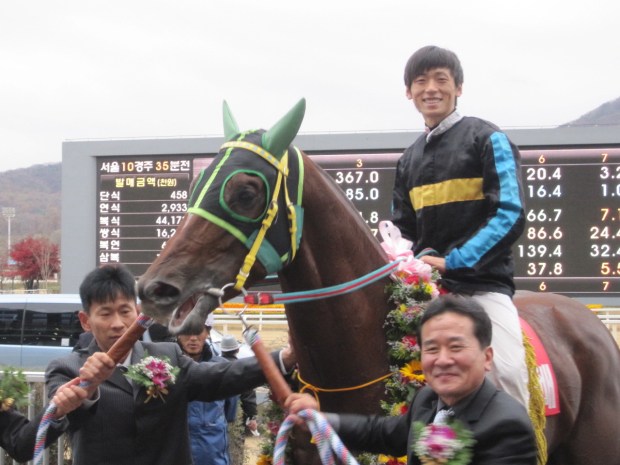
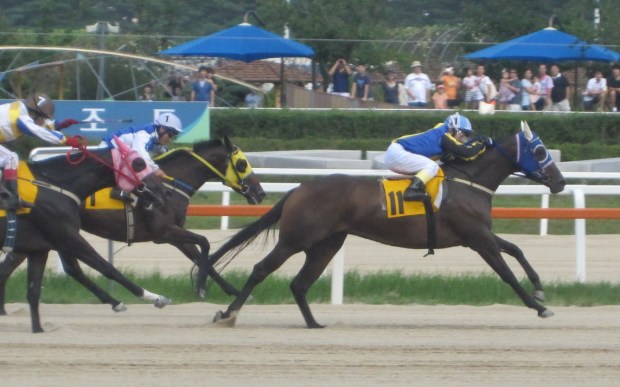
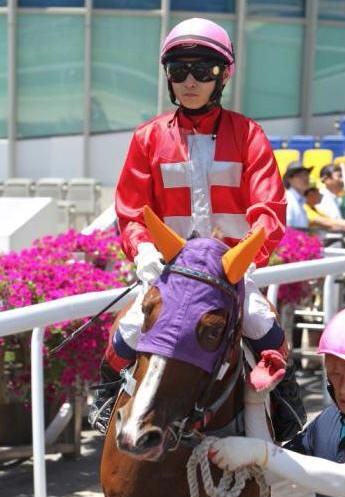
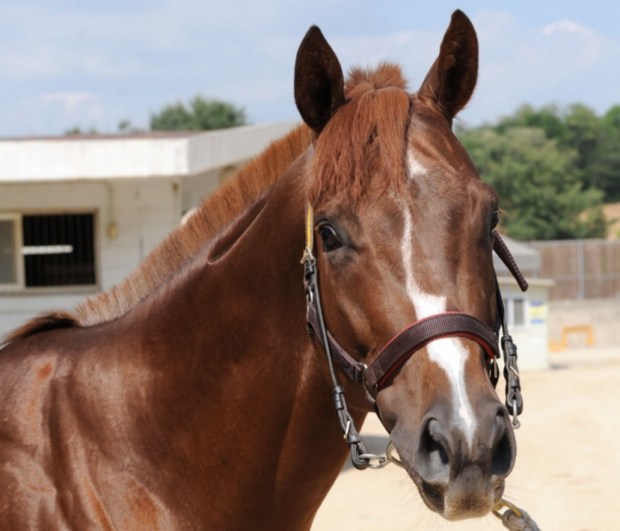
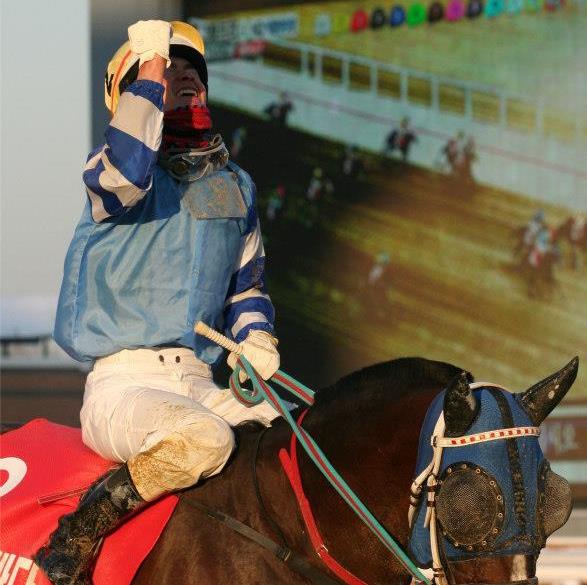
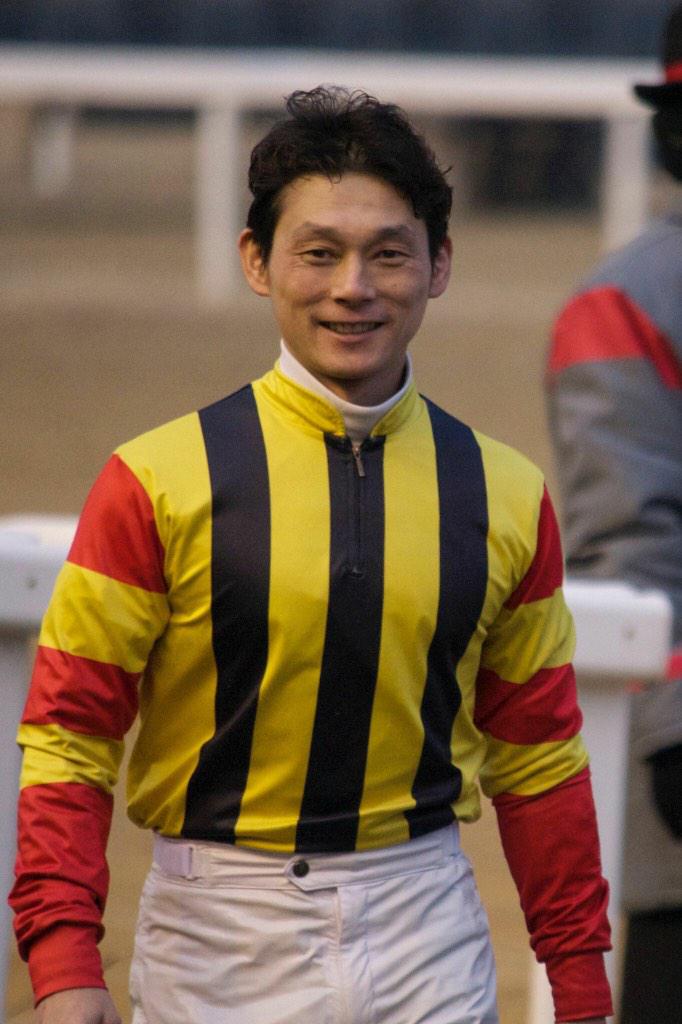
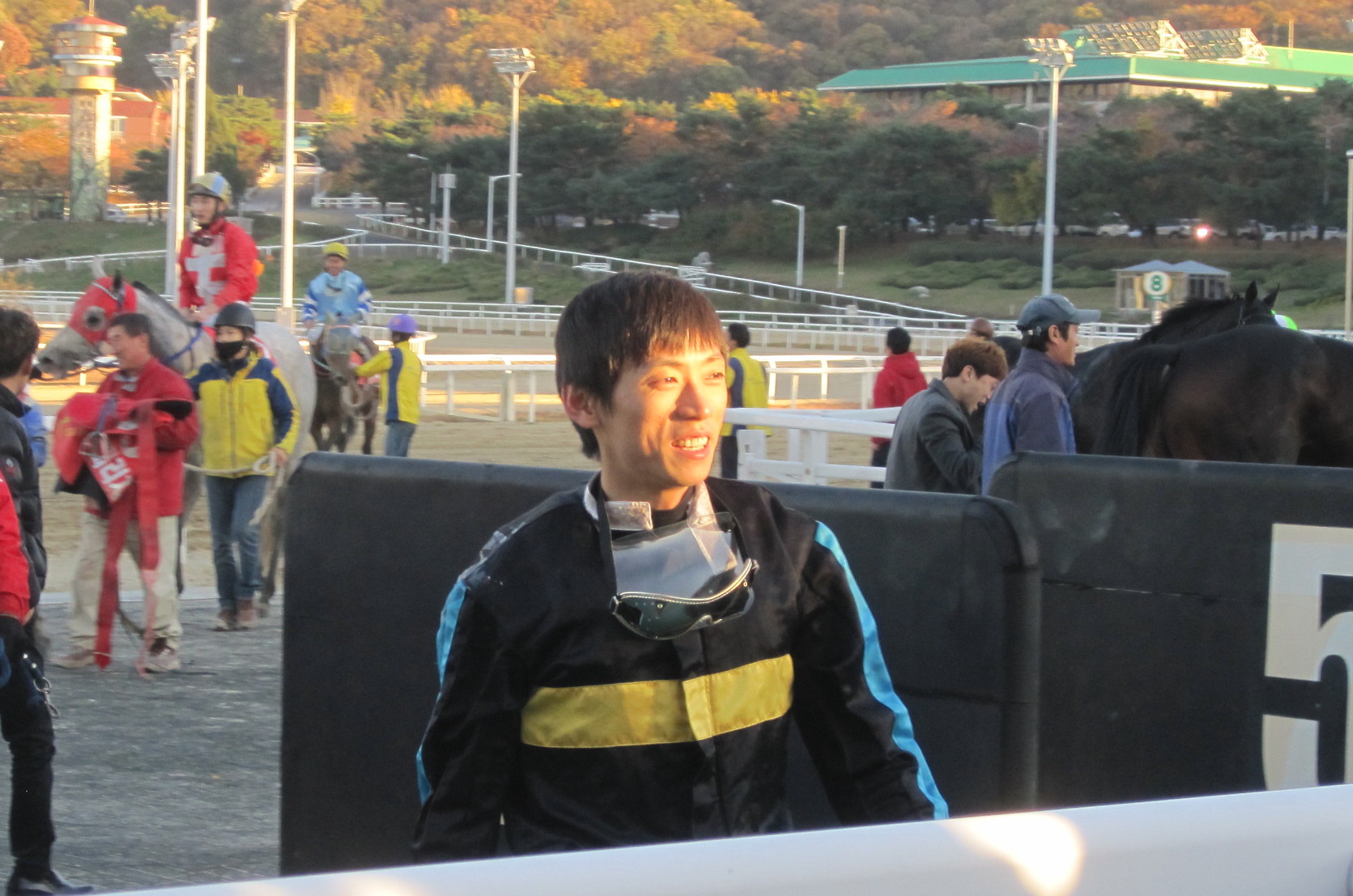
Success Story is set to face fourteen rivals when he makes his Dubai World Cup Carnival debut at Meydan this Thursday evening.
The five-year-old will run in race 6 on the card, the “District One Mansions” 1600M Handicap on the dirt at 9.55pm local time (2.55am Friday in Seoul). Success Story will break from gate 4 and will be ridden by Irish jockey Tadhg O’Shea.
The race looks a very competitive event with some up and comers as well as some very experienced winners among the fifteen-strong field. Carrying 57kg, Success Story finds himself right in the middle of the handicap and faces a stern test. Click here for the racecard from the Emirates Racing Authority.
Success Story has been inconsistent in winning 10 of 18 starts to date. His jockey got a sore neck on his most recent start though:
Success Story gets a mention in Katherine Ford of Equidia’s piece on Korean racing at Thoroughbred Racing Commentary. Read it here.
In other news on what has been a bitingly cold few days in Korea – the cold snap is expected to last through the weekend with temperatures down at lows of -15C which should make racing fun for all concerned – the 2016 race plan, which will take effect from February, has been published.
As expected, the rating system will be adjusted (a work that has been in progress since last September) while two new race series; a Juvenile Triple Crown and the intriguingly named “Triple Tiara” are also included as well as final details for the International Weekend which this year will take place on September 10/11 with a new Million Dollar Korea Cup the highlight. More on all this over the Lunar New Year break.
Nicola Pinna may not be racking up huge numbers of rides or winners but he is certainly getting the job done on the right horses The Italian jockey ride his third Class 1 winner on Sunday as he guided 17/1 chance Gumanseok to a narrow victory in Seoul’s feature race.
In addition to a pair of class 1 victories on Bichui Jeongsang, Pinna had also won a major Juvenile race on OS Hwadap. Gumanseok (Vicar) had shot back into form with a surprise win under Djordje Perovic a month ago and carrying plenty more weight today, punters once again allowed him to go off reasonably unfancied.
Under a strong ride from Pinna, however, Gumanseok got the best of a tight finish, seeing off Double Shining by a neck on the line. It was Gumaseok’s 1th win of a 41-race career that included success in the Sports Chosun Cup back in 2013. It took Pinna on to 6 wins in career.
At Busan, 2015 Korean Derby winner Yeongcheon Ace was denied once more in Friday’s feature. Sent off the odds-on favourite, the four-year-old just couldn’t get up as outsider Useung Chance, took her chance fully under Makoto Okabe to record an unlikely victory. It’s now been five races since the Derby without a win for Yeongcheon Ace.
Sunday’s feature on the south coast saw a return to the track following five months out for Macheon Bolt (Old Fashioned). And the Peter Wolsley trainee returned in style, cruising through the rain to score a five-length win over a mile. It was the four-year-old’s seventh win from ten starts.
Racing returns to Korea on Friday but before that, attention turns to Meydan in Dubai where, should he get into the race, Success Story is set to make his Dubai World Cup Carnival on Thursday. He has been entered in the 1600M race 1 on the dirt.
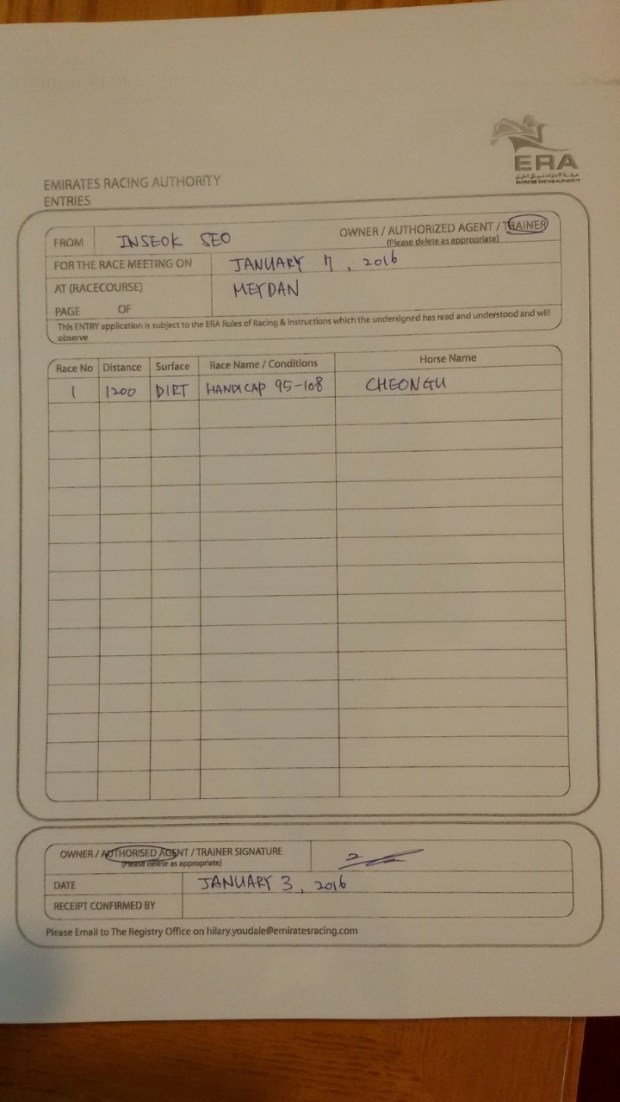
Cheongu made his debut on January 8th over 1200M and did ok, finishing 5th of 8, despite getting a bad start and losing a plate. Racing over a mile, it will be more difficult for Success Story, but if he is right, he can be competitive. As for Cheongu, he may go again next week.
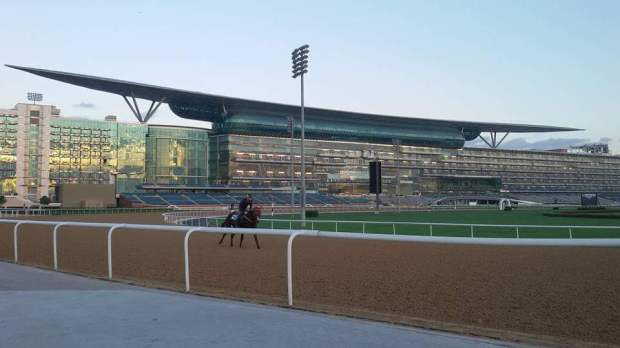
The 2016 Dubai World Cup Carnival gets underway at Meydan on Thursday and on on the very first day, Cheongu will become the first ever Korea-trained horse to take part in one of world racing’s biggest annual meetings.
Cheongu works at Meydan (Pic: Seungho Ryu/KRA)
Cheongu (Old Fashioned) will race over 1200M on the dirt in an event for horses rated 95-108, the Longines Conquest Classic Gents Moon Phases Handicap, which will go to post at 7.35pm Dubai time.
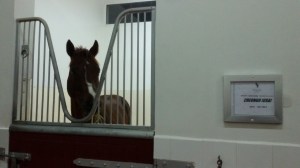
Cheongu in his stall in Dubai
He is one of two Korea-trained horses to travel to the carnival along with Success Story (Peace Rules), who is being pointed towards a race over mile later this month.
The two horses arrived in Dubai on Christmas Eve and both the already experienced traveler Cheongu and first-time flyer Success Story have reportedly settled well.
Having already concluded quarantine protocols with Singapore and Japan, the protocol with the UAE was finalized in autumn last year and should also enable Dubai based horses to come and race in Korea with the inaugural US$1Million Korea Cup and the Korea Sprint – the new incarnation of the Asia Challenge Cup – both potential attractions in early September.
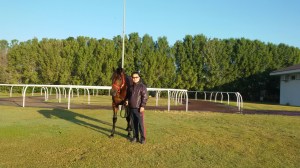
Success Story settles in
Unlike in previous forays overseas, jockeys already in Dubai will be booked to ride the Korean horses and the services of a very good one have been secured on Thursday. Originally Christophe Soumillon was scheduled to ride, however, with Cheongu only set to carry 54.5kg, Britain’s Royston Ffrench will take the mount.
Hopes are realistic with creditable performances the goal. Cheongu led the KRA Trophy in Kranji in July, the Asia Challenge Cup in Seoul in August and the Interaction Cup at Ohi in October but each time didn’t take kindly to being challenged and weakened late on. He was 3rd and 4th respectively in the latter two races.
Cheongu returned to the winner’s circle at Seoul in November, making all over 1200M to record a smart win. On Thursday, he will face just seven rivals but he is rated the lowest but one of them. Here is the racecard from the Emirates Racing Authority.
Two of Korea’s top jockeys will relocate from January 1st. Seo Seung Un is going to Busan while the south coast’s champion jockey Jo Sung Gon will be based at Seoul.
Jo Sung Gon, seen here on a previous winning visit to the capital, will be full-time in Seoul in 2016
Jo Sung Gon to Seoul is something that has been talked about every year for at least the past six and now the jockey who is about to be crowned Busan’s Champion for the fifth time, will finally go head to head with the country’s top rider in terms of numbers, Moon Se Young, in the capital.
With 658 winners from from 4181 rides at Busan so far (with one weekend to go), Jo leads the all-time winners’ list at the track and won the Championship in 2009, 2010, 2011 and 2013. This year he will win the Championship this weekend and has become the first jockey at the track to ride over 100 winners in a calendar year.
Jo is, of course well-known to Seoul punters and was winning the nation’s most prestigious race at the track on Peter Wolsley’s Bold Kings only two Sundays ago. He won the Korean Derby on Sangseung Ilro in Seoul in 2009 and also partnered the remarkable Dangdae Bulpae to a hat-trick of President’s Cups between 2010 and 2012.
Seo Seung Un burst on to the scene in 2011, winning two races on his first day as an apprentice. He has gone on to ride 294 winners from 2170 rides at Seoul, finishing 3rd in the Championship in 2013 and 2nd in 2014. This year he finished in 3rd place but had a slightly disappointing end to the season, being only 6th best in the second half of the year.
Busan Bound – Seo Seung Un
Seo is a rare Seoul jockey in that he has tasted Group race success at Busan, winning the 2014 KRA Cup Mile on Cheongnyeong Bisang.
Another Busan rider, Hwang Jong Woo, will also transfer to Seoul (Hwang only rode eleven times in 2015). In other licensing news, Nozi Tomizawa and Pasquale Borelli have extended their licenses at Busan by three and six months respectively. As previously reported, Masa Tanaka, whose license expires on December 31st, is not renewing.
Jo Sung Gon is currently retained rider for Peter Wolsley and his departure eaves the Australian trainer with a dilemma in advance of the 2016 season with the rides on Triple Crown contender Banjaui Jewang and of course, Bold Kings, now up for grabs. While the depth in quality of horses is much greater at Busan, in the weighing room – where there is big gap between a small number of top jockeys and the rest – the depth in terms of top line riders is in favour of Seoul.
Masa Tanaka’s time riding in Korea is at an end but the Japanese jockey had time to clock up his 100th winner on the peninsular last Friday, one of three successes on his final weekend.
Masa Tanaka (Pic: Busan Ilbo)
Tanaka joined Busan Racecourse in June of 2013 and returned solid results in his first year even while fellow Japanese rider Joe Fujii was getting most of the acclaim. Tanaka rode 24 winners in his first seven months up to the end of that year.
2014 was a challenging one but Tanaka still emerged with 29 winners from 330 rides. It would be in 2015, however, when his persistence paid off and he became acknowledged as one of the top jockeys in the country. He rode 49 winners this season, taking him to 5th place in the jockey championship.
Although he couldn’t secure a Stakes race victory, he landed a 3rd place on New York Blue in the Asia Challenge Cup in 2014. This year he managed another 3rd, on Ildeung Hanghaesa in the President’s Cup , Korea’s joint-richest race, in Seoul in October.
As has been written many times here, i order to make it in a place like Korea, it is not enough to simply be a good jockey. An open mind, a thick skin and an awful lot of cultural and people skills are required too. If you have an ego, leave it at the airport.
Masa Tanaka fulfilled all of those criteria in addition to being very good in the saddle. He is one of those whose presence here has had a positive impact on Korean racing. He will be missed.
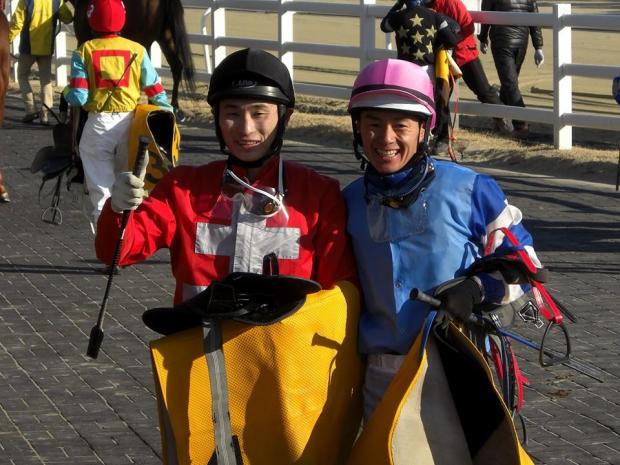
Masa Tanaka (left) and Joe Fujii are 4th and 2nd in the all-time list of foreign jockeys in Korea (Pic: Hiromi Kobayashi)
Tanaka came into his final weekend on 98 winners but had the 100 wrapped up by race 10 on Friday with victory on hot favourite Indian Star. He added a further victory on Sunday afternoon for long time supporter Bart Rice and while feature race favourite Queen’s Blade – his final ride in Korea – made a mess of exiting the gates, denying him the opportunity of going out with a final win, he ended with a total of 101 wins from just under 1,000 rides.
That took Tanaka to 4th on the all-time list for foreigners in Korea, the top ten of which now looks like this:
1. Ikuyasu Kurakane – 317 2. Joe Fujii – 149 3. Toshio Uchida – 138 4. Masa Tanaka – 101 5. Gary Baker – 77 6. Narazaki Kosuke – 68 7. Darryll Holland – 66 8. Nozomu Tomizawa – 63 9. Hitomi Miyashita – 55 10. Martin Wepner – 49
Tanaka, who is licensed in New Zealand and needs to maintain that license, is expected to be riding there in the New Year.
Two Korea trained runners are among the 181 horses who have been accepted to race at the 2016 Dubai World Cup Carnival which starts next month at Meydan.
Cheongu will shortly be on his travels again (Pic: KRA)
Busan horse Success Story will travel to Seoul Racecourse on Tuesday to join capital-based Cheongu in pre-quarantine before the pair fly out to Dubai on December 23. The carnival starts on January 7th and while there, Cheongu is expected to race over 1200M with Success Story taking on a mile.
The acceptances come following a two-year process to establish quarantine protocols between Korea and the UAE which was concluded just in time to enable the horses to be nominated. In recent years, similar protocols have also been established with Japan and Singapore allowing Korean horses to race in those countries and vice-versa. Among three applications from Korean horses to participate at the carnival, two were accepted.
Cheongu (USA) [Old Fashioned – So Much Fun (Speightstown)] is a three-year-old colt who has won five of his eight starts in Korea. A sprinter, he also travelled to Kranji in Singapore in July and Ohi in Japan in October. He led both of those races before weakening in the closing stages. In between those trips, he finished 3rd behind Choegang Schiller and El Padrino in the Asia Challenge Cup in Seoul at the end of August.
Success Story (KOR) [Peace Rules – Power Pack (Lil’s Lad)] is a little bit of an enigma. A four-year-old, he has won ten of his eighteen races but has yet to score in a really big race although he hasn’t had the opportunity to go for one over his preferred distance of a mile. He put in an eye catching performance over that trip at Busan last month when he was just outside the track record when scoring the easiest class 1 win seen for some time.
Voting is underway for the season-ending Grand Prix Stakes which will take place at Seoul Racecourse on Sunday December 13. Like Japan’s Arima Kinen, entry to the race is determined by a vote among racing fans. The vote opened on Friday at the Korea Racing Authority’s website with polls due to close on Sunday November 22.
Gamdonguibada won the Grand Prix Stakes in 2012. Now six-years-old, she is on the ballot once more
A total of 28 horses; 14 from Seoul and 14 from Busan, have been nominated for the race and there will be a maximum field size of 16. Among the nominees is one former winner, Gamdonguibada, who took the honours as a three-year-old in 2012.
For the last two years, the winner of the President’s Cup has gone on to take the Grand Prix, Indie Band in 2013 and Gyoengbudaero last year. While those two are respectively on the long-term injured list and retired, this year’s President’s Cup victor, Triple Nine is on the ballot and will be a strong contender.
Also nominated is Korean Derby winner Yeongcheon Ace and Queen’s Tour overall winner Heba as well as the hitherto unbeaten three-year-old Bold Kings. Cinderella Man who won a trial for the race over the Grand Prix distance last week, is another on the ballot.
Here is a full list of the nominees with links to their English language Korean Studbook pages, age, sex (Starts/1st/2nd/3rd) and notable recent Stakes and Listed race achievements:
Grand Prix Stakes (KOR G1) – Seoul Racecourse – 2300M – December 13, 2015
Borelli, Tomizawa, Rice, Tanaka, Takahashi, Gillespie & Wolsley All With Winners Too
It’s been a mixed couple of months for Djordje Perovic but the “Balkan Wolf” was back smiling again having guided four winners home on what was an all-round good weekend for the foreign contingent in Korean racing.
Things hadn’t been going all Perovic’s way since losing the support of one of his main trainers after the KRA Cup Classic at the end of August. However, other trainers have continued to use him and this weekend it all came together as the “Serbian Frankie” – he has no shortage of nicknames – showed his class with a treble on Saturday and a further winner on Sunday.
Those four winners took Perovic to 28 in Korea. Meanwhile fellow Seoul rider Yuri Takahashi, whose Korean license was last week confirmed to have been extended until the end of April 2016 rode his 16th winner in the country on Saturday.
Down at Busan, Bart Rice saddled two winners on Friday, giving Masa Tanaka his 95th Korean victory and taking the Japanese rider one closer to his stated goal of 100 before his license ends. Rice also provided Italian rider Pasquale Borelli with one of his two weekend successes. Nozi Tomizawa also got home in front twice, the first of them a welcome win for trainer Thomas Gillespie.
Gillespie has still only sent out 35 runners in total but has 4 winners now and a remarkable place strike rate of 37%. Rice too takes care of his horses and doesn’t send them out for the sake of it and has a place strike rate of 31%. Peter Wolsley also sent out a winner on Friday and remains in clear 2nd place in the Trainer Championship. His place strike rate is also 37% and was bolstered by Ms. Margaux running a very good 2nd in the Governor’s Cup on Sunday.
Those foreign trained or ridden winners in full:
Djordje Perovic: 4 – Saturday Seoul Race 2 (Yeongam Arirang), Saturday Seoul Race 8 (Bulguruisinhwa), Saturday Seoul Race 13 (Sun Strong), Sunday Seoul Race 1 (Cin Cin Jjan)
Masa Tanaka: 1 – Friday Busan Race 1 (Jangguneui Huye)
Yuri Takahashi: 1 – Saturday Seoul Race 5 (Samba Festival)
Thomas Gillespie: 1 – Friday Busan Race 9 (Professor Silver)
Peter Wolsley: 1 – Friday Busan Race 5 (Dangdae Queen)
It wasn’t all good news for the foreign contingent though. Italian jockey Nicola Pinna was scheduled to debut at Seoul this past weekend but unfortunately was unable to make weight for his three mounts. Pinna’s disappointment was compounded as the first of those, Jeongsang Daegil in race 2 on Saturday, bolted up at 10/1 under replacement Lee Chan Ho. Pinna will hopefully get another chance next week when Japanese rider Makoto Okabe is expected to start at Busan.
In addition to Takahashi’s extension, the KRA also confirmed last week that Ikuyasu Kurakane (who was suspended this week) has had his jockey license extended until April 2016. Good news for punters and less so for the local jockey colony. “Good”, is the only sensible reaction to that.
Busan has undoubtedly benefited from the presence of foreign trainers and that is set to be extended to Seoul. Applications have been received over the past couple of months and the first overseas trainers to be granted licenses in the capital will be announced soon.
There isn’t a jockey challenge bet in Korea but if there was, yesterday at Busan it would have been a two-man race with Jo Sung Gon and Ikuyasu Kurakane dominating the Friday afternoon card.
Four winners: Ikuyasu Kurakane (Pic: Hiromi Kobayashi)
Of course, punters had seen this coming. With the likes of Kim Yong Geun, Choi Si Dae and Masa Tanaka among eight Busan riders in Seoul for the President’s Cup on Sunday (Union rules say a jockey who has the temerity to go and ride in a big race at the other track isn’t allowed to ride at his or her home track on the same weekend) and You Hyun Myung on the long-term injured list, Jo and Kurakane were really the only Big Beasts of the weighing room in action.
Jo Sung Gon managed to get himself beaten on two favourites but like Kurakane, still emerged with four winners from the eleven-race card.
Highlight of Jo’s winners was perhaps a dominant victory for the young US import Doraonpogyeongseon (Kantharos) the third of his four winners which all arrived consecutively in races 5 to 8. Doraonpogyeongseon, named after a Grand Prix winning horse of the 1990’s, was getting his maiden win on his second start.
Kurakane’s winners arrived in pairs. He rode two-year-old debut-maker My Alice (Limitless Bid) to an eye-catching, albeit hard to judge how good it really was, eleven-length triumph in race 2 but the highlight was in the final race 11 when he guided two-year-old import Gakbyeolhan (Big Brown) to win by three lengths.
Four winners: Jo Sung Gon
The juvenile Gakbyeolhan was beating seven older horses over a mile on what was just his third career start and looks quite a prospect.
Had there been a jockey challenge and had it been run under Hong Kong rules, Kurakane would have come out as the winner due to riding three 2nd place finishers as well – two of them behind Jo’s winners. Contrastingly Jo, aside from his winners, only got one other into the top three.
While the eight Busan riders in the capital will be riding in the big race on Sunday afternoon, both Jo Sung Gon and Ikuyasu Kurakane have a full book of rides on Busan’s short six-race card on Sunday. It would be very surprising if either failed to add to their weekend total.
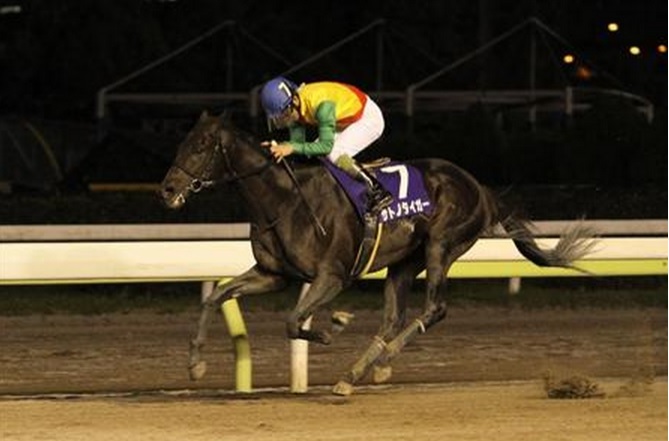
Urawa-based Satono Tiger was too strong for Cheon Gu and the other Korean raiders as he ensured the honours remained on home soil with a comfortable victory in the Interaction Cup at Ohi last night.
Satono Tiger goes clear (Pic: sanspo.com)
As expected it was Cheon Gu (Old Fashioned) who set the early pace but Satono Tiger (King Kamehameha), a 7-year-old horse who had won seven of his forty-one primarily JRA starts and was top sprinter in the NAR last year, took things up inside the final two furlongs and cruised away for a comfortable victory.
The fast finishing Major Athlete (Daiwa Major) on the outside and Fire Prince (On Fire) on the rail knocked Cheon Gu out of the places in the closing stages with the Seoul trained three-year-old hanging on for 4th. The other two Korea-trained entrants Cowboy Son and Dynamic Jilju finished in 8th and 10th.