Breeding

Delago Brom, Air Shady Join K-Stallion Ranks

May is traditionally a busy season for Korean buyers at overseas racehorse sales. This year, however, the nation’s equine shoppers have also returned home with additions to the peninsula’s breeding stock in the shape of established Australian sire Delago Brom and recently retired superstar Japanese racehorse Air Shady.

Delago Brom on Aussie Guineas Day 2003 (Pic: Ross Holburt)

Delago Brom [Encosta De Lago – Brompton Cross (El Qahira)] only raced ten times but among his four wins was the 2003 Australian 2000 Guineas. An A$80,000 purchase at the Inglis Great Southern Bloodstock Sale in Melbourne, he’ll be standing on Jeju Island for the 2012 breeding season. Among the small number of Delago Brom’s progeny who are racing in Korea, the most successful is four-year old Dudeurim who has four wins from fourteen starts. Delago Brom is a very welcome Australian addition to the US dominated sire-ranks in Korea.

Aussie based owner and drinking buddy friend of the blog Ross Holburt, who owns Delago Brom three-year old Delago’s Lad who is being pointed towards the Australian Spring Classics later this year thinks Delago Brom is an ideal sire for Korea “they tend to be one paced but tough…I think the sand will suit them down to the ground.”

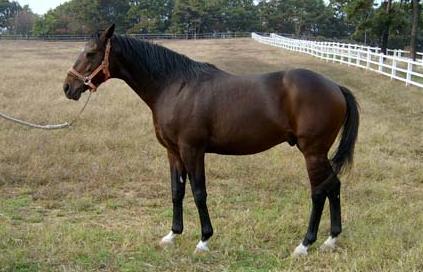
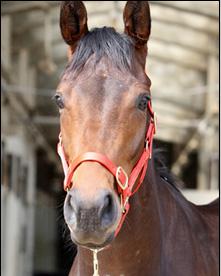
Joining Delago Brom in Korea will be Japanese born Air Shady. Son of the legendary Sunday Silence, Air Shady [Sunday Silence – Air Deja Vu (Northern Taste)] was officially retired from racing in Japan only two weeks ago.
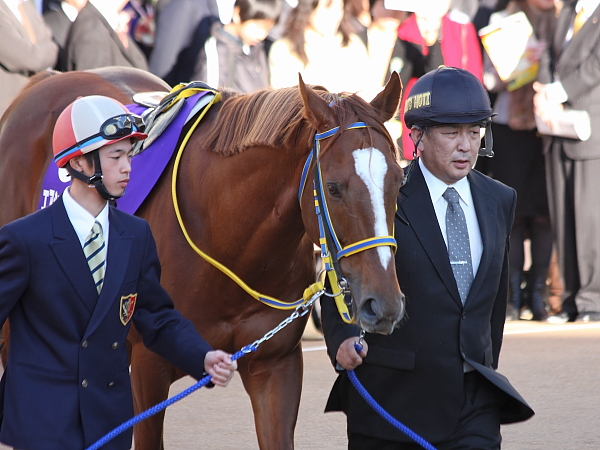
Air Shady (Pic: Kazushi Ishida)

His early racing years were blighted by injury and it was not until he was seven years old that he won his first Group race but, with his six-year career, Air Shady became one of the most popular racehorses in Japan in recent times. It will be fascinating to see what kind of mares get sent to Air Shady and whether he can repeat the success of fellow Japanese sire Meisei Opera who, despite being totally unheralded, sired this year’s KRA Cup Mile winner Soseuldaemun.

While Delago Brom and Air Shady are, along with Officer, the highest profile recent additions to the stallion ranks, a number of racehorses have been retired to stud so far this year. New Korean bred sires are Nice Choice (Lost Mountain), Money Car (Newsprint) Secret Weapon (Native Regent) and Rainmaker (Revere). Secret Weapon is potentially the first second generation Korean stallion. Foreign bred horses retired from the track to stud are Angle Slam (Gold Case), Angus Empire (Lion Cavern) and Florida Native (Kissin Kris). Additionally, Colors Flying (A.P. Indy) and Limitless Bid (Sunday Silence) have been imported from the US and Japan respectively.

* Picture of Delago Brom is by Ross Holburt of the inimitable Slickpix while that of Air Shady is by Ishida Kazushi of the HimawariKazushi racing blog.
A Tale Of Two Sisters

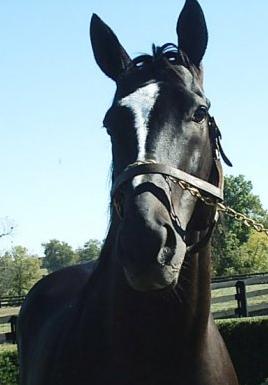
Plum Pretty is America’s Champion Three-Year old filly, but her older half-sister helps beginners learn how to ride at an Equestrian Club in Korea.

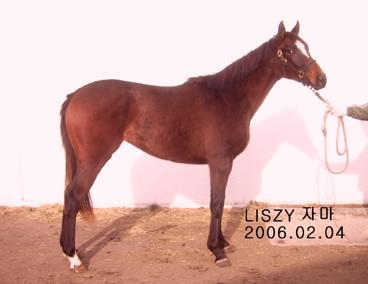
Korean racing fans were a little bemused to watch Plum Pretty bravely hang on in the final furlong at Churchill Downs on Friday to win the Kentucky Oaks. For Plum Pretty (Medaglia D’Oro) is the fourth foal out of a dam called Liszy. And in 2006, Liszy (A.P. Indy) gave birth to a filly by More Than Ready (Southern Halo).

In December the following year, that filly would go through the Fasig-Tipton Midatlantic December Mixed sale and, at a knock-down price, be purchased by a Korean buyer. A month later, in January 2008, she arrived for her new life in Korea.

The filly was bought by Kumak Farm and was named Taeyangui Mabeopsa – or “Magic of the Sun.” She was sent to Seoul Race Park and the barn of trainer Kim Myung Guk. Although not especially impressive in trials, by September of that year she was considered ready to race and made her debut in race 2 on the 28th of that month.

Ridden by Choi Bum Hyun, she was sent off at 35/1 and ran to expectations finishing seventh of twelve over five furlongs. That would set the standard for her next couple of outings and on her fourth start she finished so far behind the winner, she was banned from racing from two months for being uncompetitive.

Taeyangui Mabeopsa given the KRA Studbook treatment (Pic: KRA)

On her return in March 2009, things improved. Now in the ownership of Kim Gwang Young and under American jockey Santos Chavez in another five furlong race, she finished fourth, gaining her first money finish. Two races later and stepping up to six furlongs, she would finish third. This was a position she would go on to achieve three more times for a third owner, Koo Bon Soon, over the next couple of years, but Taeyangui Mabeopsa never won a race and never made it out of class 4 racing – the lowest for imported horses.

She ran at Seoul for the final time in January of this year, finishing tenth of twelve in her thirty-second outing. Owner Koo decided that she was unlikely to add to the 21 Million Korean won (about US$20K) she had won and retired her from racing. She was transferred to the Namyang Riding Club, an equestrian club in Gyeonggi Province, 75 miles south-west of Seoul, an organisation that retrains former racehorses as riding horses.

Once re-trained, the horses are used for various leisure activities while the club is also well-known for appearing in many Korean movies and TV Dramas.

Taeyangui Mabeopsa is in good company. Among many recently retired from the track, Namyang recently took possession of Seonbongbulpae, Korea’s champion juvenile of 2009 who also ran his last race earlier this year. As a Korean born colt, Seonbongbulpae had no stud value. Likewise, Taeyangui Mabeopsa hadn’t been deemed worthy of broodmare duties.

After what happened in Louisville last Friday evening, she may well find herself called back to the farm.

H/T to Fallight for this story.

Stallions Yankee Victor & The Groom Is Red Pass Away

Sad news out of Jeju Island as stallions Yankee Victor and The Groom Is Red have both died within the last month. Yankee Victor succumbed to a colic on February 1 while The Groom Is Red had to be euthanized after sustaining multiple fractures in a paddock accident on January 27.

Yankee Victor (Pic: KRA)

Yankee Victor [Saint Ballado – Highest Carol (Caro)] had been in for five years. On the racecourse in the US, Yankee Victor won eight of his nineteen races. A fine miler, in 2000, he won a pair of Grade 1 races over the distance – the Met Mile at Belmont Park and the Westchester Handicap at Aqueduct.

Retired to Stud, he was moderately successful in the US before being bought by the KRA in late 2005. Just becoming established as a sire in Korea, he’s had just two crops of foals reach the track so far both including some promising runners.

Here are the closing stages of his Met Mile victory:

And his KRA appearance video:

The Groom Is Red (Pic: KRA)

The Groom Is Red [Runaway Groom – Sheena’s Gold (Fast Gold)] won just four times in the US. Just like Yankee Victor, his biggest triumph also came over a mile at Belmont when, as a two year old in 1998, he won the G1 Champagne Stakes. Brought straight to Korea as soon as he retired from the track, he would have been entering his twelfth season.

Siring solid if generally unspectacular horses, he nevertheless produced some champions including the great grey Baekgwang, winner of the Minister’s Cup in 2006, and Triple Seven, Ttukseom Cup winner in 2010 as well as Andy’s Runner, winner of this year’s New Year Stakes.

Here is his KRA appearance video:

Double Classic Winning Filly Sangseung Ilro Retired

Sangseung Ilro, the filly who won the first two legs of the 2009 Triple Crown has been retired. She ran – and won – her last race in December last year and was retired in January ahead of what would have been her five-year old season. She was officially registered as a broodmare yesterday.

Sangseung Ilro (Pic: KRA)

Although she won three of her first five races, Sangseung Ilro [Concept Win – Ms. Whiskey (Whiskey Wisdom)] was a 17/1 outsider going into the first leg of the Triple Crown, the KRA Cup Mile at her home track of Busan in April 2009.

She wasn’t even the most fancied of four fillies taking part in the race, with Seoul’s Love Cat arriving down South with a big reputation and odds of 8/1 However, under Japanese jockey Eiki Nishimura she scored by a length and a half over stablemate Namdo Jeap and pre-race favourite Yeonseung Daero. It would not be the final time she’d beat these two who would both go on to become stars themselves.

There was intrigue surrounding her trip to Seoul the following month for the Korean Derby. Nishimura, who had been expecting to accompany her to the capital was jocked off in favour of local jockey Jo Sung Gon amid whispers of displeasure in the Jockeys’ Union that a foreigner had won a Classic race. It made no difference to Sangseung Ilro and while local Seoul hope Nice Choice was sent off as favourite, she repeated her feat from the KRA Cup Mile, this time winning by a comfortable five lengths, Namdo Jeap chasing her home once again.

By this time, she was not only talked about as being on course to complete the Triple Crown but, being a filly, possibly securing the Oaks aswell in what wa being termed the “Grand Slam”. However, tt was shortly after the Derby that the first signs of an injury problem – Sangseung Ilro had consistent problems with her shins – started to surface and she didn’t reappear until the Korean Oaks on a hot August evening at Busan. This time, with Eiki back in the saddle, she was sent off odds-on favourite.

All was going well as she entered the home straight clear of the field and seemingly heading to a simple victory. Then, out of nowhere, second favourite Pangpang emerged and as Sangseung Ilro weakened, slowly reeled her in, hitting the front just before the line to score a shock victory and give her jockey, the late Han Sang Kyu, his first and only Classic success.

The “Grand Slam” was off the table and it was a race against time for her to be fit for the final leg of the Triple Crown, the Minister’s Cup, at Seoul in October. That day, after being runner-up in the first two legs, Namdo Jeap finally took the honours with Martin Wepner in the saddle. Sangseung Ilro ran a brave and battling third. She hadn’t quite managed to pull off the Triple Crown, but had made her mark as one of the best fillies in modern Korean racing.

It seemed that an appearance two days after Christmas when she ran fourth in a handicap at Busan would be her farewell but, in a surprising and welcome decision, connections decided that she was fit enough to keep in training as a four year old. Their decision was quickly rewarded when in January she won a valuable handicap. Durung 2010 she would run seven times, winning on four occasions including back-to-back Stakes victories in the KNN Cup and the Gyeongnam Do-Min Ilbo. Her final race, on December 17, ended in a commanding four length victory.

Sangseung Ilro was retired with career figures of 17 races, 9 wins, 3 seconds and 2 thirds for prize money of just over 1 Billion Korean Won (approximately $1 Million). She has been retired by her owner to “Good Day Farm” and is expected to begin her broodmare career this year.

2010 Review: Creek Cat Is Leading Sire In Korea

Didyme’s Streak Broken / Menifee Waiting

Didyme’s run of three consecutive years as Leading Sire in Korea came to an end in 2010 as Creek Cat stormed to the top of the table by an astonishing margin of over $1M.

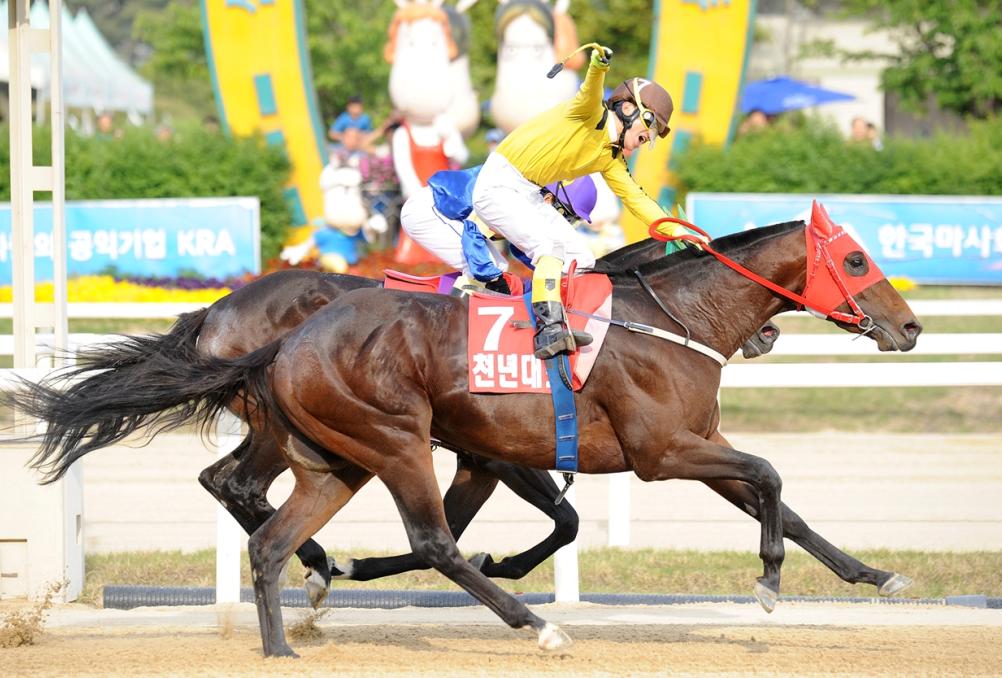
Cheonnyeon Daero winning the Derby - he was Creek Cat's biggest earner

Derby winner Cheonnyeon Daero was Creek Cat’s chief earner while Seoul’s Champion filly & mare Love Cat also contributed big winnings for the sire who has been in Korea since 2000 and was fourth in the standings last year. Runner-up was Concept Win for who once again, Sangseung Ilro was the biggest contributor. It was a disappointing year for Didyme but it could have been very different for the now twenty-year old stallion but for the injury suffered by his colt Northern Ace in the Korean Derby and if last year’s chief earner Areumdaun Jilju had not spent most of the year on the sidelines.

Japanese sire Biwa Shinseiki entered the top ten for the first time due to the success of champion three-year old Dangdae Bulpae while Volponi saw his first Korean crop reach three-years old and was ninth on the money list.

Looming on the horizon for all the established sires in Korea though is Menifee. Having arrived in Korea in late 2006, his first crop of two-year olds hit the track this year having been highly sought-after at yearling sales in 2009. They did not disappoint. Menifee was both leading first-crop sire and Leading sire of two-year olds by some considerable distance with colts of his sweeping the placings in the Breeders’ Cup in late November.

Leading Sires In Korea 2010 (Name/Pedigree/Owner/Earnings in Korean Won/Chief Earner)

1. Creek Cat (USA) [Storm Cat – Vivano (Island Whirl)] – (Evergreen Farm) – 3,409,984,000 – Cheonnyeon Daero
2. Concept Win (USA) [Manila – Conveniently (In Reality)] – (Korea Mainland Horse Breeders’ Association) – 2,358,508,000 – Sangseung Ilro
3. Ft. Stockton (USA) [Cure The Blues – Tai The Devil (Tai)] (KRA) – 2,176,639,000 – Cheonun
4. Fiercely (USA) [Danzig – Whirl Series (Roberto)] – (KRA) – 2,107,087,000 – Lucky Dancer
5. War Zone (USA) [Danzig – Proflare (Mr. Prospector) – (KRA) – 2,081,931,000 – Tamnaseontaek
6. Didyme (USA) [Dixieland Band – Soundings (Mr. Prospector)] – (KRA) – 1,928,442,000 – Glory Yeonggwang
7. Exploit (USA) [Storm Cat – My Turbulent Miss (My Dad George)] – (KRA) – 1,795,566,000 – Mr. Rocky
8. Biwa Shinseiki (JPN) [Forty Niner – Oceana (Northern Dancer)] – (Kim Chong Sik) – 1,717,986,000 – Dangdae Bulpae
9. Volponi (USA) [Cryptoclearance – Prom Night (Sir Harry Lewis)] (Korean Mainland Horse Breeders’ Association) – 1,684,316,000 – Dongbang Rose
10. The Groom Is Red (USA) – (Runaway Groom – Sheila’s Gold (Fast Gold)] – 1,575,416,000 – Triple Seven

* Eight registered Stallions passed away in Korea in 2010. They were Gwacheon Ruler (KOR), Time Star (USA), Glorify (USA), Tertian (USA), Bohamian Butler (USA), Jamine Langfuhr (KOR), Yashima Japan (USA) and Five Aligned (USA).

Mister Park: Korean Born, Not Bred

Grand Prix winner – and therefore Champion Korean Racehorse of 2010 – Mister Park, was born in Korea. However, he belongs to a group of horses that are considered neither fully Korean nor Foreign-bred. The reason is that while he has spent all his life in Korea, his dam (mother) Formal Deal was imported to the country while pregnant. Formal Deal was bought by the Korea Racing Authority (KRA) for $30,000 at the Keeneland November Breeding Stock Sale in 2006 and arrived in Korea the following January. When she went through the sales ring, she was in foal to stallion Ecton Park. And that foal was Mister Park.

Mister Park: Korean born - but not bred

While Korean buyers are restricted by law to spending a maximum of $20,000 on a colt at an overseas sale, they may spend up to $40,000 on a filly or broodmare. The thinking behind that is to protect and promote the domestic breeding industry; and buying a mare in foal in theory gets a racehorse as a bonus. Those foals are considered to be Korean bred and are eligible to run in any race in Korea with the exception of the three-year old Classics; the KRA Cup Mile, Korean Derby, Oaks and Minister’s Cup. Being a gelding, Mister Park was doubly unqualified for those races.

It makes sense. Young racehorses imported to Korea don’t generally have superior pedigrees to those sired domestically. There are some good sires in Korea – certainly good enough to produce foals to match those available for $20,000 at two-year old sales in the USA. However, there remains a significant advantage to being broken-in and initially trained overseas. It is for this reason that the KRA has for some time, been seriously considering setting up a training centre in Ocala, Florida.

Mister Park’s Grand Prix win, only the fourth by a horse listed as Korean-bred in twenty-nine runnings of the race, is therefore something of a triumph for domestic racing here. Even more so in that his sire, Ecton Park, who had long been popular with Korean buyers, had been finally purchased by the KRA last year and is now standing at the KRA’s Jeju Stud Farm. Sadly, there will be no reunion with Formal Deal.

Formal Deal
[Formal Gold – Green Noble (Green Dancer)] born in 2000, made her racing debut as a three-year old at Woodbine Racecourse in Toronto in 2003, finishing a rather inauspicious fifth of seven over seven furlongs. She ran another seven times – five at Woodbine and twice when shipped down to Fair Grounds in Louisiana – before finally being successful, in what turned out to be her final race at Woodbine on August 4, 2004. She was retired with career figures of nine runs, one win, one second, and three third place finishes.

Two years later and in foal to Ecton Park, she would go through the sales ring in Keeneland and be bought by the KRA. Sadly, her time in Korea was brief. She gave birth to Mister Park in March 2007 and later that year was covered by stallion Sakura Seeking but no foal resulted. Then, tragically, in 2008 she was struck down by colic and died in July that year.

Known in Korean as “Po-In-Ma” those horses sired elsewhere but born in Korea have long accounted for many of the competitors in the upper echelons of racing here. Among current the current elite class are the mare Top Point (Tom Cruiser) and colt Ace Galloper (Chapel Royal). More significantly, at both Seoul and Busan, the outstanding two-year olds of the year came from this category. In the capital Magic Party (Artie Schiller) has won three of her four races, including the Gwacheon Cup, while down at Busan another filly Bulkkot Gisang (Langfuhr) has cruised to five wins from five starts.

It’s early days but perhaps one of them could go on to emulate Mister Park a year from now.

Ocala Spring Purchases Sold-On

KRA takes quantity over quality at OBS

Horses purchased by the KRA and the Seoul Racecourse Trainers’ Association at the Ocala Breeders’ Sales (OBS) Spring two-year old sale have arrived in Korea and have now been sold on to local owners. At the original sale in April, Korean representatives purchased 92 horses – 12% of the total who went through the ring.

Due to government restrictions designed to protect the Korean breeding industry, the Korean buyers at Ocala were limited to paying no more than $20,000 for a single colt or $40,000 for a single filly – the higher limit for fillies being intended to encourage the purchase of higher quality fillies for racing who may end up having careers as broodmares.

There were no such limits on the amounts they could be sold on for in Korea, however, with owners at Busan splashing out the most. A Tiznow colt out of the mare Trickle of Gold (Formal Gold) fetched the highest figure closely followed by another colt by Sharp Humor out of Secret Mirage (Secreto). Owners Choi Sang Il and Choi Sang Hee both shelling out close to 200 Million on the pair.

Tough Win

While such high prices for seemingly indifferent horses may seem inexplicable, it must be remembered that these horses will immediately be running for big money with even the least valuable race worth $13,000 to the winner. Indeed, both Dongbanui Gangja and Tough Win – respectively the best and the most exciting horses on the peninsula right now – arrived in Korea via Ocala and owners are keen to get a piece of the action.

The KRA operates as a not-for-profit oragnization so the excess money made is put straight back into breeding and also for funding their next overseas purchases.

Here are a list of the top re-sales of horses bought at the OBS Spring Sale for both Busan and Seoul with original names if known as well as the amount (in Korean won) they were sold for:

Busan

1. Colt [Tiznow – Trickle Of Gold (Formal Gold)] – 187,700,000 won
2. Colt [Sharp Humor – Secret Mirage (Secreto)] – 183,300,00 won
3. Filly [Dehere – Riptide (Gold Case)] – 150,000,000
4. Colt [Montbrook – Auf Wiedersehn (Notebook)] – 115,000,000
5. Filly [Johannesburg – Perfect Wave (Boston Harbor)] – 110,000,000 won

Seoul

1. I’d Rather B Lucky (Colt) [Gibson County – Tricky Prospector (Prospector’s Halo)] – 72,000,000 won
2. Colt [D Wildcat – Freddy Fenter (Fenter)] – 61,500,000 won
3. American Revival (Colt) [Put It Back – American Saint (Saint Ballado)] – 52,000,000 won
4. Filly [Sir Shackleton – Tocar (Jeblar)] – 50,200,000 won
5. Public Mischief (Filly) [Grand Slam – Silver Lover (Silver Deputy)] – 46,100,000 won

1233 Korean won = 1 US$ – Figures from Korean Stud Book and Korea Racing Journal

The local Ocala media ran a story on the Korean buyers at the time of the sale.

Anyone wishing to check on the progress of horses they may have sold to Korea can do so by going to the homepage of the Korean Studbook and then searching on the dam’s name.

Creek Cat Leads Sire Race

Didyme’s three-year streak set to be ended

It’s looking less and less likely that that Didyme is going to make it four straight years as leading sire in Korea after Cheonnyeon Daero’s Derby victory propelled Creek Cat to the top of the standings.

Fiercely is just over 100 Million won behind, just edging The Groom Is Red into third. Last year’s runner-up, Concept Win makes it into fourth with Sangseung Ilro once more his top earner.

Revere is the only non US-bred stallion in the top ten in ninth place, one below Didyme eighth in eighth.

Leading Sires in Korea as at January 1 – June 1, 2010

Name – Earnings (Chief Earner)
1. Creek Cat (USA) 1,204,702 (Cheonnyeon Daero)
2. Fiercely (USA) 1,099,840 (Seon San)
3. The Groom Is Red (USA) 1,083,946 (Triple Seven)
4. Concept Win (USA) 1,018,712 (Sangseung Ilro)
5. War Zone (USA) 910,313 (Hanhyeolgeumgu)
6. Social Charter (USA) 868,611 (Free Woody)
7. Ft. Stockton (USA) 841,525 (Namdo Jeap)
8. Didyme (USA) 769,355 (Top Seed)
9. Revere (IRE) 693,225 (Boryeong Bulbit)
10. Buster’s Daydream (USA) 644,564 (Seungundaeseung)

Naturally Creek Cat is also the leading sire of three-year olds with the late Newsprint – sire of Money Car and Seonbongbulpae – in second. Also appearing in that top ten are Capital Spending, Exploit, Biwa Shinseiki, Volponi and Yehudi.

While at the two-year old and yearling sales recently there has been a buzz around Menifee, whose first crop will be making their debut this year (one of his fillies, Daehwarang, already has, although she made an inauspicious debut), more and more Korean bred horses are being sent to stud.

2007 Triple Crown winner J.S. Hold (Ft, Stockton) is the highest profile, however, he covered just fourteen mares last year with just one foal born so far. Meanwhile, 2008 Minister’s Cup winner Gaeseon Janggun (Duality) is set to begin stud duties this year.

* Information on all stallions in Korea can be found at the Korean Studbook. Also, Fallight maintains a constantly updated user-friendly list at his website.

Exploit Colt Heads Jeju Sale

An Exploit colt, out of the mare Telegraph Road (Royal Academy) fetched the biggest price at this week’s two-day Jeju two-year old sale. Since arriving in Korea in 2006, Telegraph Road has had two foals reach the track and both of them – Blue Pin and Northern Ace – have shown talent.

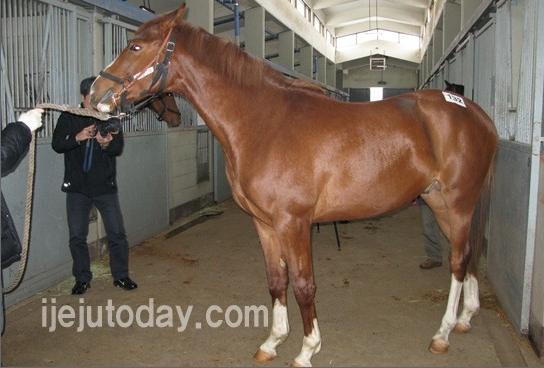
The Exploit colt that topped the Jeju sale - Photo: Jeju Today

The bidding for the Exploit colt started at KRW 20 Million and the hammer finally came down at KRW 116 Million, a record for these sales (KRW 1131=$1). The successful bidder was Busan Racecourse based owner Choi Won Ho.

Others to attract big money was a Vicar colt out of Carson City Dancer (Carson City) who was sold for KRW 95 Million and a Thunder Gulch colt out of Escape (A.P. Indy) going for KRW 80 Million. The biggest amount paid for a filly was the KRW 70 Million a daughter of Menifee out of the New Zealand bred mare Monster (Waikiki Star).

Jeju Today covered the event (in Korean) and Chulgigi has a complete table of all purchases (in Korean). As ever, full details on all horses in Korea for both racing and breeding can be found online in the Korean Studbook. meanwhile, Fallight has a number of official appearance videos by Korean based stallions on his Youtube channel.

Didyme is Top Sire for 3rd Straight Year

Didyme is Leading Sire in Korea for the third year running. The nineteen year old was responsible for earnings approaching 3 Billion Won over the year, 200 Million Won more than nearest rival Concept Win whose filly, Sangseung Ilro claimed two legs of the Triple Crown. Revere was in third place.

Leading Sires in Korea 2009
Name/Pedigree/Earnings (Korean Won)/Win Rate/Chief Earner

1. Didyme (USA) [Dixieland Band – Soundings (Mr. Prospector)] – 2,961,105,000 – 13.1% – Areumdaun Jilju
2. Concept Win (USA) [Manila – Conveniently (In Reality)] – 2,799,694,000 – 8.2% – Sangseung Ilro
3. Revere (IRE) [Dancing Brave – Bint Pasha (Affirmed)] – 2,489,169,000 – 7.9% – Pangpang
4. Creek Cat (USA) [Storm Cat – Vivano (Island Whirl)] – 2,328,035,000 – 14.4% – Yeonseung Daero
5. Duality (USA) [Seeking The Gold – Jody.G (Roberto)] – 2,208,030,000 – 15.4% – Gaeseon Janggun

All of the top five’s chief money earners run at Busan, a further demonstration of the stranglehold the southern track has in terms of quality. In races where Seoul and Busan horses faced each other this year, Busan won four and Seoul won two. Crucially though, Busan won all the races which were restricted to Korean bred runners.

Creek Cat was leading sire of two year-olds, ahead of Didyme, but one to look out for though could be Newsprint (USA) [Gone West – Salty Perfume (Salt Lake)]. He finished seventh on the list of sires of two-year olds from just six runners. They included Seonbongbulpae and Money Car, two of the year’s most exciting juveniles. Newsprint was second among first crop sires behind Volponi. Sadly Newsprint died in November at the tender age of seven but his offspring may do him proud in 2010.

Full details can be found at the Korean Studbook.