Horse Racing

Stallions Yankee Victor & The Groom Is Red Pass Away

Sad news out of Jeju Island as stallions Yankee Victor and The Groom Is Red have both died within the last month. Yankee Victor succumbed to a colic on February 1 while The Groom Is Red had to be euthanized after sustaining multiple fractures in a paddock accident on January 27.

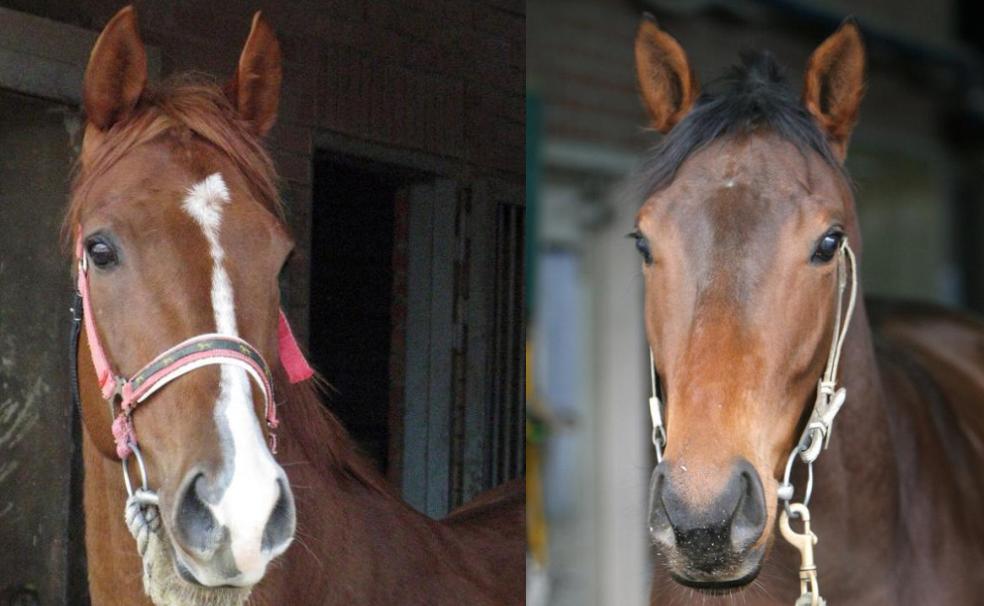
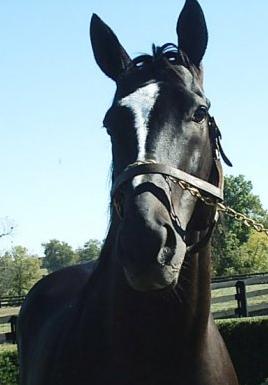
Yankee Victor (Pic: KRA)

Yankee Victor [Saint Ballado – Highest Carol (Caro)] had been in for five years. On the racecourse in the US, Yankee Victor won eight of his nineteen races. A fine miler, in 2000, he won a pair of Grade 1 races over the distance – the Met Mile at Belmont Park and the Westchester Handicap at Aqueduct.

Retired to Stud, he was moderately successful in the US before being bought by the KRA in late 2005. Just becoming established as a sire in Korea, he’s had just two crops of foals reach the track so far both including some promising runners.

Here are the closing stages of his Met Mile victory:

And his KRA appearance video:

The Groom Is Red (Pic: KRA)

The Groom Is Red [Runaway Groom – Sheena’s Gold (Fast Gold)] won just four times in the US. Just like Yankee Victor, his biggest triumph also came over a mile at Belmont when, as a two year old in 1998, he won the G1 Champagne Stakes. Brought straight to Korea as soon as he retired from the track, he would have been entering his twelfth season.

Siring solid if generally unspectacular horses, he nevertheless produced some champions including the great grey Baekgwang, winner of the Minister’s Cup in 2006, and Triple Seven, Ttukseom Cup winner in 2010 as well as Andy’s Runner, winner of this year’s New Year Stakes.

Here is his KRA appearance video:

Double Classic Winning Filly Sangseung Ilro Retired

Sangseung Ilro, the filly who won the first two legs of the 2009 Triple Crown has been retired. She ran – and won – her last race in December last year and was retired in January ahead of what would have been her five-year old season. She was officially registered as a broodmare yesterday.

Sangseung Ilro (Pic: KRA)

Although she won three of her first five races, Sangseung Ilro [Concept Win – Ms. Whiskey (Whiskey Wisdom)] was a 17/1 outsider going into the first leg of the Triple Crown, the KRA Cup Mile at her home track of Busan in April 2009.

She wasn’t even the most fancied of four fillies taking part in the race, with Seoul’s Love Cat arriving down South with a big reputation and odds of 8/1 However, under Japanese jockey Eiki Nishimura she scored by a length and a half over stablemate Namdo Jeap and pre-race favourite Yeonseung Daero. It would not be the final time she’d beat these two who would both go on to become stars themselves.

There was intrigue surrounding her trip to Seoul the following month for the Korean Derby. Nishimura, who had been expecting to accompany her to the capital was jocked off in favour of local jockey Jo Sung Gon amid whispers of displeasure in the Jockeys’ Union that a foreigner had won a Classic race. It made no difference to Sangseung Ilro and while local Seoul hope Nice Choice was sent off as favourite, she repeated her feat from the KRA Cup Mile, this time winning by a comfortable five lengths, Namdo Jeap chasing her home once again.

By this time, she was not only talked about as being on course to complete the Triple Crown but, being a filly, possibly securing the Oaks aswell in what wa being termed the “Grand Slam”. However, tt was shortly after the Derby that the first signs of an injury problem – Sangseung Ilro had consistent problems with her shins – started to surface and she didn’t reappear until the Korean Oaks on a hot August evening at Busan. This time, with Eiki back in the saddle, she was sent off odds-on favourite.

All was going well as she entered the home straight clear of the field and seemingly heading to a simple victory. Then, out of nowhere, second favourite Pangpang emerged and as Sangseung Ilro weakened, slowly reeled her in, hitting the front just before the line to score a shock victory and give her jockey, the late Han Sang Kyu, his first and only Classic success.

The “Grand Slam” was off the table and it was a race against time for her to be fit for the final leg of the Triple Crown, the Minister’s Cup, at Seoul in October. That day, after being runner-up in the first two legs, Namdo Jeap finally took the honours with Martin Wepner in the saddle. Sangseung Ilro ran a brave and battling third. She hadn’t quite managed to pull off the Triple Crown, but had made her mark as one of the best fillies in modern Korean racing.

It seemed that an appearance two days after Christmas when she ran fourth in a handicap at Busan would be her farewell but, in a surprising and welcome decision, connections decided that she was fit enough to keep in training as a four year old. Their decision was quickly rewarded when in January she won a valuable handicap. Durung 2010 she would run seven times, winning on four occasions including back-to-back Stakes victories in the KNN Cup and the Gyeongnam Do-Min Ilbo. Her final race, on December 17, ended in a commanding four length victory.

Sangseung Ilro was retired with career figures of 17 races, 9 wins, 3 seconds and 2 thirds for prize money of just over 1 Billion Korean Won (approximately $1 Million). She has been retired by her owner to “Good Day Farm” and is expected to begin her broodmare career this year.

History Time: Visiting The Old Seoul Racecourses

A trip to Ttukseom and Sinseol-Dong

The current Seoul Race Park, just outside the city limits in Gwacheon is horse racing’s third home in the capital. With no racing this weekend, it was an opportunity for a long overdue trip across the city to visit the sites of its two predecessors.
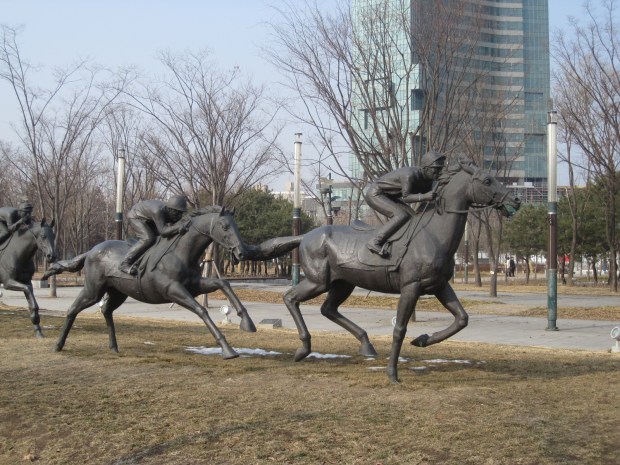
Seoul Forest honours its history as the former Ttukseom Racecourse

The KRA moved its operations to the current site in Gwacheon after the 1988 Seoul Olympic Games. During the Games, the KRA had organised the equestrian events and afterwards converted the facility for racing, closing its track at Ttukseom which had been the home of Seoul Racecourse for thirty-five years.
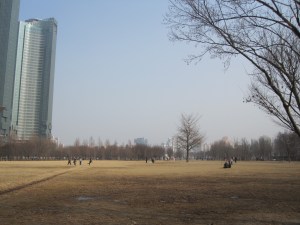
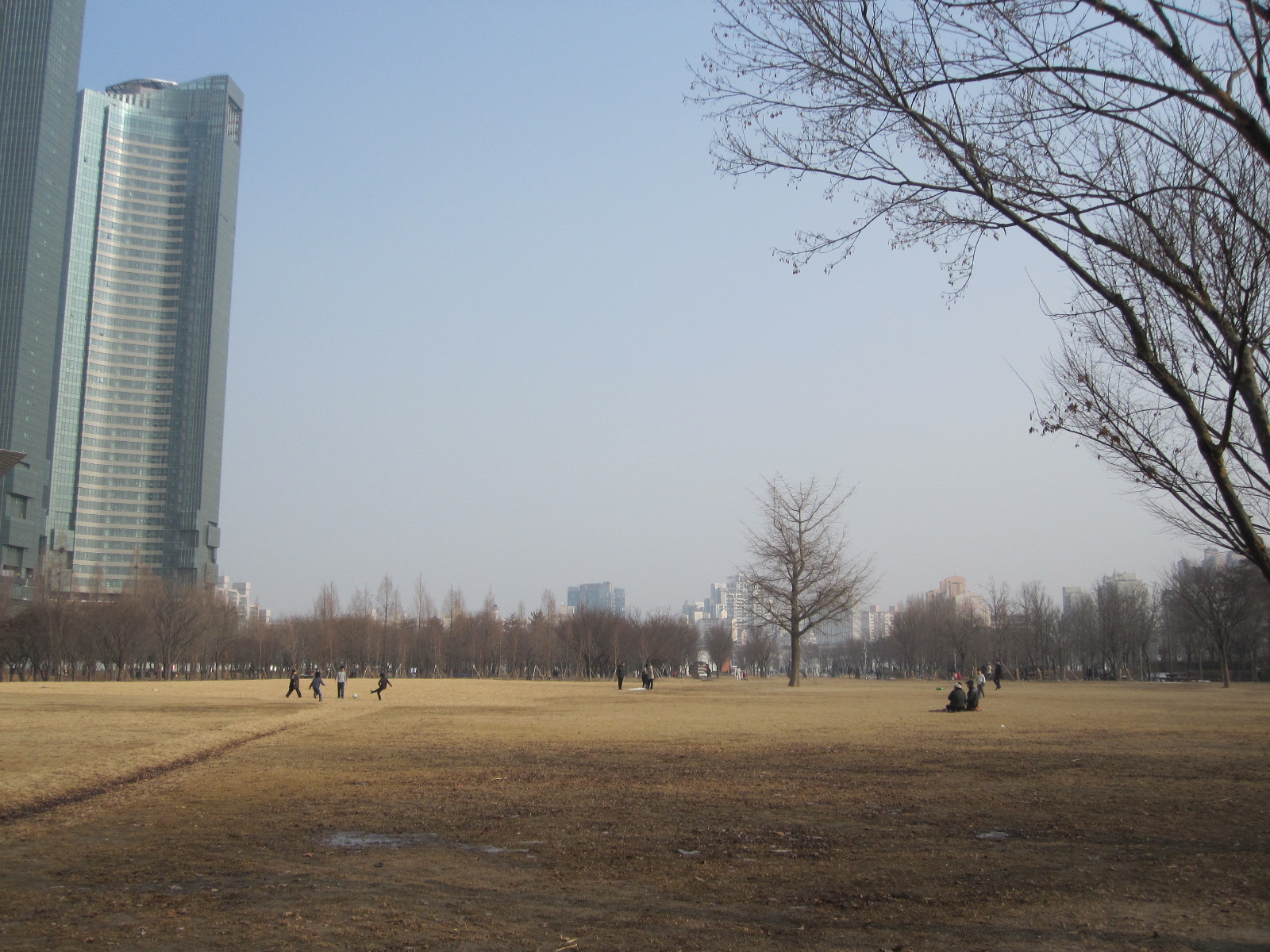
The large Ttukseom infield remains intact

Remarkably, given its central location, Ttukseom remains open space. After the racecourse closed, a water purification plant was built but the majority of the site lay untouched with the infield public golf driving range remaining open until well into the 1990s.

In 2003, resisting the temptation to turn the whole site into a private golf-course or to let Samsung, GS et.al build expensive apartments on it (well not on all of it, anyway) the City Authorities launched an ambitious plan to turn the area into an inner-city Forest Park. The old grandstand was finally knocked down and two years later, “Seoul Forest” was officially opened. And a beautiful place it is too.
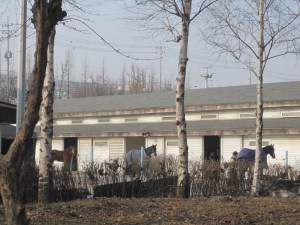
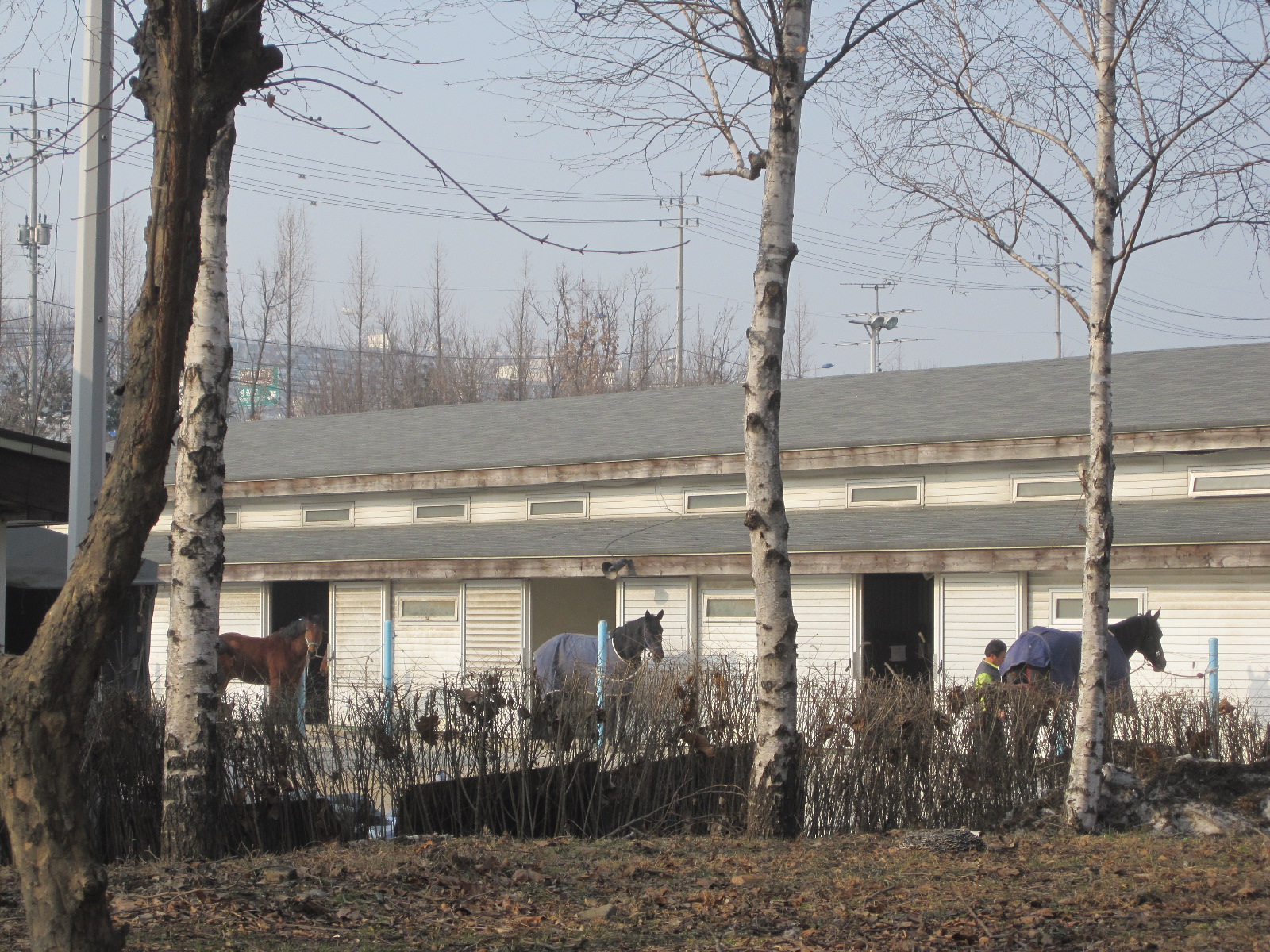
Some of the old Stable blocks are still in use

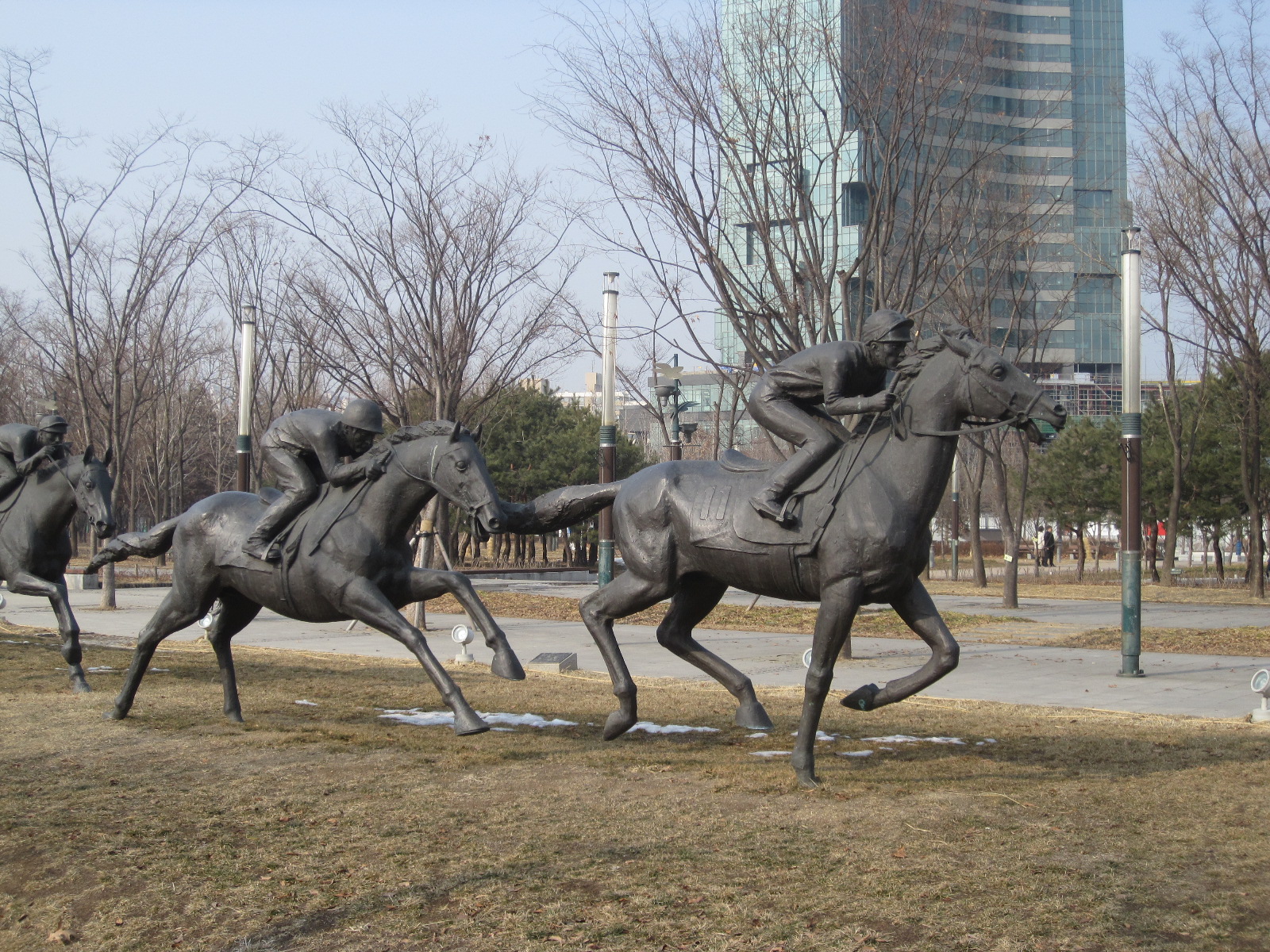
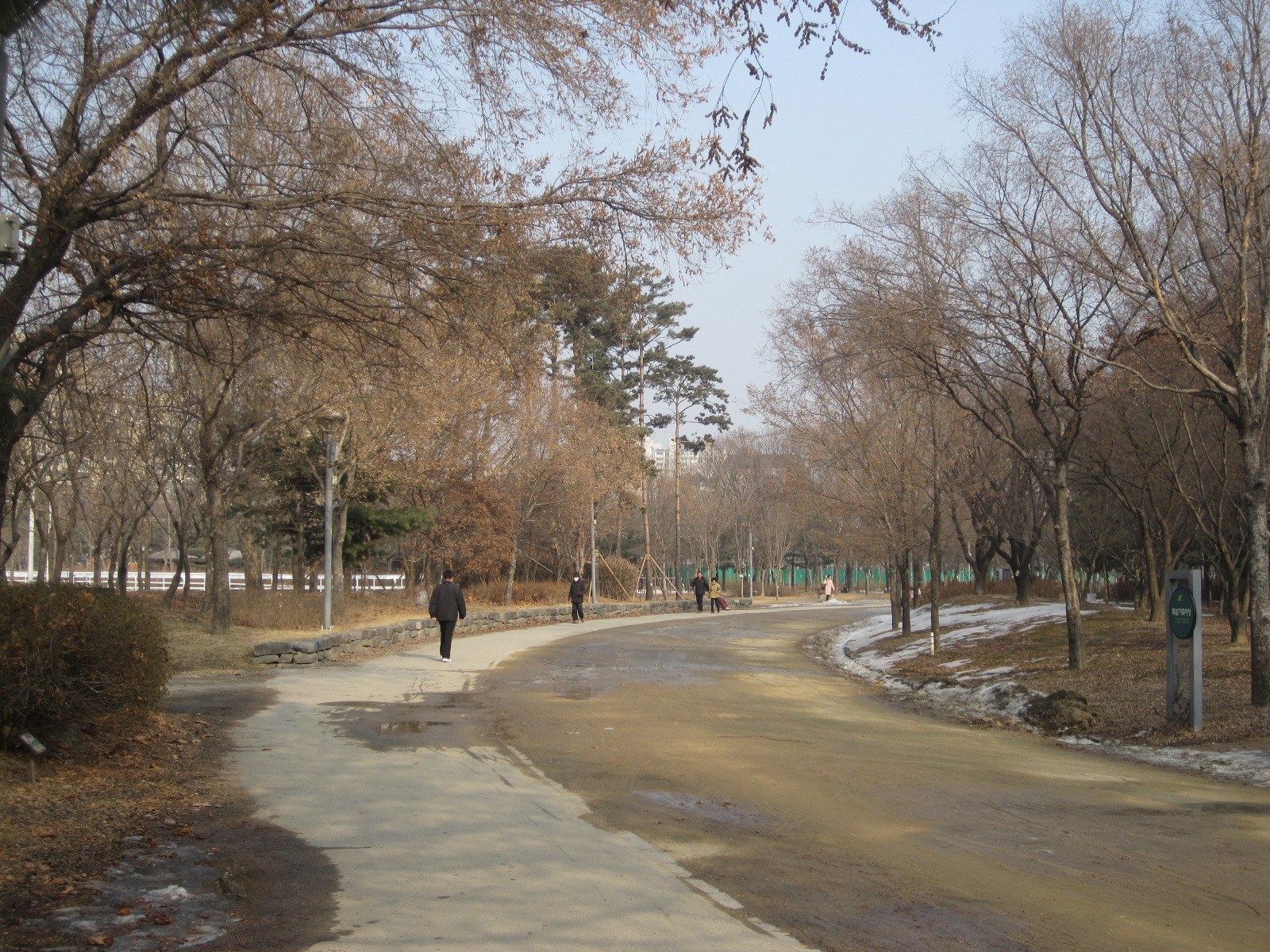
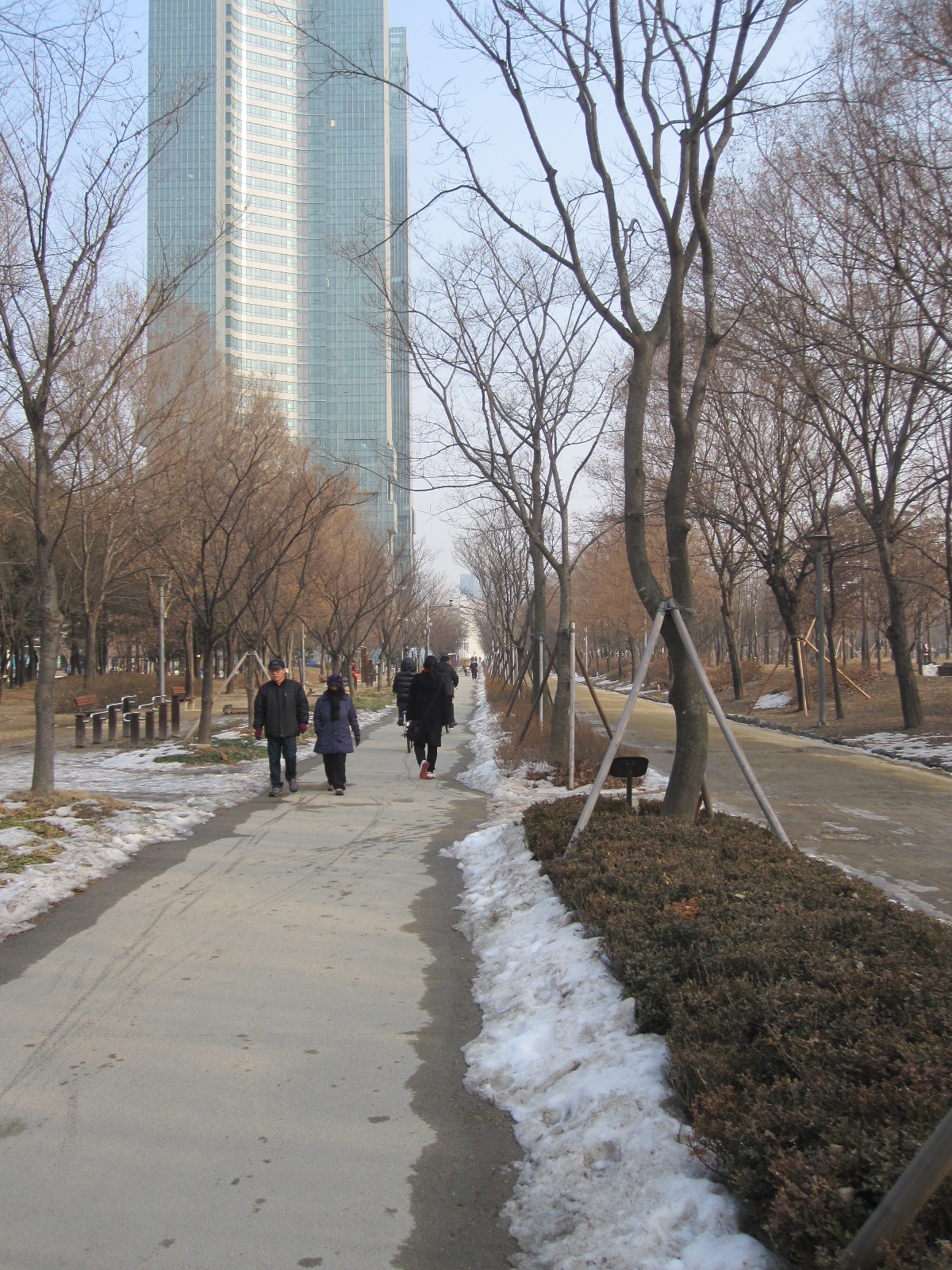
The bronze statues of racehorses contesting a tight finish is just one of many reminders of its former use. The oval track outline is still visible, having been turned into a walking path and, even on this chilly late winter day, many walkers, cyclists, and even game-playing families, were out enjoying the tail-end of the Lunar New Year holiday in the cool sunshine.

The old stable buildings were located on the same side of the track as the Grandstand and while there is no trace of the latter, one or two stable blocks remain intact as the home of the Seoul Equestrian Club. Indeed a number of horses were out being schooled in the club’s paddock drawing a small crowd of onlookers.
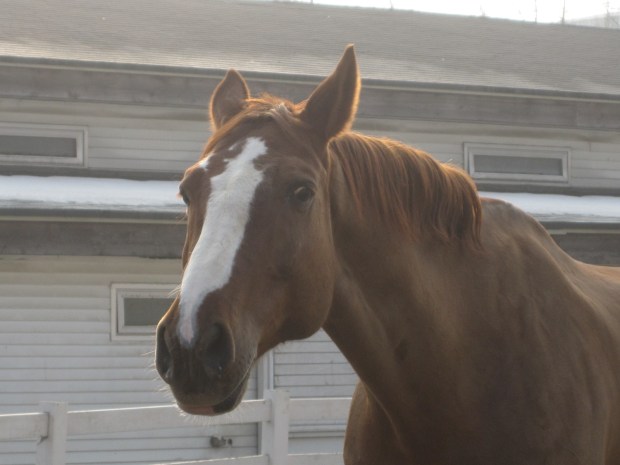
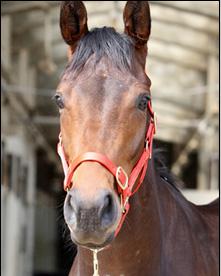
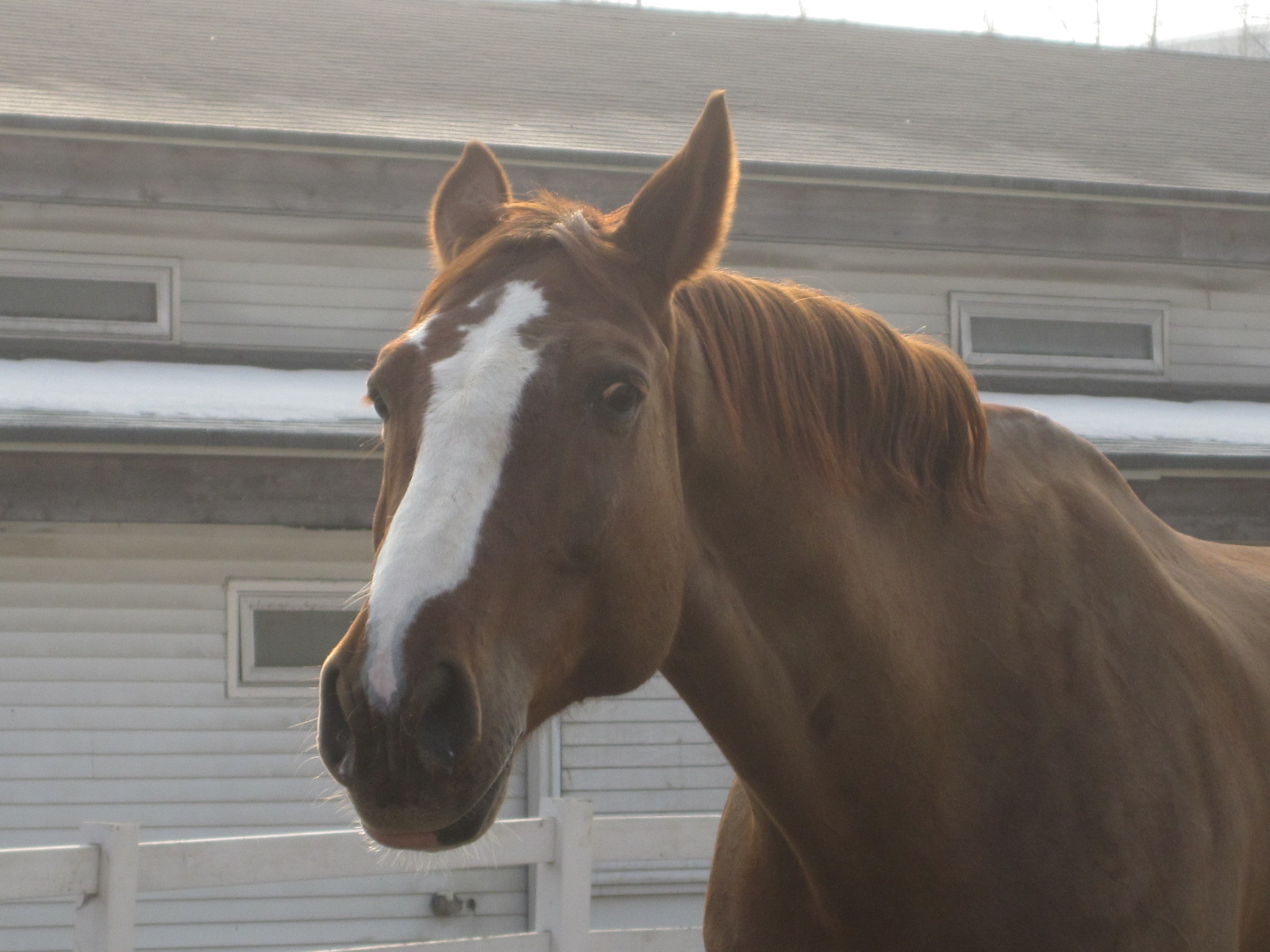
This chap was huge! But friendly enough as he took a break from schooling

The “forest” extends a long way beyond the confines of the old racecourse to join up with the nearby Hangang Park. It includes various “Eco-Zones” (basically bits of land that have just been left as they are) and a deer habitat, as well as a concert stage and the obligatory bicycle hire, coffee shop and fast food restaurant. While pleasant enough already, when the young trees start to mature in the next few years, Seoul Forest will surely be one of Seoul’s best parks.
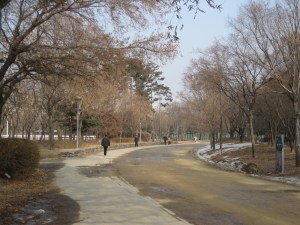
The home turn - unlike the current Seoul Racecourse, horses at Ttukseom ran clockwise

While it’s been only twenty-three years since it hosted its last race, Ttukseom truly does belong to a different era of racing. There was no private ownership of horses – all were owned by the KRA – and therefore no prize money. The Korean Stud Book was only just getting started and a large portion of the horses running would not have been thoroughbreds. The only Stakes race to have begun at Ttukseom and still be run today is the Grand Prix, however, the old course is honoured in a race of its own, “The Ttukseom Cup”, contested at Gwacheon each April. Park Tae Jong, Shin Hyung Chul and Kim Gui Bae are the only jockeys still riding who began their careers at Ttukseom.
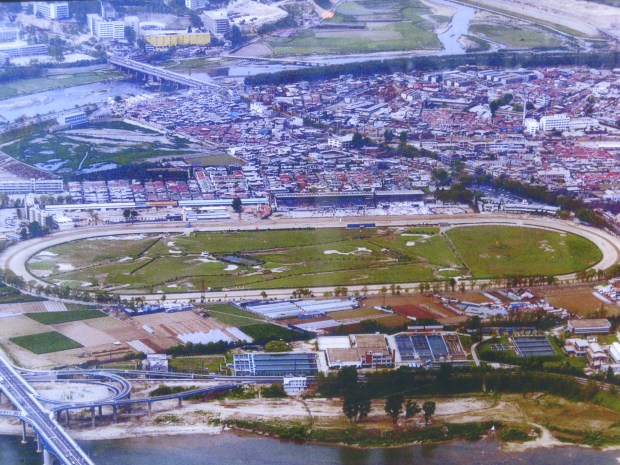
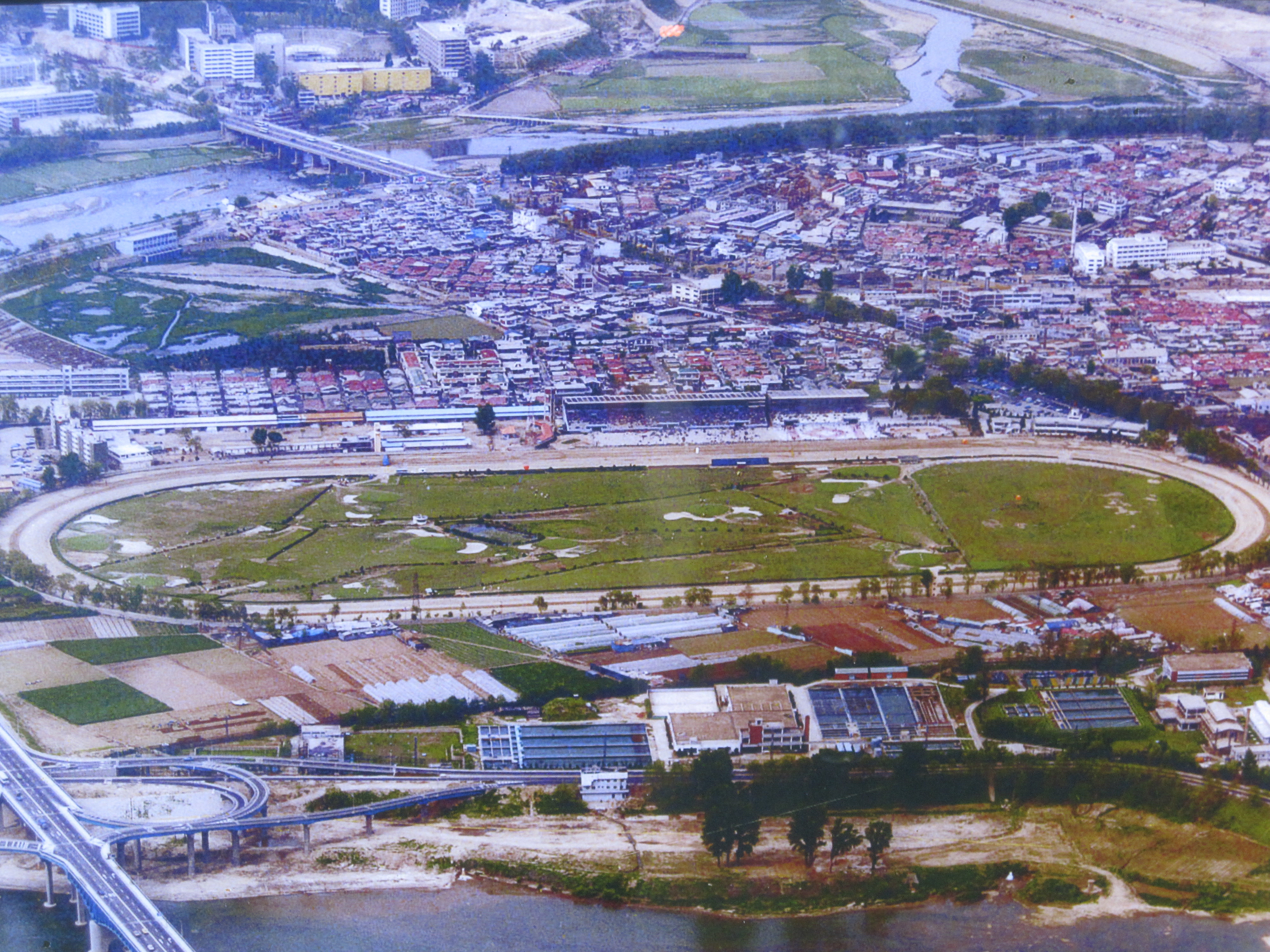
From the Archive: An overhead view of Ttukseom in its racing days (photo of a photo in the gallery at Seoul Race Park)

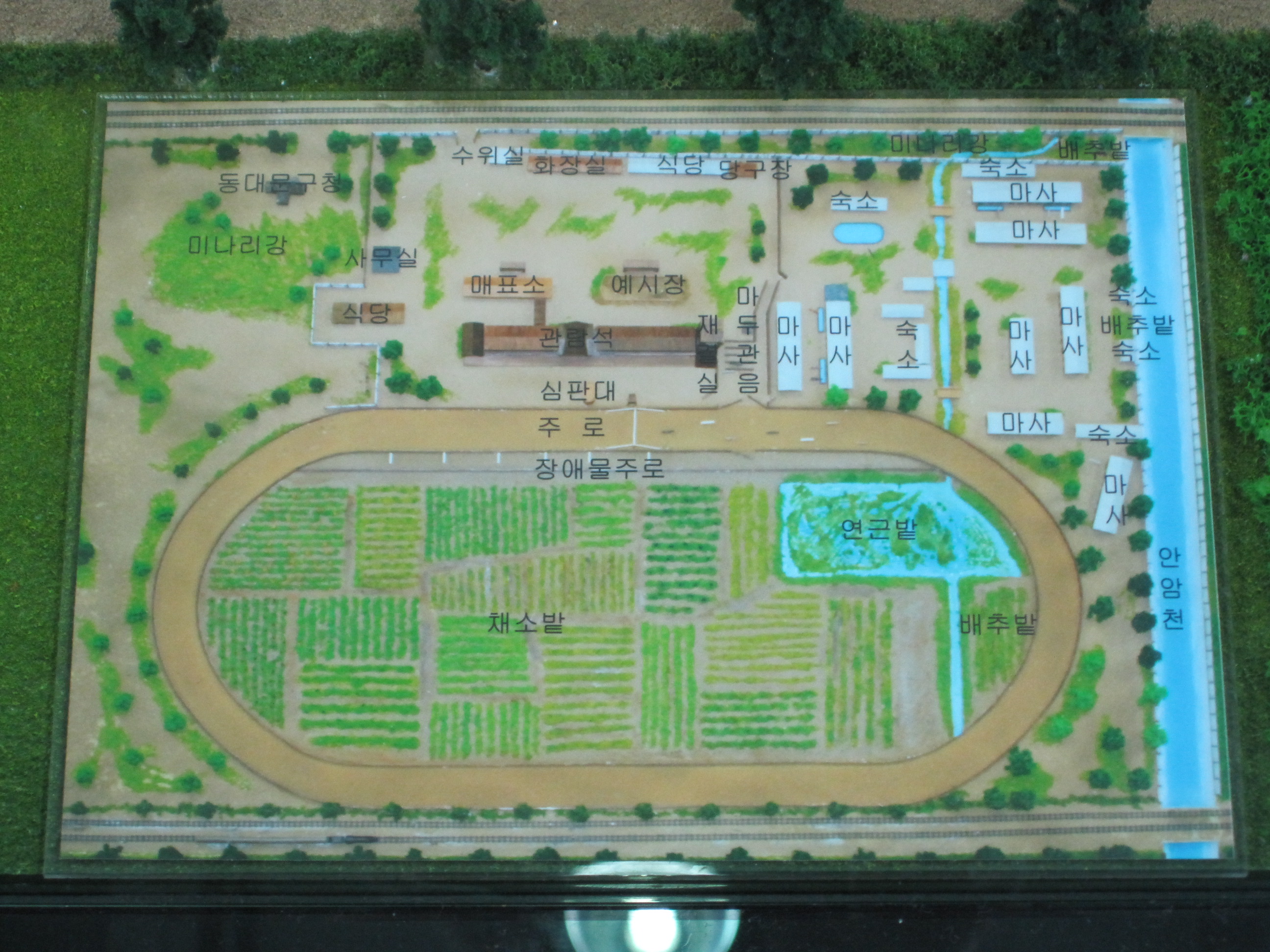
A fifteen minute subway ride from Ttukseom brings you to the district of Sinseol-dong and a step even further back in time in Korean racing terms. Sinseol-dong, adjacent to the historic “Dongdaemun” or “East Gate” and it’s sprawling market, was home to Seoul Racecourse from 1928 until the outbreak of the Korean War in 1950 when the track was abandoned (see this post from last year about the final day of racing at Sinseol-dong).
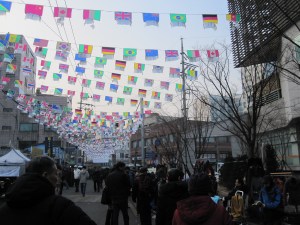
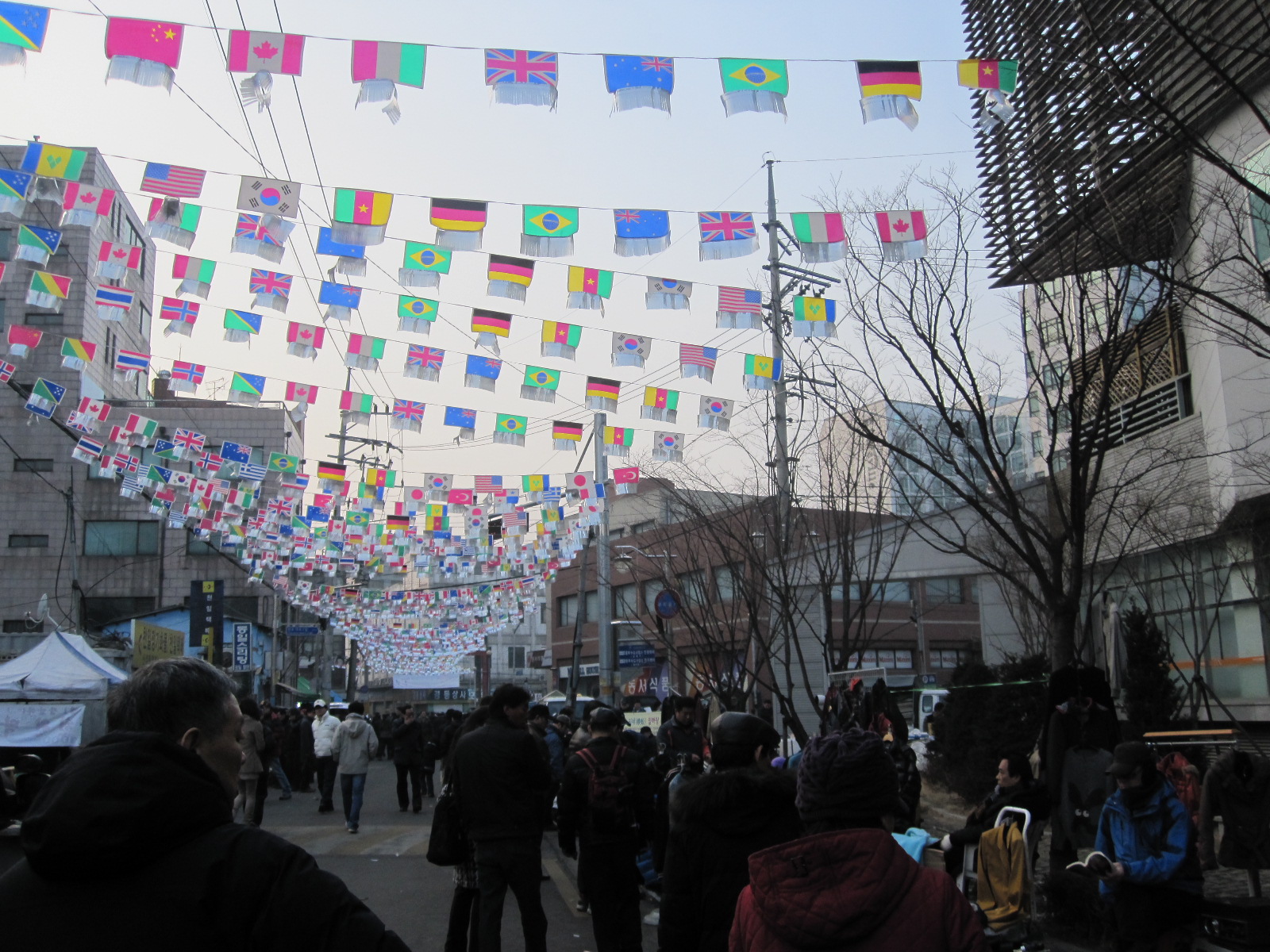
One of a number of bustling street markets on the site of the old Sinseol-dong Racecourse

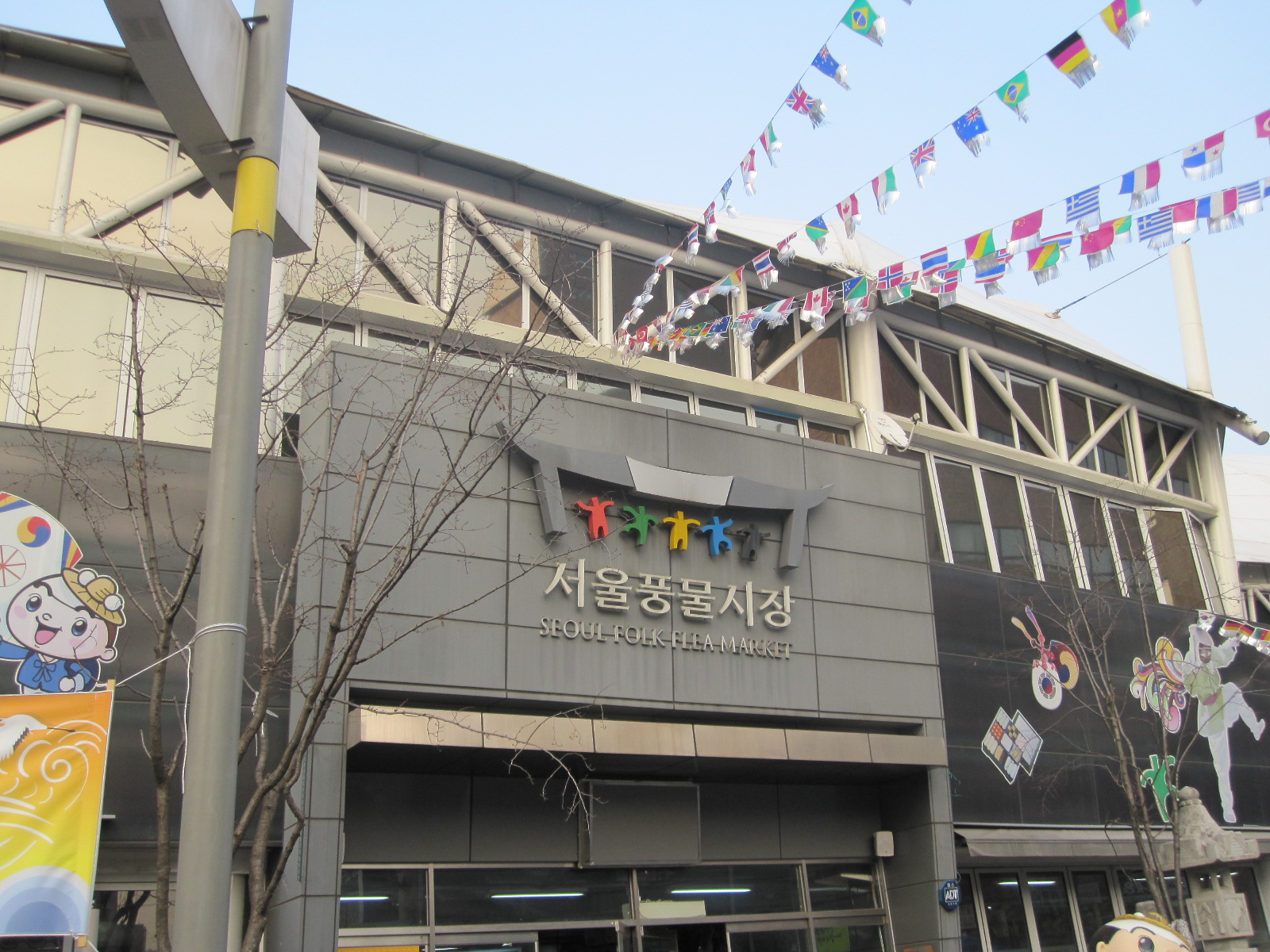
Today, nothing remains of the track, which was situated from the wall of Dongmyo Shrine in the west, stretching down to the Chongyecheon stream to the South, Sinseol-dong Station to the North and the present day Seoul Folk Flea Market in the east.

The KRA does, however, have a presence on the site in the shape of a gleaming new eight storey Off-Track Betting Plaza. The plaza is located a few metres to the south of where the winning post would have stood.
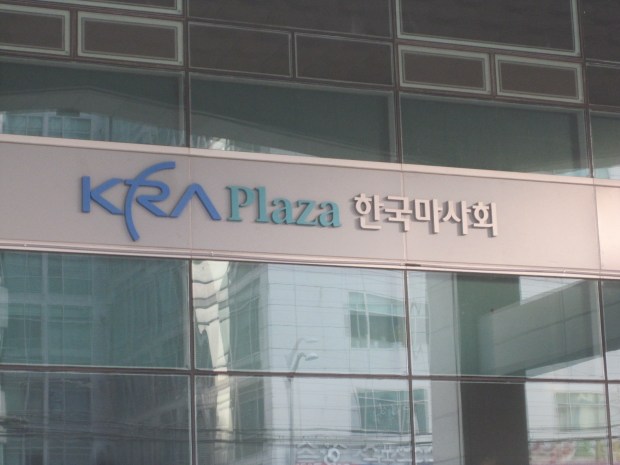
Just south of where the Sinseol-dong winning post would have stood, the KRA has a massive, brand new off-track betting plaza

The rest of Sinseol-Dong – the old track infield – is a maze of old buildings and alleyways that were constructed in the late 1950’s and early 1960’s and which have yet to undergo the “Samsung-ification” of much of the rest of tha capital. With the Dongmyo Market in the East and the “Folk Flea Market” in the west, it is a fascinating area and one in which you can walk around for hours without running out of things to see. However, the giant – and very expensive – Lotte Castle Apartment buildings just to the South sadly look sure to encroach on the area very soon
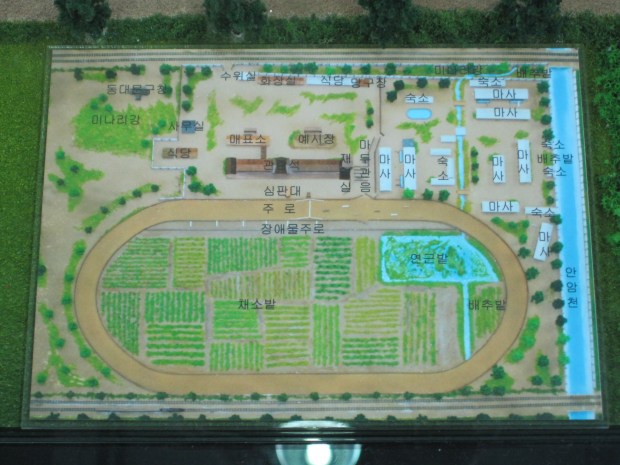
A scale-model of Sinseol-dong Racecourse in the present day Seoul Race Park gallery

In the early part of the twentieth century, there were a number of racecourses across the peninsula operated by local racing clubs, including a number in what is now North Korea. It is Sinseol-Dong and Ttukseom, however, as the forerunners of the present day Seoul Race Park, that played the biggest role in the development of horse racing here. For different reasons, the sites of both are well worth visiting; Ttukseom to spend a couple of hours away from city life in a tranquil setting and Sinseol-dong to see a little bit of the vibrancy of old-Seoul before its gone for good. The current track at Gwacheon is even more worth a visit and live racing resumes next Saturday.

Seoul Forest: Ttukseom Subway Station (Subway Line 2), take exit 8 – follow the signs to the Park entrance.

Sinseol-Dong: Sinseol-Dong Subway Station (Subway Lines 1 & 2), exit 10. The site of the winning post is in the vicinity of the KRA Plaza. Take exit 10 from the station, turn left and walk for 1 minute.
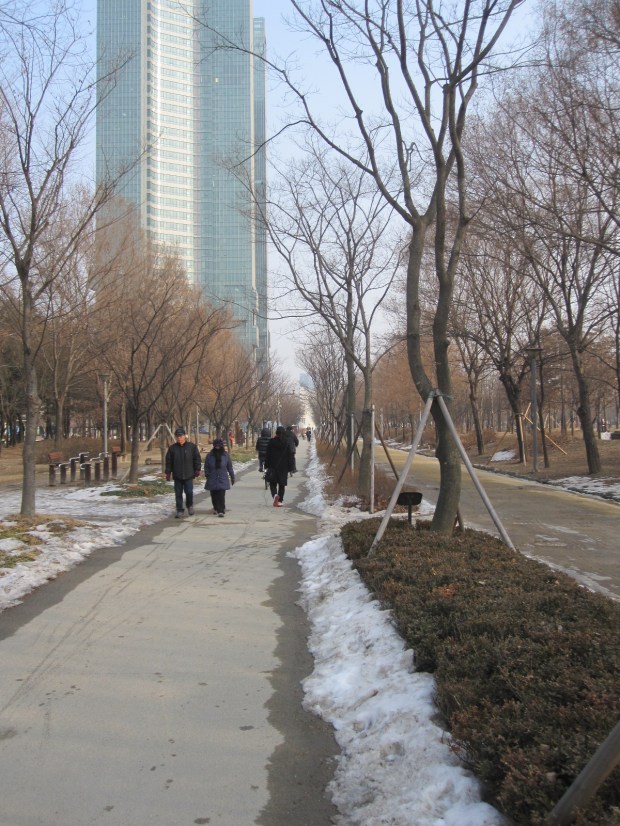
View down the old home straight towards the winning post at Ttukseom
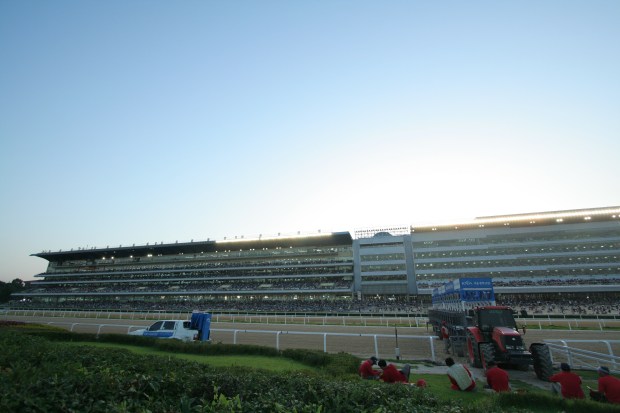
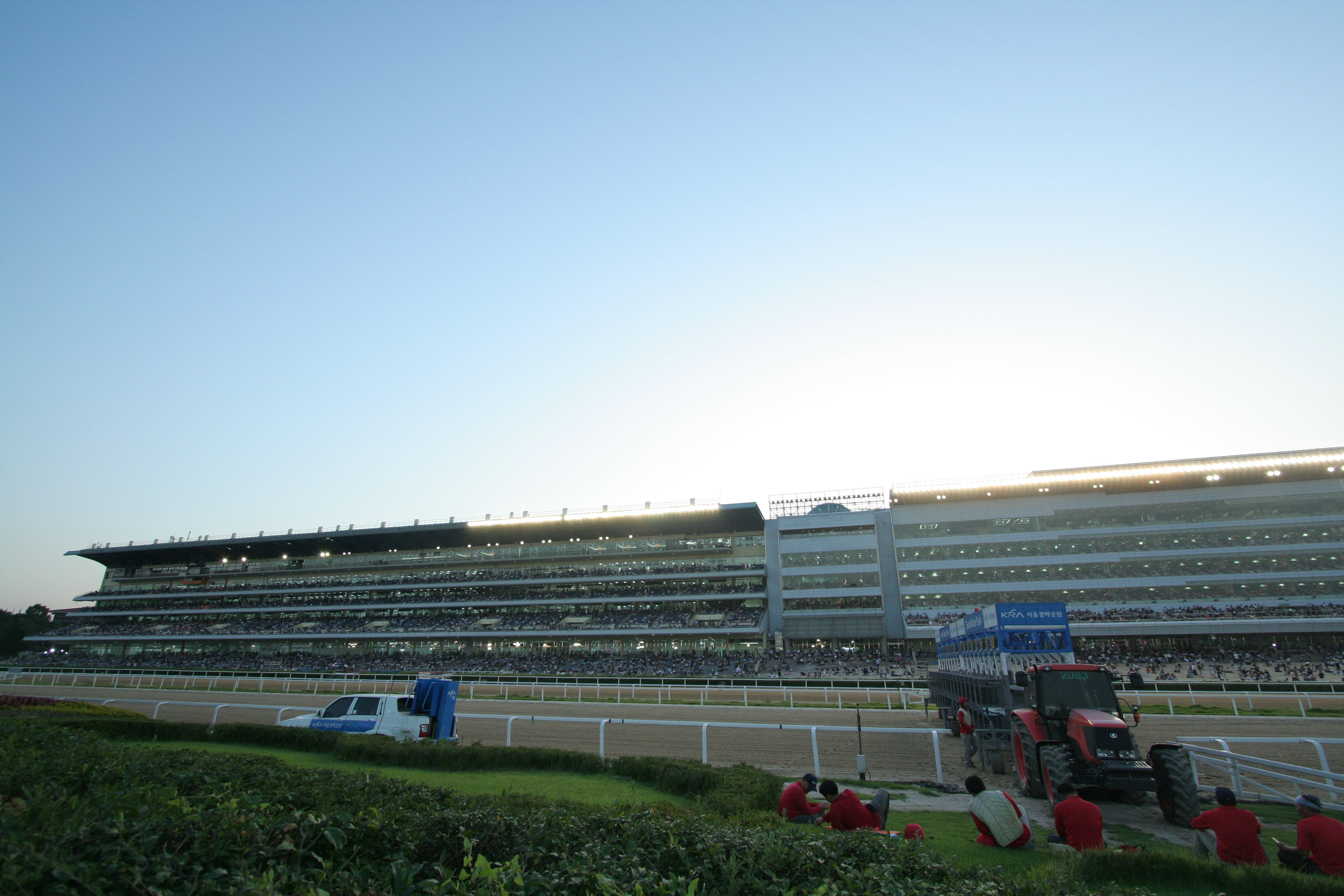
Still Standing: The Present day Seoul Racecourse at Gwacheon
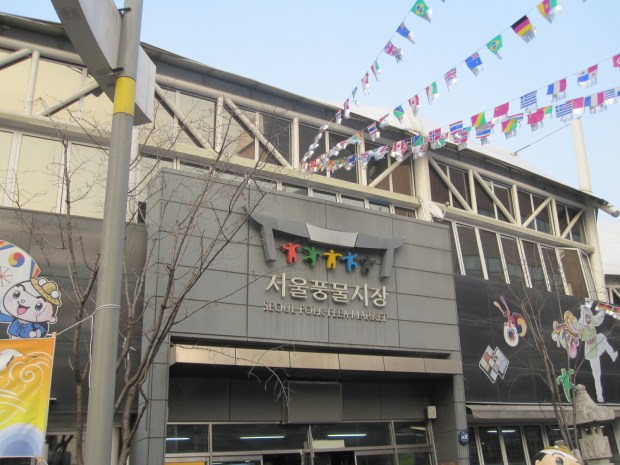
Seoul Folk Flea Market - you can buy anything either in the main bulilding or the surrounding streets. Located just east of the old winning line at Sinseol-dong
Horse Of The Year – And Other Awards

With no racing this weekend and a month gone of the new season, it’s time to take a belated look back at 2010. Last week, the Korean Racing Journal, Korea’s most authoritative racing newspaper (in Gyongmaman’s opinion anyway as he likes to bet their “dark horse” predictions) published their annual award winners. There were numerous categories up for grabs along with some special awards too. One thing to note is that no horse could win more than one category.

Horse Of The Year: Tough Win

Horse Of The Year: Tough Win
He was beaten in the season-ending Grand Prix but before that won six straight races in 2010 including the Busan Metropolitan and the KRA Cup Classic. While Mister Park remained unbeaten, the quality of opposition Tough Win defeated up until the Grand Prix was superior. Doubts about his staying ability appear to have been confirmed by his defeat in his 2011 debut but in 2010, Tough Win was a worthy Horse Of The Year.

Mister Park

Male Horse Of The Year: Mister Park
It was a toss-up between him and Tough Win as to who would take the big prize but Mister Park is both the present and the future of Korean racing. His win in the Grand Prix in December capped an unbeaten nine races in 2010. He wasn’t eligible for the Triple Crown by virtue of having been sired overseas, however, the sire in question, Ecton Park, is now in Korea and his progeny are eagerly awaited.

Champion Filly & Mare: Sangseung Ilro
A remarkable filly, the winner of two legs of the Triple Crown in 2009, Sangseung Ilro takes this crown for the second year running. She has fragile legs and has to be campaigned very sensibly but was kept in training instead of being rushed off to the breeding shed. She ran seven times in 2010, capturing two Stakes victories along the way and she will go down as one of the best fillies or mares in Korean racing history.

Dangdae Bulpae

Champion Three Year Old (open): Dangdae Bulpae
He struggled in the KRA Cup Mile and finished third in the Derby but came good in the autumn as he landed the Minister’s Cup – the final leg of the Triple Crown – at Seoul in October, before returning to the capital a month later to defeat older horses in the President’s Cup. While Seoul’s two most talented three-year olds of 2010, Money Car and Northern Ace, found their careers tragically curtailed, Dangdae Bulpae remains a worthy winner of this award.

Champion Three Year Old (Korean): Cheonnyeon Daero
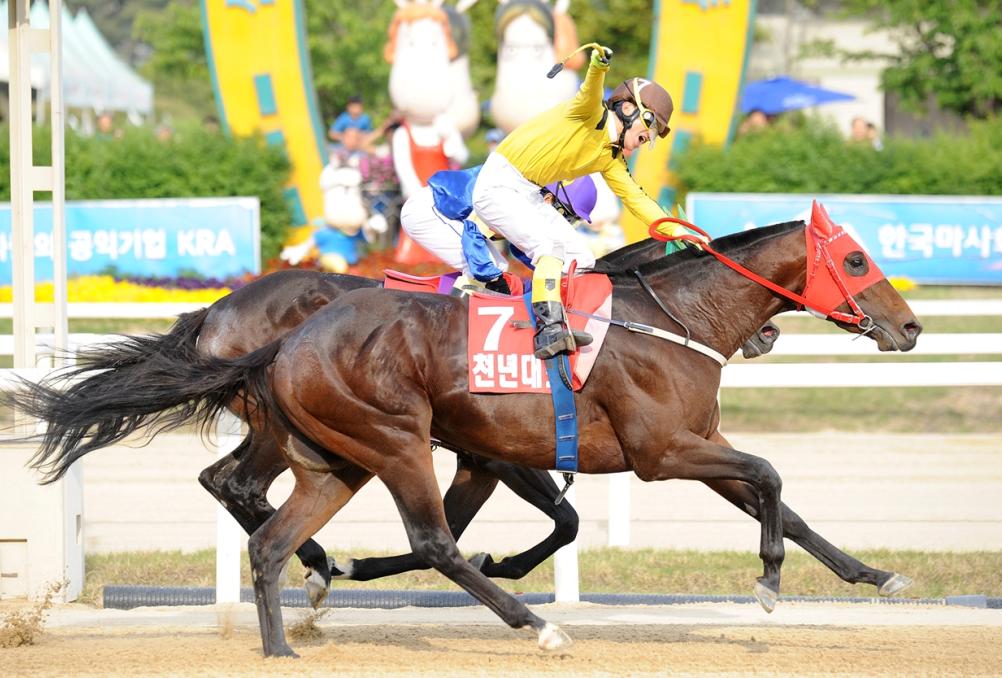
A bit of a stretch to split to award for champion three-year old between two Korean breds but Cheonnyeon Daero won the korean Derby and has gone on to show that was no fluke by landing the Busan Owner’s Cup at the end of the year.

Cheonnyeon Daero Winning the Derby (Ross Holburt)

Champion Trainer: Shin Woo Chul
With Tough Win and Dongbang Rose leading the way, the vetearn Soul handler scored 64 wins in 2010

Champion Jockey: Cho Kyoung Ho
While the talent may be at Busan, the competition is unquestionably at Seoul. A late season suspension to Moon Se Young helped but Cho Kyoung Ho finally claimed his first jockeys; championship with 120 winner.

Champion Owner: Tamna Feed Co.
A corporate owner wins this for the first time. Tough Win is the best known of a slew of winners for the Jeju based feed company. While feed companies have an obvious interest in sponsoring race horses, in recent years companies from other industries have become involved too, with IT, Construction and Cosmetic companies joining Shinhan Bank in owning racehorses. How the feed companies deal with their retired horses will be watched very very closely.

Champion Breeder: Seongsu Farm
The farm, based in Icheon, Gyeonggi Province, didn’t produce any big race winners this year but its mares are responsible for the likes of Gi Ra Seong, Good Day, Triple Sinhwa, Forest Wind and Breeders’ Cup first and second Sun Hero and Sun Blaze.

Special Awards: In addition to the regular prizes, some special awards were also handed out.

Kim Gui Bae

Lifetime Achievement: Kim Gui Bae
The longest-serving jockey in the weighing room, Kim Gui Bae had something of a renaissance in the latter part of 2010. While in the rest of the world it might be common for a jockey to have a career of thirty plus years, in Korea it is unheard of. Kim Gui Bae debuted in 1979 and is one of only three current riders (along with Park Tae Jong and Shin Hyung Chul) to have ridden at the old Ttukseom Race Park.

Special Award: Kim Seung Pyeong
A KRA employee at Busan, Kim Seung Pyeong was recognised for his work on IT systems.

Special Award: Sorabol College
This Higher Education institute located in Gyeongju, North Gyeongsang Province was recognised for its horse welfare course which specialises in training people to look after racehorses. A significant number of grooms at the Seoul and Busan Race Courses have been through this program

Special Award: Korea Horse Affairs High School
Staying with the education theme, this specialist high school was set up in North Jeolla Province in 2003 and is playing a key role in the development of young jockeys. Kim Cheol Ho, Park Byeong Yun, Jo In Kwen, Lee Gi Woong and Jang Chu Yeol are graduates who are making their way in the jockey ranks at Seoul Race Park.

2010: Trainers, Tragedy & Optimism

We’re just a few days away from the start of the 2011 season so it’s time to look back at some of the key events – randomly selected and not necessarily in order of importance- of 2010:

Number One: Tough Win

Dongbanui Gangja’s Reign Fizzles Out – We got our showdowns. The double-Grand Prix Champion Dongbanui Gangja faced the young pretender Tough Win on three separate occasions and three times he was beaten. Twice though he beat himself as the five-year old proved too much of a handful for his jockey to keep him running straight.

Meanwhile in the Grand Prix itself, Tough Win failed to stay the distance as Korean-born Mister Park took the end of season honours. Despite this, for his Busan Metropolitan and KRA Cup Classic wins, Tough Win is Gyongmaman’s Horse of the Year.

Lee Shin Young

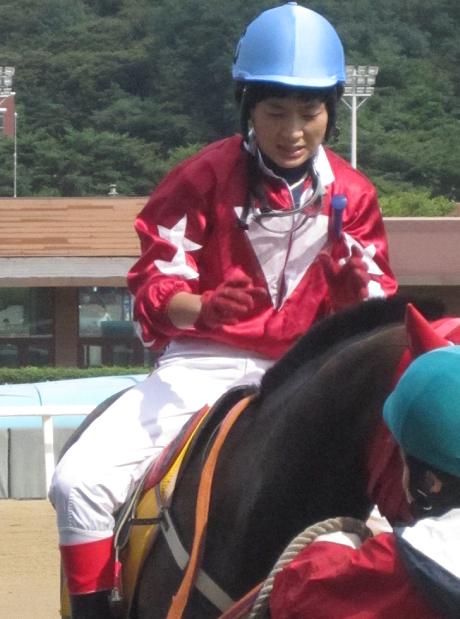
Lee Shin Young Becoming the First Korean Woman to Pass the Trainer’s Exam – Thirty year-old Lee, who was only the second Korean woman to be granted a jockey’s license became the first to pass the Trainer’s exam.

For the moment Lee continues to ride in races but is now eligible to move over to the backstretch when a vacancy becomes available.

Peter Wolsley’s Success at Busan – Australian trainer Peter Wolsley has now completed three full seasons as a license-holder at Busan. 2010 was his stand-out year saddling 38 winners from 223 starters for a strike rate of 17% with 41% of his starters managing to place. Were it not for a lack of truly top quality horses in his string – hardly his fault – Wolsley would have been a strong contender for Trainer of the Year.

Wolsley’s stable stars have been Gyongkwaehanjilju, winner of five of his seven starts as a three-year old this year and the late-developing filly Ganghan Yeoja and with a number of promising two-year olds in his barn, next year looks set to be a very interesting season. Wolsley now receives the majority of horses from two Jeju farms – Isidore and Pegasus – which both have foreign interests. Indeed, when Pegasus Farm’s two-year old filly Secret Whisper won back in November under Japanese jockey Yoshi Aoki, it made for a winner that was essentially foreign-owned, trained and ridden. Training is the key to improving Korean racing and Wolsley’s presence is setting the bar higher for the local training colony which, while containing some talented handlers, has for many years essentially been an old-boys club of ex-jockeys.

Sires – Officer has become the latest recruit to the stallion colony in Korea. He joins the likes of Menifee, Volponi, Yehudi and Ecton Park as recent additions to what is becoming a strong breeding operation on the peninsula.

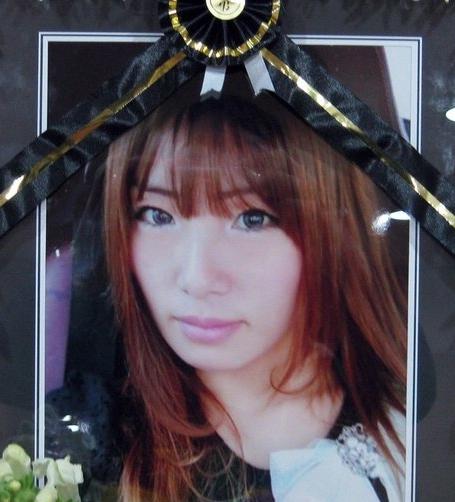
Park Jin Hee: 1982-2010

Jockey Park Jin Hee Commits Suicide – Without doubt, those most affected by the suicide of Park Jin Hee were her family, who lost a talented and beautiful daughter in the most awful of circumstances at the age of just 28.

However, in the aftermath of that desperate Friday in March when Park didn’t appear for her rides at Busan and was later found dead in her apartment, Korean racing was shaken. The young jockey had left a suicide note in which she blamed the pressures of racing and her mistreatment by trainers – naming one of Busan’s most prominent as particularly responsible. The KRA faced a barrage of online criticism from Korea’s poisonous “netizens” and, while they quickly moved on to their next target, back in Busan, jockeys boycotted the named trainer’s horses for several weeks. Park Jin Hee was the second lady jockey to take her own life, after Lee Myoung Hwa in 2005.

KRA Levels Up its English – This blog has been known in the past to be slightly unkind about the KRA’s attempts at English but, credit where credit it due, in 2010 it introduced an English language results and race-cards service. It’s not detailed but the vital information is there and, coupled with the race videos which are now freely available as well as the links to the Studbook page for each entrant, makes for a fantastic service. Sadly since he departure of James Perry from the Stewards panel, English language stewards’ reports from Seoul are no longer produced. The KRA says there is a “vacancy” for a foreign steward – whether they plan to fill it is another matter.

The Regulator – As we enter 2011, things are much the same as they were a year ago. The government continues to be stuck in its position of wishing to appear to be tough on gambling but not wanting to do anything that will seriously jeopardise the vast tax revenues racing generates. Trials on an Electronic ID card to track punters’ expenditure began and looks like it will ultimately be made compulsory. Meanwhile, we saw the usual slew of stories about illegal gambling. Corruption stories involving jockeys didn’t help matters and the KRA is still yet to resolve a long-running dispute over an off-track gambling site in the southern city of Suncheon.

Yeongcheon To Build Korea’s Third Thoroughbred Racecourse – The small city of Yeongcheon, just outside Daegu in North Gyeongsang province was named as the location of Korea’s newest racecourse. The track, which is scheduled to open in 2014 will also host a resort and something called a “Horse-Park”. It’s opening also looks likely to spell the end of year-round racing at Seoul and Busan with each of the three tracks taking turns to be “dark” for four months of the year while the other two operate.

Kim Tae Hee

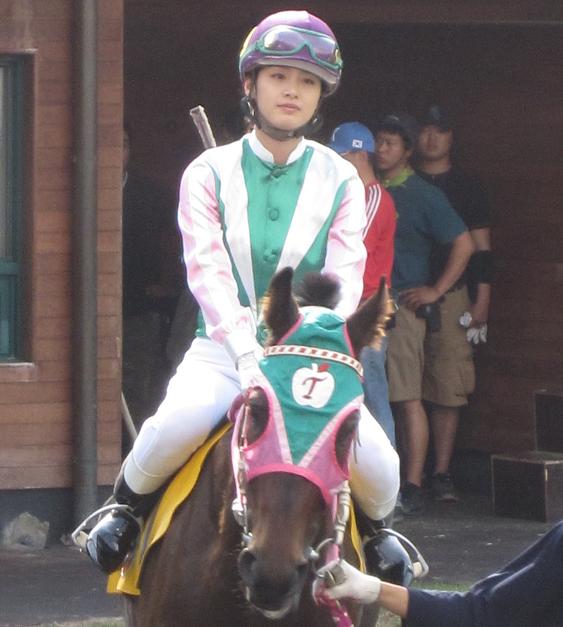
Kim Tae Hee Stars In Grand Prix – OK, so the finished movie wasn’t that great but it had some amazing racing scenes and got the sport some mainstream attention. Plus punters got to see Kim Tae Hee in racing silks.

Young Jockeys – The standard of riding in Korea is definitely on the up. Those who gained their licenses in the last few years such as Lee Sang Hyuk and Jo In Kwen are already well established in the upper ranks of the jockeys’ championship while Kim Hae Sun, who qualified in 2009, looks like she could go on to become the peninsula’s most successful ever female rider. Meanwhile, Busan’s Park Geum Man was a popular winner of the Derby.

Foreign Jockeys – It’s not looking so positive for foreign riders. At the beginning of 2011, there are no non-Japanese foreign jockeys in Korea following the departure of Martin Wepner in May. And even for the Japanese, it still seems as though Seoul is unbreakable with Hiro Hamada the only non-Korean plugging away in the capital. On the front of their English website, the KRA is still advertising for foreign jockeys. Any-takers should click here. Things are very tough here though. Martin Wepner didn’t endear himself to everyone but he was tenacious and a battler and he was able to be successful, but one doubts it would be an experience he would want to repeat.

In no particular order – Mister Park, Yeonseung Daero, Cheonnyeon Daero, Dangdae Bulpae, Money Car, Sangseung Ilro, Love Cat, Tough Win, Triple Seven, Dongbanui Gangja, Baekgwang, Bally Brae, Larrycat, Dongbang Rose, Euro Fighter, Northern Ace, Sun Hero and Magic Party are just some of the 2,810 thoroughbred athletes who entertained us through triumph and tragedy in 2010.

Mister Park and You Hyun Myung in the Grand Prix Winner's Circle

Subsidy, Last Son of Mr. Prospector, Retired at 10

Subsidy, Grand Prix winner and Horse Of The Year in Korea in 2005 has been officially retired at the age of 10, his owners confirmed at the weekend. One of the final foals by the late Mr. Prospector, Subsidy [Mr. Prospector – Foreign Aid (Danzig)] was born on March 29, 2000, nine months after the death of his illustrious sire.

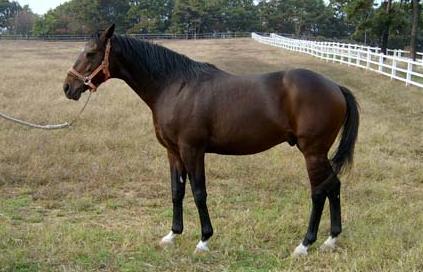
Subsidy (KRA)

Subsidy was a late arrival to Korea, not being imported until the age of four. These days, the only horses older than two who arrive here are for breeding purposes and it is almost unheard of for a new arrival to have racing experience. Subsidy, however, was a veteran of 14 races in the US.

He made his debut as a two-year old on November 11, 2002 over 6 furlongs at a sloppy Delaware Park, finishing an encouraging second. He made one more appearance as a two-year old at Aqueduct Racetrack in New York but was a disappointing eighth. Reappearing at Pimlico the following spring, he ran second again. After a couple more outings back at Delaware Park, he was taken to Monmouth, where he scored his first – and only – victory on US soil in a 6 furlong allowance race on July 12, 2003.

At the end of his three-year old season he was sold to Korea. His US racing record was 14 runs with 1 win, 4 seconds and 1 third. In total he won $51,000. Four months after his last US appearance – a claiming race at Philadelphia Park between Christmas and New Year – he debuted in Korea on April 3, 2004 winning at seven furlongs with ease. He did enough throughout the remainder of his four-year old campaign to merit an invite to the season ending Grand Prix in December. It didn’t quite go to plan as he finished sixth. However, he was not done with this race.

2005 was Subsidy’s year. He won the Owner’s Trophy in April and, despite suffering a surprise defeat to Value Play in the KRA Chairman’s Cup the following month, harvested big handicaps throughout the summer and autumn and headed into the Grand Prix as favourite. He didn’t disappoint. Hitting the front as the field turned for home, Subsidy stretched away for a three length win, taking Korean racing’s biggest prize as well as the Horse of the Year award.

By 2006, Bally Brae was on the scene. A year younger than Subsidy, the pair would spend the next three years battling it out in big handicaps. Their connections could have avoided each other in all but the very biggest races but they would regularly meet. In the Grand Prix of that year, neither would win as Flying Cat took the honours with Bally Brae in second and an out-of-sorts Subsidy back in fourth. Only running five times in 2006, Subsidy still picked up three wins. It was Bally Brae though who picked up Horse of the Year.

In early 2007, Subsidy and Bally Brae had their most memorable battle as, despite giving the rest of the field an almost ten-kilo weight advantage, they engaged in a private duel over the last four furlongs, battling each other right up until the line. Subsidy came out on top that day in a race that, given the fondness for both of these horses, will always be special for Korean racing lovers.

However, later that year, Bally Brae would get his own back as he dominated the Grand Prix, beating Subsidy into second by place by four lengths. That Grand Prix goes down as one of the great “what might have beens” for Korean racing. 2007 was the year of J.S. Hold, but the three-year-old Triple Crown winner had already run his last race by the time the Grand Prix came around. Likewise the “white light”, Baekgwang, another star domestic-bred horse was also injured. No-one will ever know if either could have beaten Bally Brae and Subsidy, the two dominant horses of their generation.

By 2008, it was clear that Subsidy’s star was waning. He still managed three wins but, faced with a restrictive weight to carry in the big handicaps, things were getting more difficult. Subsidy’s last win came on September 7, 2008. Second in that race was Dongbanui Gangja. The margin was a nose. By the time of the Grand Prix later that year, Dongbanui Gangja was established as top horse on the peninsula.

Subsidy continued to run sporadically – and finish in the money until what has now been confirmed as his last race, the 2009 Owner’s Trophy. Dongbanui Gangja won that day with Subsidy finishing sixth. Old rival Bally Brae wasn’t there – they had said their goodbyes the previous month as Bally Brae comfortably beat him in a Saturday handicap.

He wasn’t officially retired then. Always sensibly campaigned, his owners had said that so long as he could be competitive and safe, he would run again. In July 2010, he took part in a Friday morning race trial and won easily, re-qualifying him for the real thing. The real return never happened though. Subsidy will be retired to a private farm. One of those few horses in Korea known by name rather than number, the gelding who went from being a mid-week claimer at Philadelphia Park to winning a Grand Prix in front of 80,000 passionate punters and amassing over $1Million in prize money, has earned his retirement.

Field Takes Shape For Triple Crown Showdown

Dongbanui Gangja vs Tough Win Part 2 / Triple Crown Concludes

Enough talk of the NGCC and electronic ID cards. We’re back on the track and about to embark on two massive weekends of racing in Korea.

Part 2? Dongbanui Gangja (right) and Tough Win - Pic:KRA

Just a few hours from now, we’ll find out if Dongbanui Gangja and Tough Win will indeed face each other at Seoul Race Park this coming Sunday in the Group 3 KRA Cup Classic. Korea’s best two horses went head-to-head for the first time two months ago in the Busan Metropolitan with young upstart Tough Win taking the honours after double Grand Prix Champion Dongbanui Gangja veered suicidally wide on the final turn. What will happen at Seoul? Full preview to come over the next couple of days.

Regardless what happens there though, a week later we’re guaranteed another top class race the when the 2010 Triple Crown concludes with the Group 2 Minister’s Cup – formally, and wonderfully, known as the Minister for FAFF (Farming, Agriculture, Fisheries and Forestry) also at Seoul Race Park. Derby Winner Cheonnyeon Daero heads north to the capital once more, however, the horse who was second that day, Money Car will not. Whether we will ever see the injured KRA Cup Mile winner back on the track is questionable. Nor will long-shot Oaks Winner Euro Fighter be present.

Cheonnyeon Daero beats Money Car in the Derby

However, that doesn’t mean this isn’t set to be an intriguing contest. Dangdae Bulpae was third in the Derby but is unbeaten since. Most recently, the son of Biwa Shinseiki dispatched an array of big-name older horses in dismissive fashion in the Gyeongnam Governor’s Cup. He is sure to give Cheonnyeon Daero a run for his money. Then there is Glory Yeonggwang. Sent off at 60/1 in the Gold Circle Trophy earlier this month, he upset the odds – and eleven rivals – to take the prize and earn a place at Seoul.

Best Holls - Ilgan Sports winner

Another improver is Best Holls. The surprise winner of the Ilgan Sports Cup will try his luck in what seems a very open field. In Euro Fighter’s absence, the hopes of the fillies look set to rest with Dongbang Rose. She was third in the Oaks but back on her home track could pull off a surprise. Here is the full list of the fourteen horses currently entered (race records/home track):

FAFF Minister’s Cup (KOR.G.II) – Seoul Race Park – October 10 – 2000M

1. Cheonnyeon Daero (13/4/5/2) Busan
2. Dangdae Bulpae (10/7/0/1) Busan
3. Triple Shinhwa (9/3/4/0) Busan
4. Glory Yeonggwang (14/4/2/3) Busan
5. Andy’s Runner (12/3/2/5) Seoul
6. Forest Wind (8/3/0/2) Seoul
7. Bonsol (14/4/0/3) Seoul
8. Dongbang Rose (8/4/1/2) Seoul (filly)
9. Medlin Speed (10/4/0/0) Seoul
10. Best Holls (10/5/1/2) Seoul
11. Gayabobae (11/4/2/0) Seoul
12. Gaecheok (8/1/1/3) Seoul
13. Hey Day (8/2/3/1) Seoul
14. Tracker (9/3/1/2) Seoul

* In Stud news, the KRA announced today that they have purchased the stallion Officer
[Bertrando – St. Helens Shadow (Septieme Ciel)], who is currently standing for a $10,000 fee in Kentucky. Officer will be flown to the KRA’s stallion station on Jeju Island where the eleven year-old will be standing alongside the likes of Ecton Park, Volponi and Menifee as well as more established Korea-based sires Revere, Didyme and Psychobabble.

Serendipper All-Smiles in Owners’ Cup

Aussie Mare Lands Owners’ Cup / Sangseung Ilro Wins KNN Cup

A barnstorming late run saw Aussie bred Serendipper crowned top filly or mare in Seoul in the Seoul Racecourse Owners’ Association Trophy (“Owners’ Cup”) at Seoul Race Park this afternoon.

In an open betting race, Lucky Mountain was sent off the slight favourite but she rarely featured as JRA Trophy winner Gippeumnuri set the early pace. Second favourite Love Cat was well-placed throughout but it was five-year old Serendipper, under Kim Ok Sung who came wide of the field in the home straight to pass them all and take victory by just over a length.

Serendipper [Danewin – Coppelius (Pleasant Colony)] has been a consistent money earner but a rare winner since making her debut three years ago. Her previous biggest payday came with a second place finish in the YTN Cup in 2008 but she had hit the wire in first place just three times in twenty-seven outings prior to today.

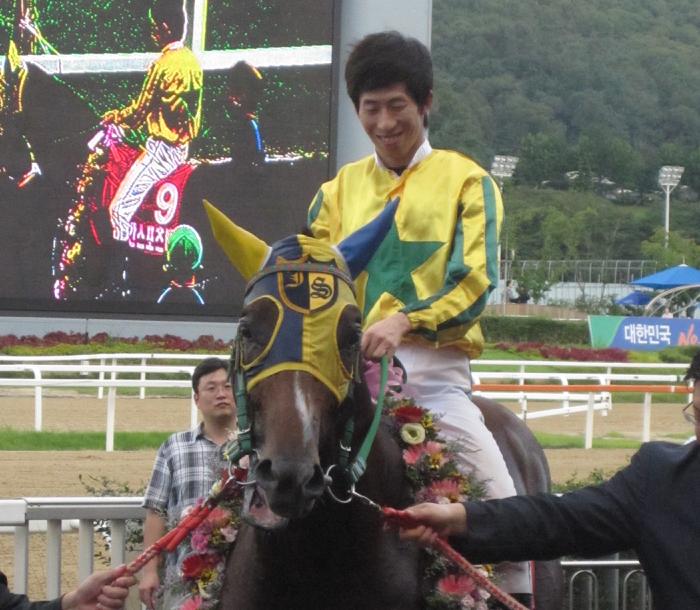
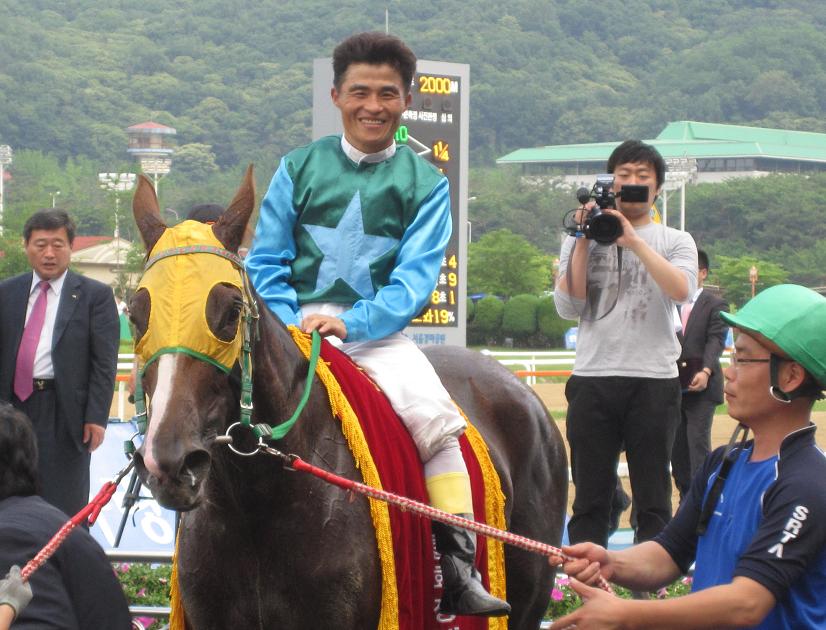
For veteran jockey Kim Ok Sung – known as the “smile jockey” for the Cheshire Cat grin he constantly wears – it was arguably his biggest win since landing the Grand Prix back in 1996. And the day got even better for the 43 year-old who’s only recently back from a 10 meeting ban – after the presentation, he got straight back out on the track and won race 10 on unfancied Choedaepungsok.

Smile: Serendipper and Kim Ok Sung in the Winner's Circle

SROA Trophy G.III – Seoul Race Park – 2000M – June 12, 2010

1. Serendipper (AUS) [Danewin – Coppelius (Pleasant Colony)] – Kim Ok Sung – 8.2, 2.5
2. Gippeumnuri (USA) [Eurosilver – Regatta Queen (Danzig Connection)] – Ham Wan Sik – 2.6
3. Love Cat (KOR) [Creek Cat – Love Cue (Curia Regis)] – Cho Kyoung Ho – 1.5

Distances: 1.25 lengths/1 length
Also Ran: 4. Lucky Mountain; 5. Jangjagang; 6. Pocketful Of Money; 7. Daehyo; 8. Sky Center; 9. Gamdonguijumal; 10. Soseono

It was also a big day down at Busan as nine of the best domestic bred horses at the track – among them three Classic winners – met in the KNN Cup. And it was a repeat of the result from the first two legs of the 2009 Triple Crown as Sangseung Ilro put in a late burst to get the better of stablemate and long time rival Namdo Jeap.

Last year’s Champion Juvenile Night Moves had set the early pace in the mile-long test but she faded in the straight as the four-year olds came by. 2009 Busan Owners’ Cup winner Yeonseung Daero was sent off favourite but, just as in the classics last year, he couldn’t get close to Sangseung Ilro or Namdo Jeap, eventually finishing a disappointing sixth. Further down the field was Namdo Jeap’s half-brother (through their dam Wandering Katie [Tejano]) 2008 KRA Cup Mile winner Rainmaker who was making his first racecourse appearance for nearly a year.

KNN Cup – Busan Race Park – 1600M – June 13, 2010

1. Sangseung Ilro (KOR) [Concept Win – Ms. Whiskey (Whiskey Wisdom)] – Jo, Sung Gon – 2.8, 1.3
2. Namdo Jeap (KOR) [FT. Stockton – Wandering Katie (Tejano)] – Gu Min Sung – 2.7
3. Lucky Dancer (KOR) [Fiercely – Ocean Dream (Mohamed Abdu)] – Kim Yong Geun – 2.1

Distances: 1.25 lengths/0.5 lengths
Also Ran: 4. Yeongung Manse; 5. Annika Queen; 6. Yeonseung Daero; 7. Rainmaker; 8. Night Moves; 9. Procyon

FULL RESULTS FROM SEOUL

FULL RESULTS FROM BUSAN

Kentucky Derby With The TBA

As far as Gyongmaman is concerned, this time of year has always been about the Guineas at Newmarket – he grew up leaning on the rail at the Rowley Mile – and in recent years, the build up to the Korean Derby.

For much of the rest of the racing world, however, attention will be focused on Churchill Downs this coming Saturday and the Kentucky Derby.

As in the past couple of years, Gyongmaman has been following the build-up to 2010 edition of the race with the Thoroughbred Bloggers Alliance.

Horse Racing in Korea has been a member of the TBA since January 2009 with the group providing unprecedented exposure to Korean racing. While most focus on US racing, there are approximately sixty members in total, covering every imaginable angle with owners, trainers, bettors, more bettors and fans, fans, fans and more fans of our wonderful sport.

Check the right hand side of this page or click on the homepage for the full list of TBA blogs.

As for the Derby, Gyongmaman will be backing Awesome Act – for no better reason than he has a Newmarket trainer.

Triple Seven, Money Car, Dongbanui Gangja Top Standings

Triple Seven’s victory in the Ttukseom Cup earlier this month has taken the five-year old to the top of the Seoul Standings. He leads Baekgwang, whose comeback from seemingly career-ending injury has been the feel-good story of the past year.

Triple Seven tops the Standings

In overall terms, Dongbanui Gangja remains the horse to beat heading as he does the overseas-bred list. Despite a dreadful performance earlier this month when jockey Choi Bum Hyun allowed him to drift across the entire width of the track in the home straight, he managed to win and took his unbeaten streak to twelve.

The resurgent Bally Brae is up to third while the three-year old Tough Win enters the top five for the first time. He beat the horse in third place, Bulpae Gisang this month and the inevitable showdown with Dongbanui Gangja is set to be one of the highlights of the year.

Money Car - On Course for Triple Crown

Overseas-bred horses are not allowed to run in the three-year old Classics and it is of course, Money Car, the emphatic winner of the KRA Cup Mile and favourite for the Derby who heads up the Domestic-bred three-year old category. Seonbongbulpae and Northern Ace, neither of whom went to Cup Mile but will be running in the Derby complete the top three.

Just behind those is Ace Galloper, a horse who belongs to the third category of thoroughbreds in Korea. He was foaled in Korea but his mare was imported to the country whilst pregnant – two of the top five overall Korean bred horses – Taesanbukdu and Gi Ra Seong – also fall into this category. They are eligible for all races open to Korean-breds except for the Classics.

Domestic-bred Class 1

1. Triple Seven [The Groom Is Red – Impudence (Grand Lodge)]
2. Baekgwang [The Groom Is Red – Grey Crest (Gold Crest)]
3. Gi Ra Seong [Precise Cat – Dauntless Cat (Mountain Cat)]
4. Taesanbukdu [Millennium Wind – Regal Meg (Regal Classic)]
5. Nice Choice [Lost Mountain – Betty’s Rhapsody (Don’t Hesitate)]

Domestic-bred 3-year olds

1. Money Car [Newsprint – Pinocchio (Big Sur)]
2. Seonbongbulpae [Newsprint – Jeseok (Lost Mountain)]
3. Northern Ace [Didyme – Telegraph Road (Royal Academy)]
4= Ace Galloper [Chapel Royal – Explicitly (Exploit)]
4= Forest Wind [Capital Spending – Coffee Royale (Sword Dance)]

Overseas-bred Class 1

1. Dongbanui Gangja (USA) [Broken Vow – Maremaid (Storm Bird)]
2. Bally Brae (USA) [Yarrow Brae – Political Bluff (Unaccounted For)]
3. Bulpae Gisang (USA) [Lightnin N Thunder – Neat Trick (Clever Trick)]
4. Baekjeonmupae (NZ) [Traditionally – Star Sixty Seven (Phone Trick)]
5. Tough Win (USA) [Yonaguska – Maggie May’s Sword (Sword Dance)]

Dongnabui Gangja is still number one in Korea – this was a better effort than his last one, winning the Grand Prix last December:

* Standings compiled by the Korean Racing Journal